
Are you confused by long lists of telehandler main parts? This makes it hard to know what truly matters. Let’s look beyond the components to understand how a telehandler really works.
A telehandler is not just a collection of parts. It’s a machine built on three core systems working together: the Structural System for stability, the Powertrain for movement, and the Hydraulic System for lifting. Understanding this integration is key to understanding performance
For over 15 years, I’ve been building and exporting telehandlers from our factory here in China. I’ve noticed most articles just list parts like the boom, engine, and cab. That’s a “parts-level” view. It tells you what is there, but not how it works together to get the job done. To truly understand these machines, you need to think in terms of systems. Let’s start with the basics and build up to this more powerful way of thinking.
What are the basic components of a telehandler?
Ever look at a telehandler and just see a complex machine? It’s easy to get lost in the details. Let’s start with the basic parts you can see.
A telehandler’s key components include the chassis, boom, cab, engine, and attachments. While these are the visible parts, their real power comes from how they are integrated into larger operational systems. They are the building blocks, not the whole story.
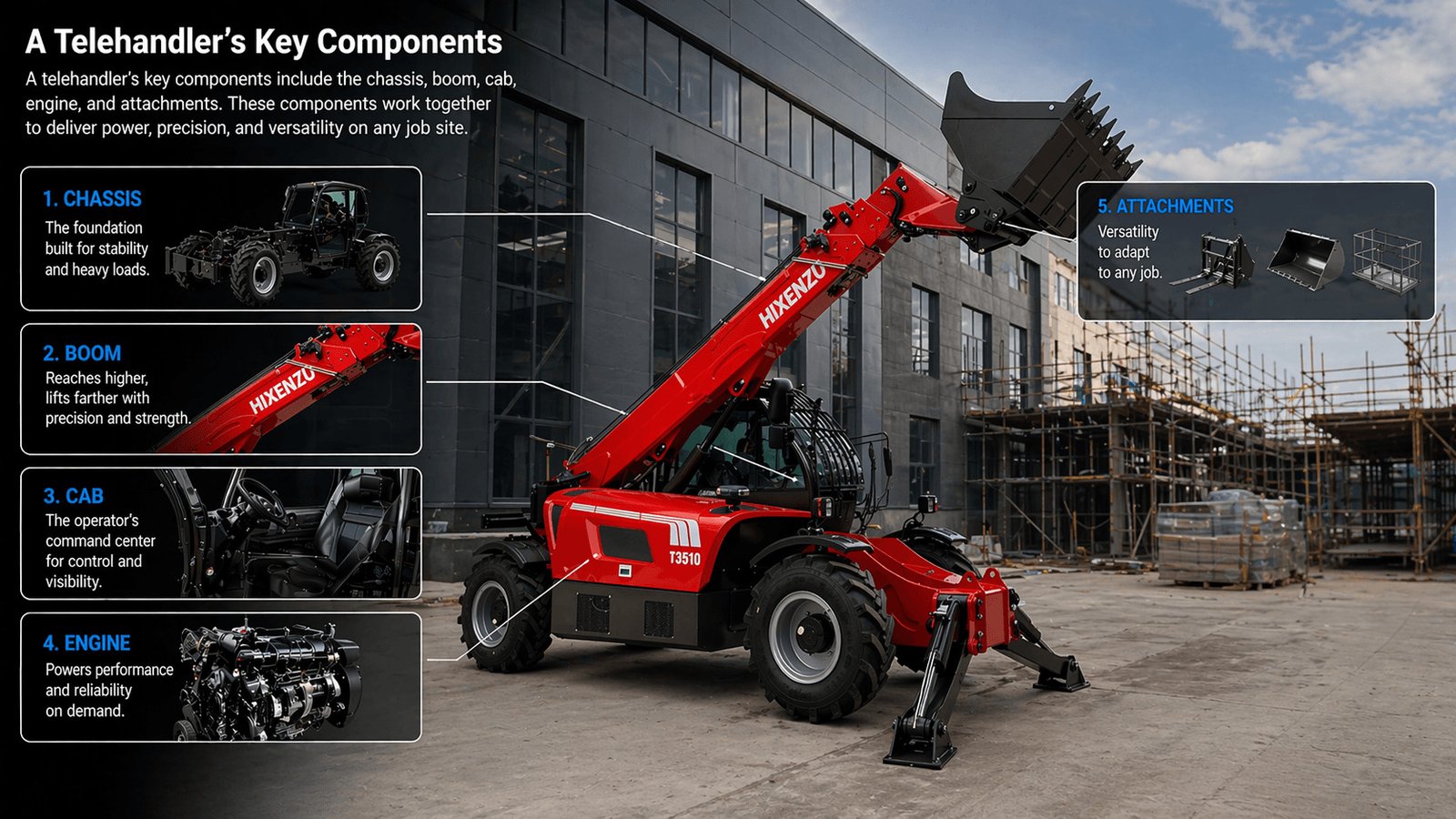
When you first look at a telehandler, you see the individual pieces. This is a natural starting point. Most people begin here and, unfortunately, many guides end here too. They give you a list, and it usually looks something like this.
| Component | Basic Function |
|---|---|
| Chassis | The main frame of the machine, supporting all other parts. |
| Boom | The telescopic arm that lifts and extends to place loads. |
| سيارة أجرة | The operator’s station with controls and safety features. |
| محرك | Provides the power for driving and hydraulic functions. |
| Axles & Wheels | Provide mobility and support the machine’s weight. |
| المرفقات | Tools like forks, buckets, or hooks for different jobs. |
This is a good list of parts. But these components don’t work alone. The engine is part of a larger powertrain. The boom is useless without the hydraulic system that moves it. Thinking only about these parts is like trying to understand a car by looking at a tire, a steering wheel, and a spark plug separately. You miss the big picture.
How do these components form the core systems of a telehandler?
Knowing the parts is one thing. But do you understand how they connect to create a powerful machine? This gap in knowledge can lead to poor purchase decisions.
Telehandler parts form three core systems. The Structural System (chassis, counterweight) provides stability. The Powertrain System (engine, transmission) delivers driving power. The Hydraulic System (pumps, cylinders) powers the boom and lifting functions. This system-level view is crucial.
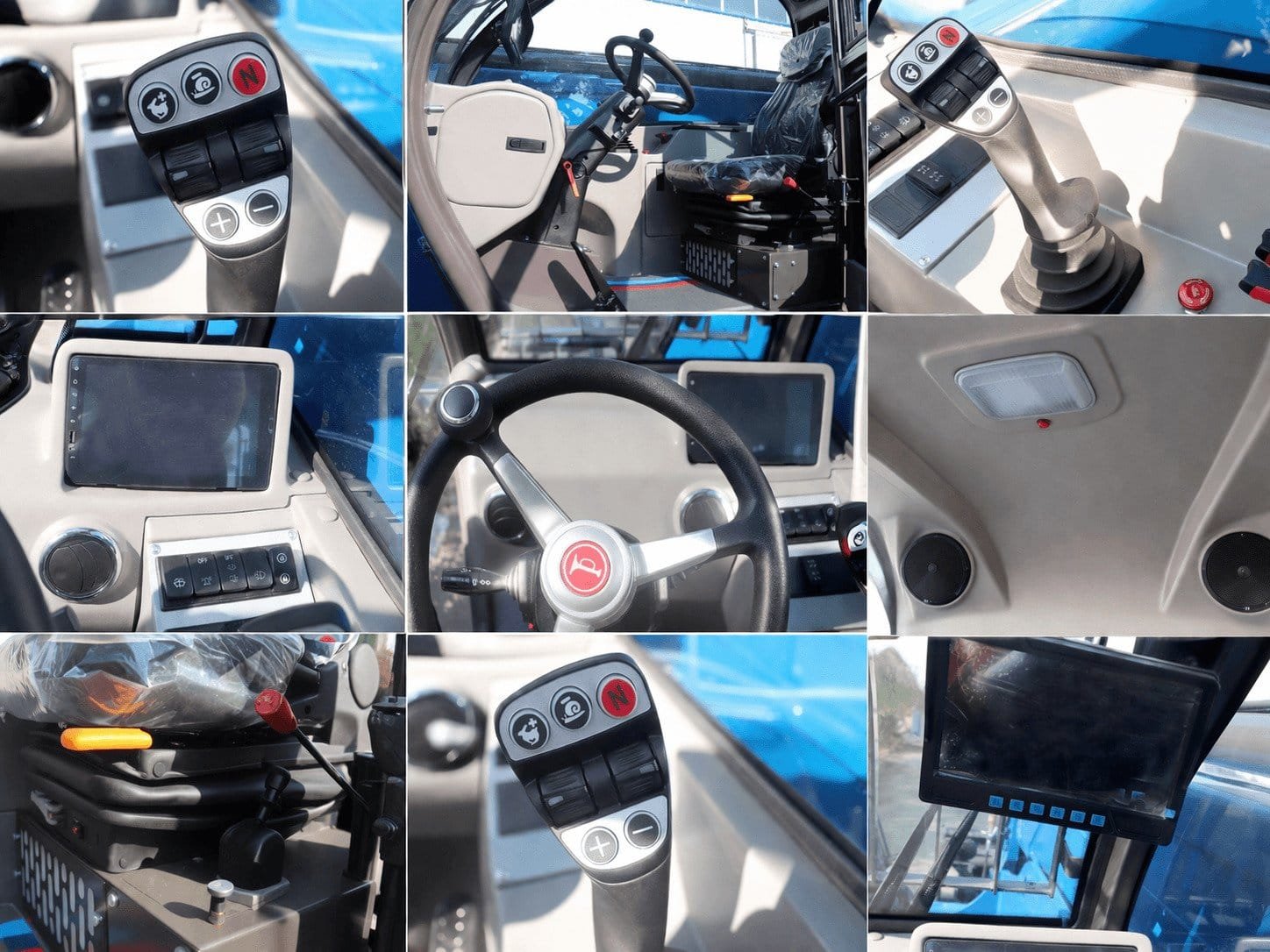
After years of designing these machines, I see every telehandler as a balance of three main systems. Think of it as a triangle. Each corner has to be strong and work with the others.
The Structural System: The Foundation
This is the skeleton of the telehandler. It includes the heavy-duty chassis, the axles, and the counterweight at the back. Its only job is to provide a solid, stable base. When you lift a 4-ton load 10 meters in the air, you are trusting this system completely. It must be strong enough to handle the machine’s own weight, the load, and all the dynamic forces during operation. Without a robust structural system, even the most powerful engine or advanced boom is useless and unsafe.
The Powertrain System: The Drive
This is the system that gets the telehandler moving. It starts with the engine, which creates the power. But that power has to get to the wheels. So, the system also includes the transmission, driveshafts, and axles. It determines the machine’s travel speed and its ability to handle rough terrain. Whether you need a simple two-wheel drive for flat concrete or a powerful four-wheel drive with multiple steering modes for a muddy construction site, it all comes down to the powertrain.
The Hydraulic System: The Muscle
This is the system that does all the heavy lifting. It takes power from the engine and turns it into force. A hydraulic pump sends oil through hoses and valves to the hydraulic cylinders. These cylinders are what push the boom up, extend it out, and tilt the attachment. The speed, smoothness, and power of your lifting operations depend entirely on the design and quality of the hydraulic system. It is the true workhorse of the machine.
Why is system integration more important than individual parts?
Have you ever seen two telehandlers with similar specs perform differently? It’s frustrating when the paper stats don’t match real-world results. The secret isn’t in the parts list.
Performance is not about having the best engine or the strongest boom. It is about system integration—how well the powertrain, hydraulics, and structure are matched. A powerful engine is useless if the hydraulic system can’t keep up, creating bottlenecks and inefficiency.

In our factory, the biggest challenge isn’t sourcing the best engine or building the strongest chassis. The real engineering work is in making sure all the systems work together perfectly. This is what we call “system matching” or “integration.” A failure here means the machine will never perform at its best, no matter how good the individual parts are.
Let me give you some real-world examples I see all the time.
| If you have… | But the matching system is… | The result is… |
|---|---|---|
| A powerful engine | A weak hydraulic pump | Slow boom speed, wasted fuel |
| A long-reach boom | An insufficient counterweight | Low stability, a major safety risk |
| A heavy-duty chassis | A basic 2WD system | Poor performance on rough terrain |
A customer might ask for a very powerful engine. But if we don’t match it with a hydraulic pump that has a high flow rate, the boom will still move slowly. The engine will be working hard, burning fuel, but that power won’t translate into faster work. It’s a bottleneck. Similarly, a long boom is great, but if the chassis and counterweight (the structural system) aren’t perfectly designed for it, the machine will be unstable and dangerous. The machine’s performance is not the sum of its parts; it is the result of how well those parts work together.
How does this systems-thinking guide your telehandler selection?
Choosing a telehandler can feel overwhelming. Focusing on just lift capacity or engine brand can lead to buying a machine that is wrong for your job.
When selecting a telehandler, look beyond individual specs. Ask how the systems are integrated. Inquire about the hydraulic flow rate, not just engine horsepower. Consider the drivetrain for your terrain, not just the chassis build. This ensures you get balanced performance.
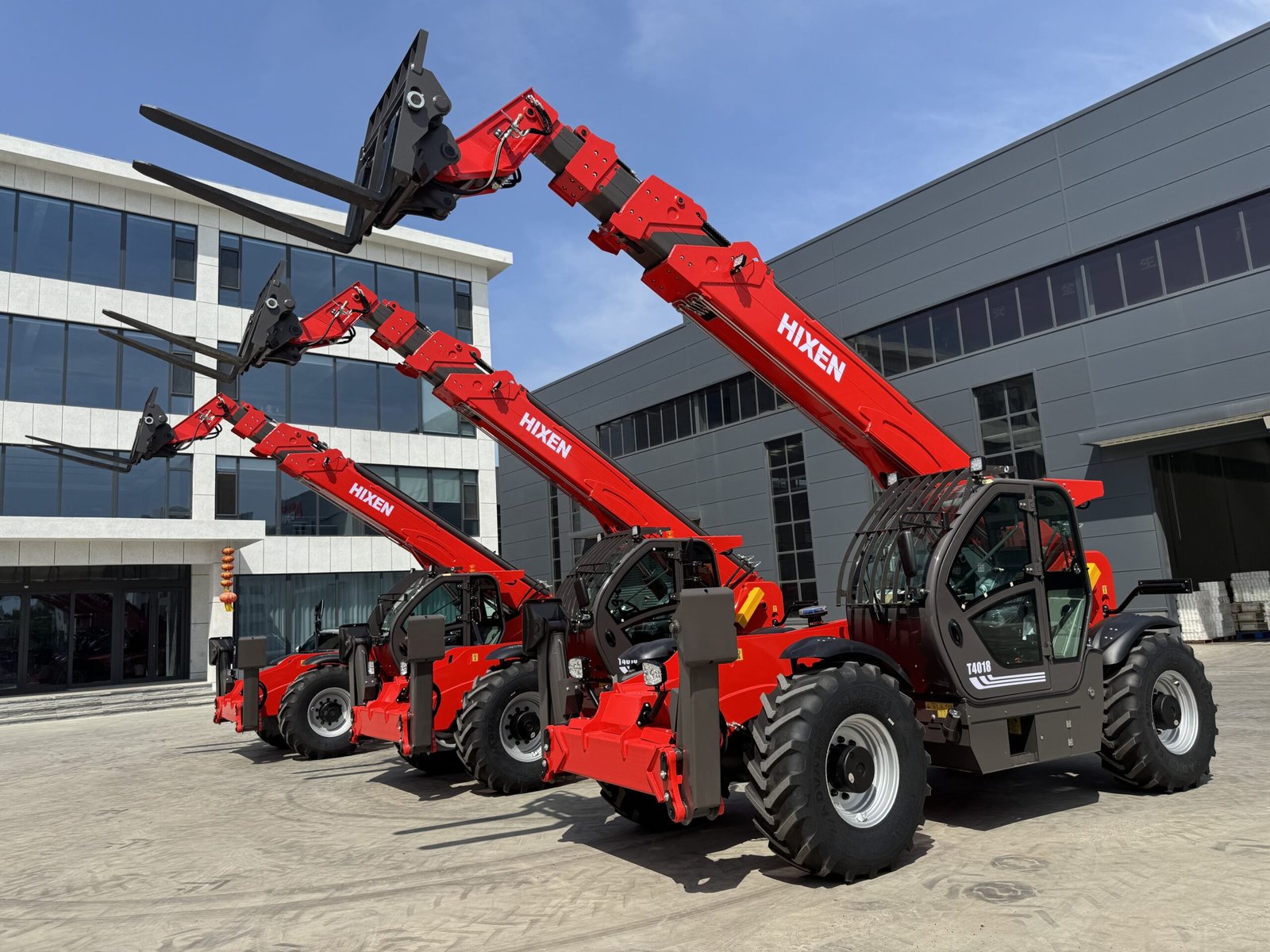
So, how can you use this knowledge to make a better choice? It’s about changing the questions you ask. Instead of focusing on individual components, start asking about how the systems work together to meet your specific needs.
Start with Your Job, Not the Spec Sheet
First, think about your primary application.
- Need for speed? If your work involves many lift-and-place cycles, like loading trucks, you need a responsive hydraulic system. Ask about hydraulic flow rates and cycle times.
- Working on rough terrain? If you’re on a muddy construction site, the powertrain is your priority. Ask about the drivetrain (4WD is a must), differential locks, and steering modes.
- Lifting heavy loads to great heights? For jobs like multi-story construction, the structural system is critical. Ask about the chassis design, the counterweight’s effectiveness, and the load charts at maximum reach and height.
Ask Questions About Integration
When you talk to a supplier, try asking these kinds of questions:
- “How is the engine’s power matched to the hydraulic system to ensure fast cycle times without wasting fuel?”
- “How is the chassis and counterweight balanced to provide stability for the boom’s full capacity at its maximum reach?”
- “What drivetrain options are available, and how do they help the machine perform on the type of terrain I have?”
These questions show you understand what really matters. They push the conversation beyond a simple list of brand names and specs. As a manufacturer, we at HIXEN focus heavily on this system integration. It’s how we build machines that are not just powerful on paper, but reliable and efficient on the job site.
خاتمة
Understanding a telehandler means seeing it as integrated systems, not a list of parts. This approach ensures you choose a machine with truly balanced performance for your specific needs.

