
Struggling to find a machine that reaches high enough for your job? Using the wrong equipment is unsafe and inefficient. A telehandler might be your perfect solution.
Most telehandlers lift between 7 to 18 meters (23 to 59 feet). This range covers the needs of most construction, farm, and warehouse jobs. Some specialized models, like rotating telehandlers, can even reach heights of 20 meters or more.
Choosing the right lift height is crucial for safety and efficiency. It is not just about the maximum number on a spec sheet. You need to understand how different factors work together to determine a machine’s true capability. Let’s look closer at what these heights mean for your work and how to make the best choice.
What Is the Maximum Telehandler Lift Height?
Are you unsure about the real-world lift height of a telehandler? Guessing can lead to buying the wrong machine for your project. Let’s clarify the typical and maximum heights available.
Standard telehandlers commonly reach up to 18 meters (59 feet). At our factory, Hixen, our popular models fall within the 7-18 meter range. However, heavy-duty and rotating models can push past 20 meters (65 feet) for very specialized, high-reaching tasks.
I have seen customers get confused by the term “maximum height.” It is important to know there are different classes of telehandlers, each designed for different tasks. For over 15 years, we have helped buyers from Europe, the US, and beyond understand these differences. Here is a simple breakdown of what you will find in the market.
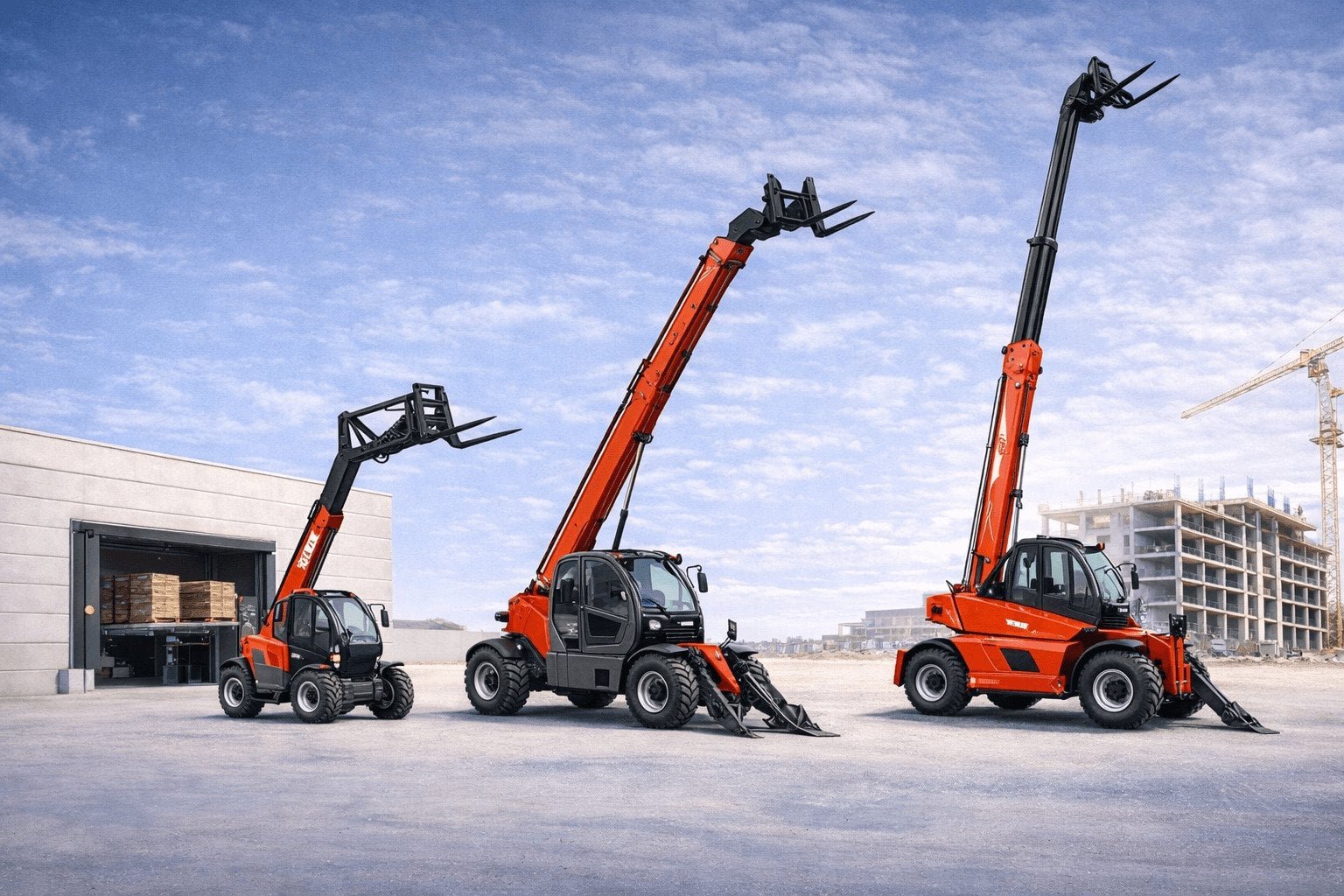
Standard Compact Telehandlers
These are the versatile workhorses for many industries. They typically offer a lift height of up to 7-12 meters. Their smaller size makes them perfect for working in confined spaces like crowded warehouses, small construction sites, or inside farm buildings.
High-Lift Telehandlers
These machines are built for height. Our main HIXEN models, with lift heights from 7 to 18 meters, fall into this category. They are the most common choice for multi-story construction projects, large-scale farms, and busy port logistics where reaching higher is a daily requirement.
Manipuladores telescópicos giratorios
These are highly specialized machines. They can often lift to around 20 meters or more. Their key feature is an upper structure that rotates 360 degrees, which allows the operator to place materials in many different spots without repositioning the entire machine.
What Telehandler Height Ranges Suit Most Jobs?
Worried about paying for more lift height than you actually need? Over-specifying a machine is a common mistake that wastes money. Let’s identify the most versatile height range for everyday work.
The 7 to 18-meter (23 to 59 feet) lift height range is the sweet spot for most applications. This versatility makes telehandlers useful in construction, agriculture, and logistics. It covers everything from lifting materials to a second floor to stacking large hay bales.
In my experience exporting our HIXEN telehandlers, most of our customers find their perfect solution within this 7-18m range. It is the most practical and cost-effective choice for a wide variety of tasks. You get the reach you need for ambitious projects without paying for extreme height you will rarely use. Let’s look at why this range works so well across different industries.
| Industry | Common Tasks | Ideal Height Range | Why it Works |
|---|---|---|---|
| Construcción | Lifting bricks, steel beams, roofing | 10-18m | Easily reaches multiple stories of a standard building. |
| Agricultura | Stacking hay bales, loading grain silos | 7-12m | High enough for barns and silos, yet maneuverable in fields. |
| Warehousing/Ports | Loading/unloading containers, stacking pallets | 7-10m | Reaches high racks and stacks containers efficiently. |
| Paisajismo | Moving large trees, placing boulders | 7-9m | Provides reach over obstacles for precise placement. |
This table shows that you don’t always need the absolute maximum height. Choosing a machine within this versatile range often gives you the best return on your investment.

What Factors Influence a Telehandler’s Actual Lift Height?
Is the advertised lift height the whole story? Ignoring key operational factors can lead to inefficient work and unsafe operation. You must understand the main things that limit your effective reach.
Three key factors determine a telehandler’s safe lift height: the load chart, the machine’s maximum lift capacity, and the attachments you use. The boom’s extension and angle directly impact how much you can lift safely to a specific height.
A telehandler’s performance is not just one number. As a manufacturer, we design and build our machines to be safe, and that safety depends on the operator understanding its limits. I always tell my clients to think about these three points before starting any job.
The Load Chart is Your Guide
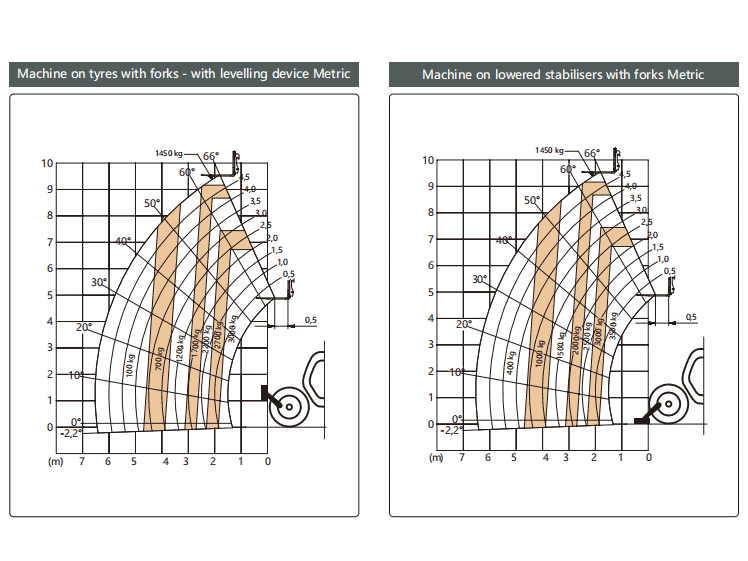
Every telehandler has a load chart in the cab. It is a diagram that shows you how much weight you can safely lift at different heights and forward reaches. As the boom extends upwards and outwards, the capacity decreases. Ignoring this chart is the most common cause of accidents.
Maximum Lift Capacity
This number refers to the heaviest load the machine can lift, but usually only when the boom is fully retracted. Most telehandlers, like our HIXEN models, have a capacity between 3,000 kg and 6,000 kg. Heavy-duty models can lift more, but the principle is the same: this max capacity is not available at max height.
Attachments Change Everything
Using a bucket, a crane jib, or a personnel basket changes the machine’s center of gravity and performance. Each attachment has its own weight and specifications. This will alter the safe working load and can even reduce the maximum effective lift height. Always use the correct load chart for the specific attachment you have fitted.
How Does Lift Height Affect Load Capacity?
Do you think you can lift the maximum weight to the maximum height? This is a very common and dangerous mistake. Let’s look at the critical relationship between how high you lift and how much you can carry.
Lift height and load capacity have an inverse relationship. As you lift higher or reach further with the boom, the maximum weight you can safely carry decreases significantly. This is a fundamental principle of physics that keeps the telehandler stable and prevents it from tipping over.
I have been in this business for 15 years, and this is the most important safety lesson I teach our clients. Imagine holding a heavy box close to your chest. It feels manageable. Now, try holding that same box with your arms stretched all the way out. It feels much heavier and harder to control. A telehandler’s boom works the same way. The load chart is the key to understanding this relationship.
At Maximum Height
When the boom is raised to its highest point, the load is often far from the machine’s center of gravity. At this point, the lifting capacity will be much lower than the machine’s rated maximum lift capacity.
At Maximum Reach
When you extend the boom horizontally to its maximum forward reach, the capacity is at its lowest. This is the most unstable position for the machine, and the weight limit will be a small fraction of its overall max capacity.
The Safety Zone
The highest capacity is always available when the boom is retracted and the load is close to the machine’s front wheels. You must consult the load chart for your specific model and attachment before every single lift. Our HIXEN telehandlers are CE certified, which means their load charts are tested and reliable.
How Do You Choose the Correct Telehandler For Your Job?
Are you feeling overwhelmed by all the different telehandler models and specifications? Choosing the wrong one can cost you time and money. Let’s simplify the selection process into a few easy steps.
First, determine the maximum height and weight you need to lift for your most common projects. Then, consider the job site conditions, like tight spaces or rough terrain. Finally, decide if a standard model works or if you need custom features from the factory.
Helping customers find the right machine is my favorite part of the job. It should be a partnership. You know your job site, and we know our machines. Here is the simple process I walk my clients through to ensure they get exactly what they need.
Step 1: Define Your Needs
What is the highest point you need to reach? What is the heaviest item you will lift to that height? Do not just think about the one extreme task you might do. Think about your most common, day-to-day lifting tasks. This gives us a clear baseline for what machine you need.
Step 2: Consider Standard vs. Custom
We offer a range of standard models, from 3-ton to 6-ton capacity, with lift heights from 7m to 18m. These machines cover most customer needs. But if you have a unique requirement, we can help. As a factory, we can provide light customization. Maybe you need a specific attachment or a non-standard feature. Just tell us what you need.
Step 3: Talk to Your Supplier
A good supplier is a partner, not just a seller. Tell us about your project and your business. We can recommend the right model based on our experience with thousands of customers. As a factory with a monthly capacity of 1000 units and ISO9001 certification, we have the flexibility and quality control to provide what you need, whether it is one machine or a full fleet for your dealership.
Conclusión
Choosing the right telehandler lift height is about matching the machine’s capabilities to your specific job needs, ensuring both safety and efficiency for a successful project.

