
Vous avez du mal à gérer plusieurs machines sur un seul chantier ? Les coûts et la logistique peuvent être écrasants. Une machine unique et polyvalente pourrait être la solution que vous recherchiez.
Un chariot télescopique gagne sa place en étant un multi-outil. Il combine la puissance de levage d’un chariot élévateur avec la portée d’une grue, effectuant des tâches allant du placement de matériaux de construction à l’entretien agricole. Cette polyvalence permet d'économiser du temps, de l'argent et de l'espace sur n'importe quel chantier, ce qui en fait un atout essentiel.
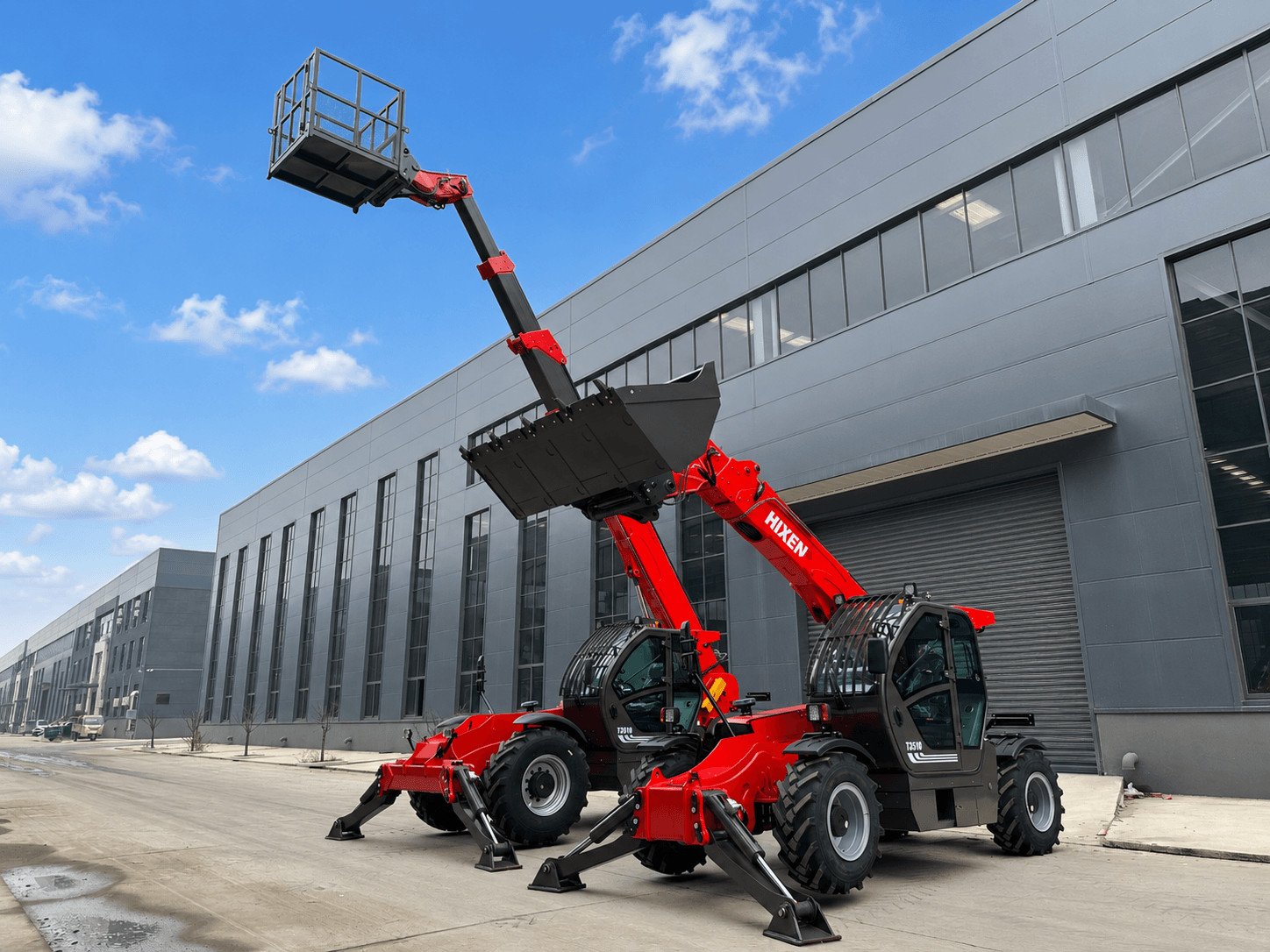
Depuis plus de 15 ans, nous fabriquons des chariots télescopiques chez Hixen. Je ne peux pas vous dire combien de fois un nouveau client d’une entreprise de construction ou d’une grande ferme m’a dit : « J’aurais juste aimé en acheter un il y a des années. » Ils découvrent rapidement qu’il ne s’agit pas simplement d’un autre élévateur ; c’est une solution aux problèmes qui change fondamentalement leur façon de travailler. Pour vraiment comprendre sa valeur, vous devez voir ce qu’il peut faire dans le monde réel. Voyons où cette machine brille vraiment et mérite sa place.
Qu'est-ce qui différencie un chariot télescopique d'un chariot élévateur ou d'une grue ?
Votre chantier est encombré d'un chariot élévateur pour le transport terrestre et d'une grue pour les grandes levées ? Cet acte de jonglerie est inefficace et coûteux. Et si une seule machine pouvait faire les deux tâches ?
La principale différence réside dans sa flèche télescopique. Contrairement au mât vertical d’un chariot élévateur, la flèche d’un chariot télescopique s’étend vers l’avant et vers le haut, dépassant les obstacles. Cette conception offre une portée comparable à celle d'une grue et des capacités de manutention semblables à celles d'un chariot élévateur, le tout dans un seul boîtier compact.
Lorsque vous regardez un chariot télescopique, la première chose que vous remarquez est la flèche. Il ne s’agit pas d’un simple bras de levage. Il s'agit d'une flèche télescopique à plusieurs étages qui peut s'étendre sur des longueurs incroyables : certains de nos modèles atteignent jusqu'à 18 mètres. Cela vous permet de placer une palette de briques au troisième étage d'un immeuble ou de soulever des bottes de foin dans un grenier élevé, tâches impossibles à réaliser avec un chariot élévateur standard. Dans le même temps, il conserve la capacité de levage d’un chariot élévateur puissant, manipulant des charges de 3 à 6 tonnes ou plus.
Mais la vraie magie réside dans son adaptabilité. Grâce à un système d'attache rapide en extrémité de flèche, un opérateur peut passer des fourches à un godet, un treuil ou une plateforme de travail en quelques minutes seulement. C’est exactement la philosophie de conception qui sous-tend la gamme de chariots télescopiques Hixen : conçue pour remplacer plusieurs machines sur un seul chantier.
Comment les chariots télescopiques sont-ils utilisés dans la construction ?
Vous êtes confronté à des retards dans le déplacement des matériaux sur un chantier de construction complexe ? S'appuyer sur des locations de grues coûteuses gruge votre budget. Il doit y avoir un moyen plus rentable de gérer la logistique.
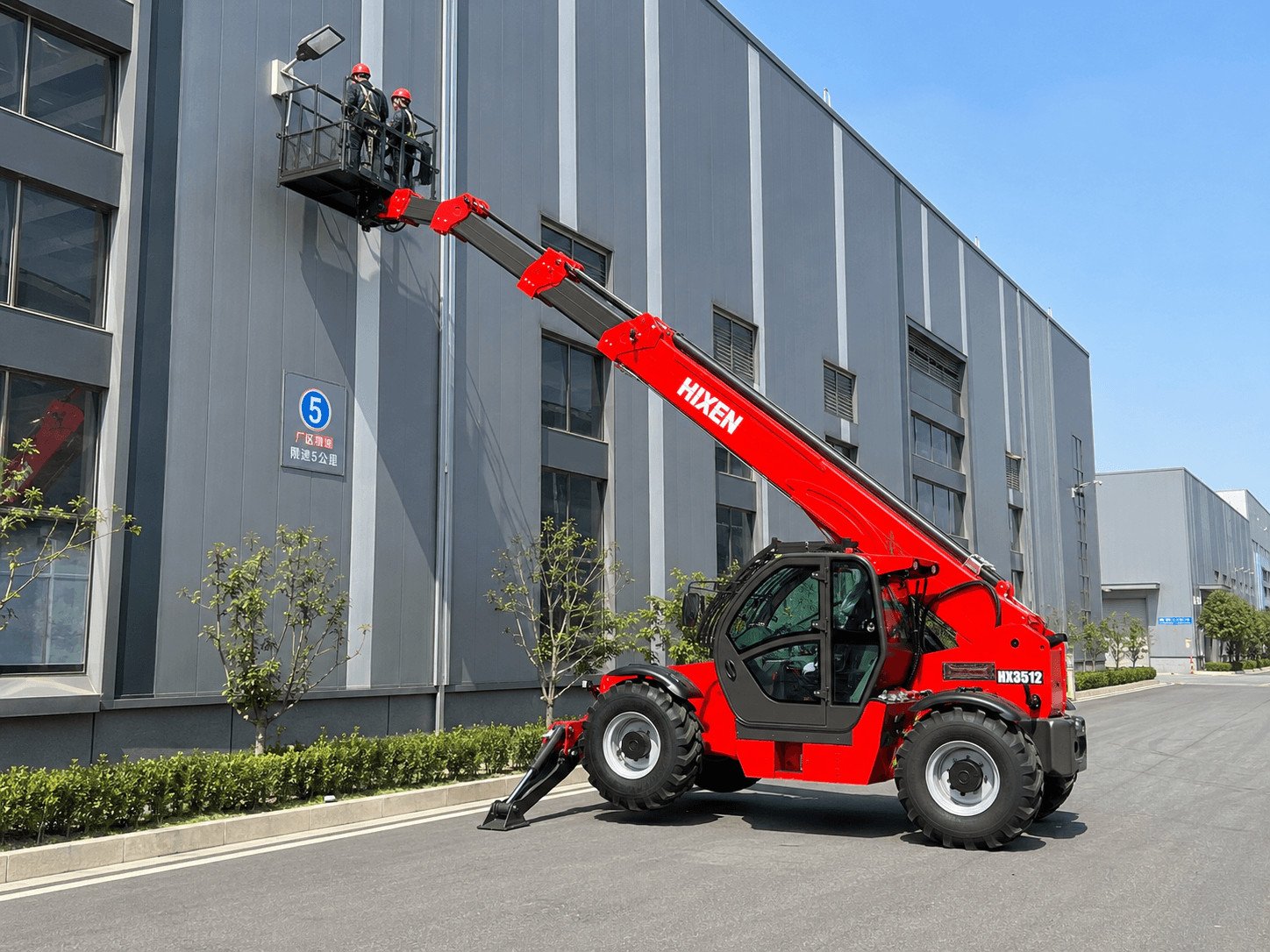
Dans le secteur de la construction, un chariot télescopique est la bête de somme par excellence. Il déplace tout, des poutres en acier et des blocs de béton aux palettes de matériaux. Doté d'une plate-forme de travail, il soulève également en toute sécurité les travailleurs pour des tâches telles que l'installation de façades ou de toiture, remplaçant ainsi les élévateurs aériens dédiés.
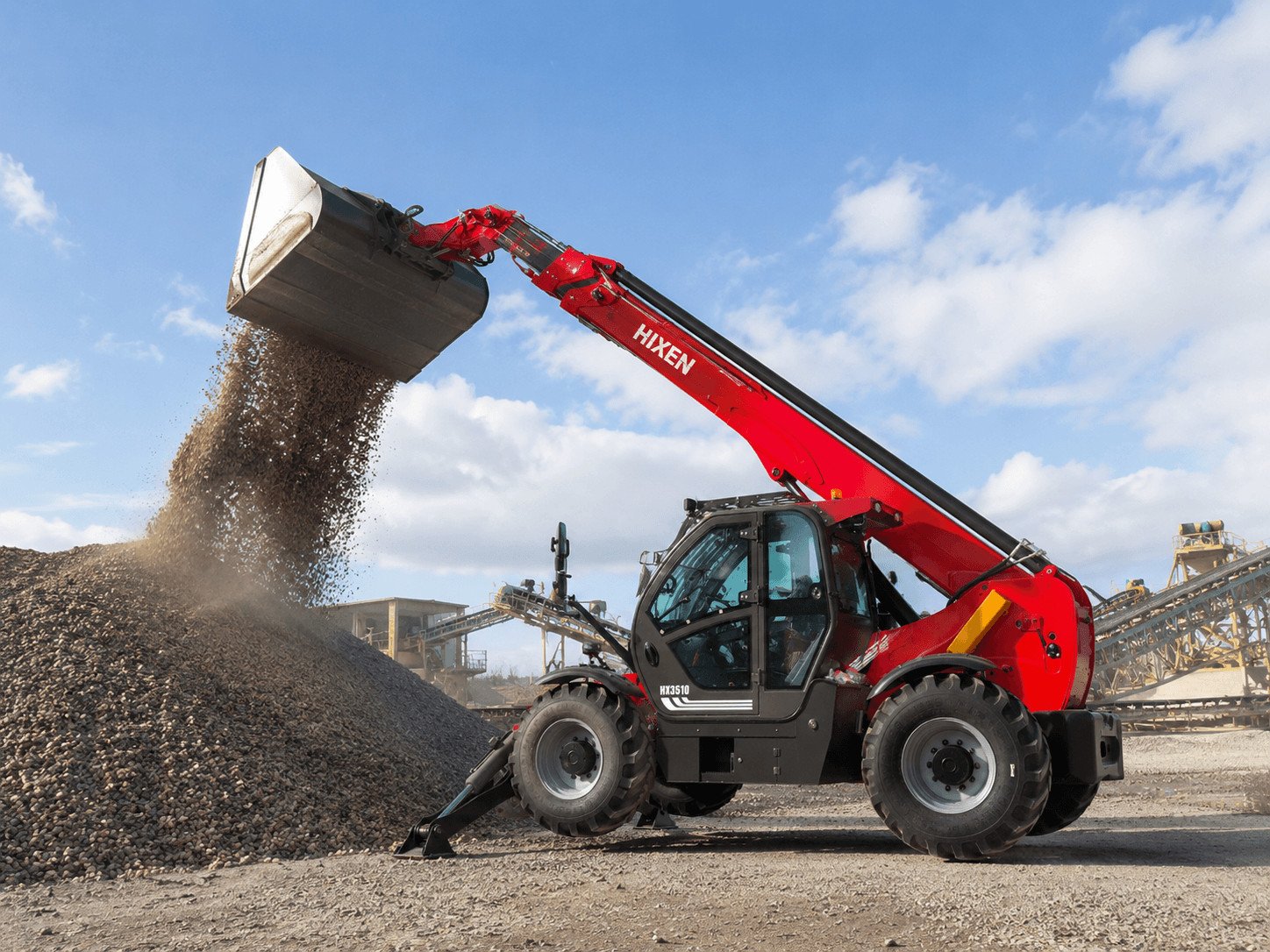
Sur n'importe quel chantier de construction, le déplacement des matériaux représente 90 % de la bataille. Un chariot télescopique est conçu pour ce combat. J'ai vu nos machines sur des chantiers transporter sans effort de lourdes poutres en acier, des palettes de blocs de béton et des paquets d'échafaudages du camion de livraison directement au point d'installation, étage par étage. Sa capacité tout-terrain signifie que la boue, le gravier et les terrains irréguliers ne posent pas de problème.
Il sert également de plate-forme de travail élévatrice mobile (PEMP). Attachez un panier de personnel et vous pourrez envoyer une équipe en toute sécurité pour installer des fenêtres, travailler sur la toiture ou terminer des travaux de façade. Cela élimine le besoin de louer une nacelle à ciseaux ou une nacelle séparée.
Je me souviens d'un entrepreneur en Asie du Sud-Est qui travaillait sur un immeuble de hauteur moyenne. Il m'a dit qu'il avait réduit ses coûts de location de grues de 40 % après avoir opté pour l'un de nos chariots télescopiques rotatifs pour la distribution de matériaux étage par étage. La précision et la rapidité du chariot télescopique surclassaient tout simplement l'installation lente et fastidieuse d'une grue mobile pour ce type de travail répétitif.
Comment les chariots télescopiques révolutionnent-ils les opérations agricoles ?
Vous vous inquiétez de la sécurité lorsque vous utilisez des échelles pour réparer la grange ? Perdre du temps à déplacer des bottes de foin et à nourrir avec un vieux tracteur ? Ces tâches agricoles quotidiennes peuvent être lentes et risquées.
Dans une ferme, un chariot télescopique améliore la sécurité et l'efficacité. Il élève les travailleurs dans une nacelle pour un entretien en hauteur, remplaçant ainsi les échelles dangereuses. Sa capacité tout-terrain lui permet de déplacer facilement des bottes de foin, des aliments et des fournitures à travers des champs boueux ou des pâturages vallonnés.
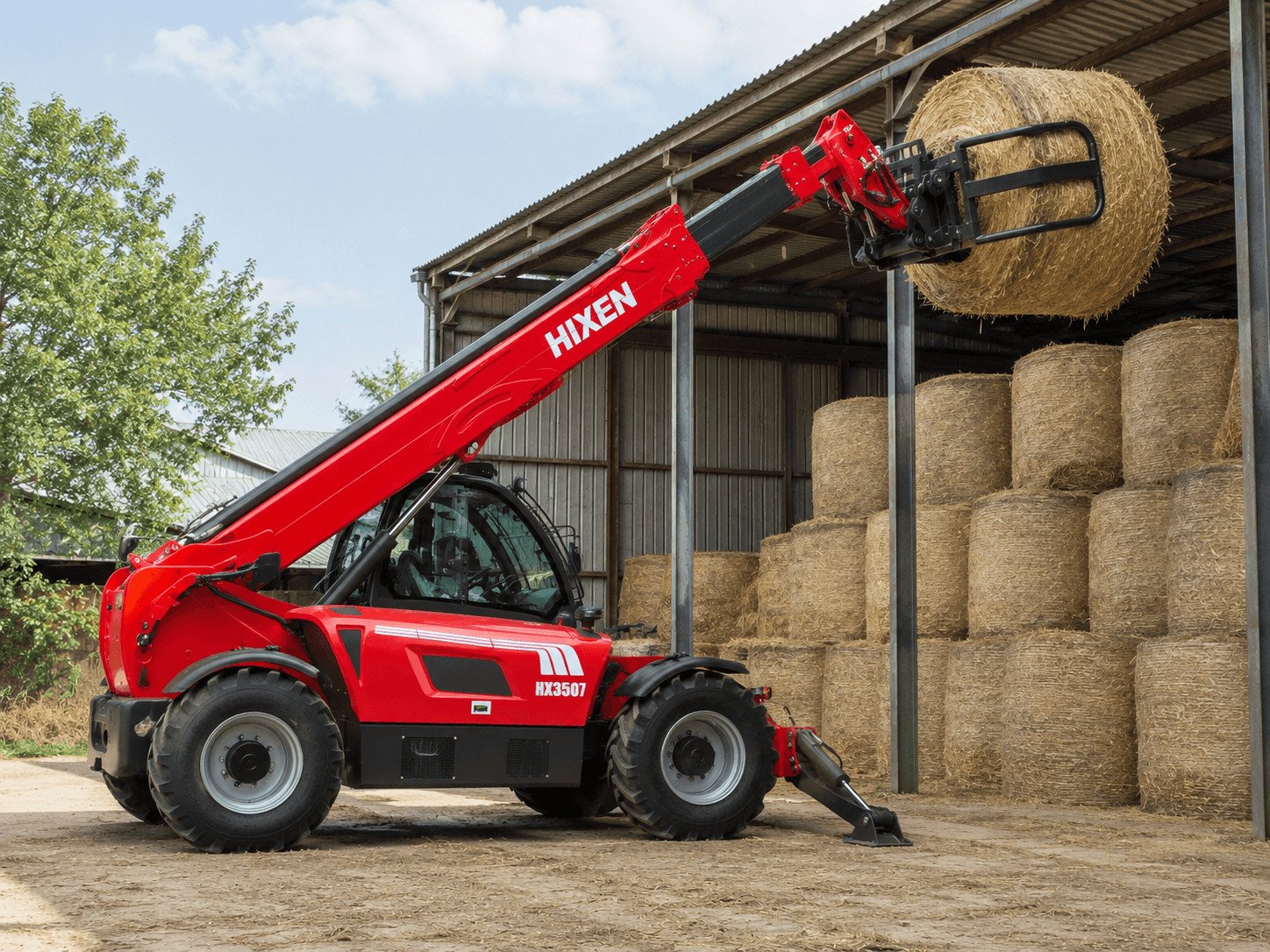
Pour les agriculteurs modernes, l’efficacité est primordiale. Un chariot télescopique devient rapidement l’engin le plus utilisé sur la propriété. Pour les travaux de grande envergure comme la réparation du toit d'une grange, la réparation de l'équipement d'un silo à grains ou l'installation d'un nouvel éclairage, l'utilisation d'un chariot télescopique avec une plate-forme de travail est infiniment plus sûre et plus rapide que l'installation d'un échafaudage ou l'escalade d'une grande échelle.
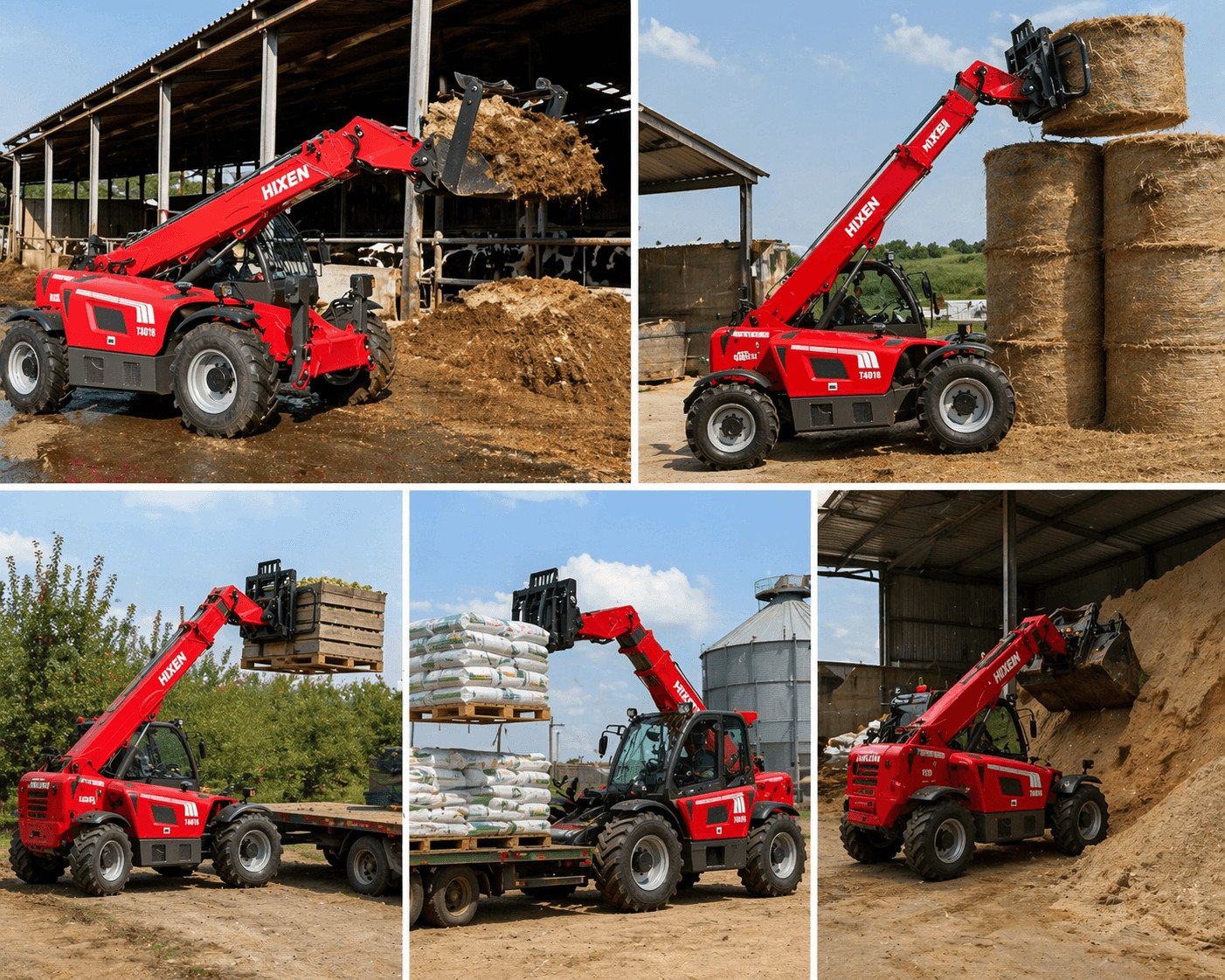
Mais sa tâche principale est la manutention. Les agriculteurs utilisent nos machines pour empiler d'énormes balles de foin, transporter de lourds sacs d'aliments et d'engrais et nettoyer les granges à l'aide d'un seau. Le système à quatre roues motrices et la garde au sol élevée lui permettent d'aller partout où un tracteur peut le faire, même dans la boue épaisse ou dans les pâturages vallonnés. En fait, de nombreux propriétaires agricoles avec qui j’ai parlé disent que pendant la saison des récoltes, leur chariot télescopique est plus utilisé que leur tracteur principal.
L'année dernière, un propriétaire de ferme laitière en Asie centrale m'a dit qu'il avait considérablement réduit ses heures d'entretien hebdomadaires après avoir acheté un chariot télescopique Hixen de 3,5 tonnes doté d'une flèche de 13 mètres pour tous ses travaux de réparation dans l'étable. La machine s'est rentabilisée en termes d'économie de main d'œuvre et de sécurité accrue dès la première année.
Quel rôle jouent les chariots télescopiques dans l’entreposage et la logistique ?
Vos opérations d’entrepôt sont-elles limitées par des chariots élévateurs standards ? Vous avez du mal à manipuler divers matériaux ou à vous déplacer entre les espaces intérieurs et extérieurs ? Ce goulot d’étranglement ralentit l’ensemble de votre chaîne d’approvisionnement.
En logistique, les chariots télescopiques excellent là où les chariots élévateurs échouent. Ils atteignent les étagères en hauteur, chargent et déchargent efficacement les camions et se déplacent en toute transparence entre les entrepôts intérieurs et les cours extérieures. Des accessoires tels que des godets et des grappins leur permettent de manipuler des matériaux en vrac, pas seulement des palettes.
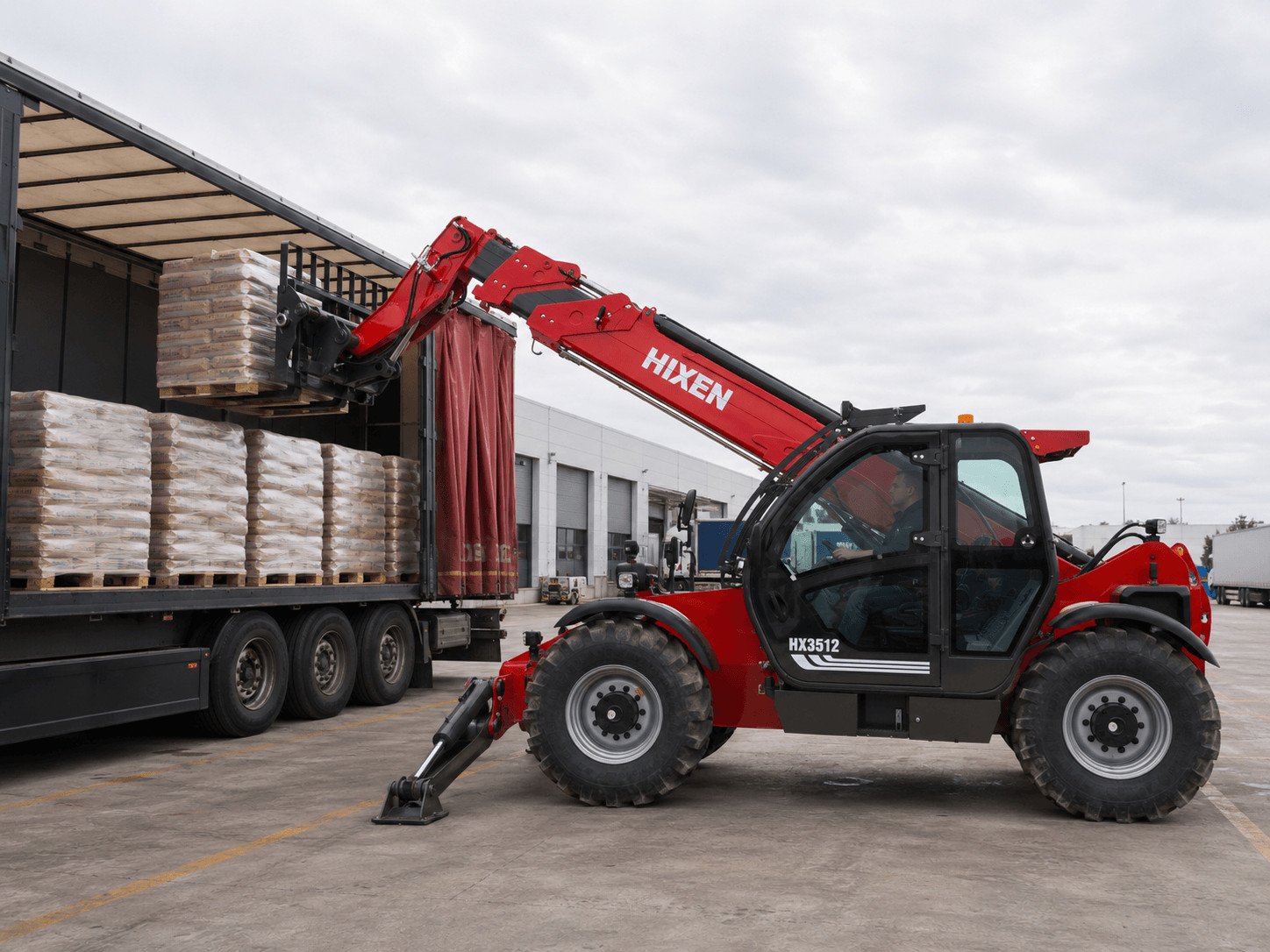
Bien que les chariots élévateurs soient les rois de l’allée des entrepôts, leur utilité se termine souvent au quai de chargement. Un chariot télescopique comble le fossé entre la logistique intérieure et extérieure. Son corps compact peut naviguer dans les allées des entrepôts pour le stockage et la récupération en hauteur, mais sa véritable force réside dans sa polyvalence. Vous pouvez utiliser la même machine pour décharger un camion à plateau dans la cour, déplacer des matériaux en vrac avec un godet, puis transporter une palette de produits finis dans l'entrepôt.
La possibilité d’utiliser diverses pièces jointes change la donne. Un chariot élévateur standard manipule des palettes. Un chariot télescopique équipé d'un godet peut déplacer du sable ou du gravier ; une benne à fumier peut traiter les déchets en vrac ; et un treuil peut soulever des moteurs ou d'autres objets lourds de forme étrange. Cette flexibilité est cruciale pour les opérations traitant une grande variété de marchandises. L'excellente visibilité panoramique depuis la cabine améliore également la sécurité dans les chantiers très fréquentés où les personnes et les véhicules sont constamment en mouvement. C’est une machine unique pour gérer l’ensemble du flux de matériaux, du chantier jusqu’au rayon le plus haut.
Les chariots télescopiques peuvent-ils gérer plus qu’un simple levage quotidien ?
Votre équipement coûteux reste-t-il inutilisé pendant la basse saison ? Vous payez pour des machines spécialisées pour des travaux temporaires comme le déneigement ou l'organisation d'un événement ? Il s’agit d’un mauvais retour sur investissement.
Absolument. Un chariot télescopique est un atout toute l'année. En hiver, il peut être équipé d'un chasse-neige ou d'une balayeuse. Il est également inestimable pour les projets temporaires tels que la construction de scènes d’événements, l’entretien municipal et le soutien sur des sites miniers ou pétroliers exigeants.
Un propriétaire d’entreprise intelligent recherche des équipements qui offrent de la valeur tout au long de l’année. Le chariot télescopique est exactement cela. Lorsque les travaux de construction ou agricoles ralentissent en hiver, vous n’avez pas besoin de le garer dans un hangar. Attachez un chasse-neige ou un balai rotatif et il devient une puissante machine de déneigement et de déblayage.
Sa polyvalence s'étend à de nombreuses autres applications spéciales. Nous avons des clients qui les utilisent pour :
- Configuration de l'événement : Levage de fermes lourdes et de matériel de sonorisation pour concerts et festivals.
- Travaux municipaux : Aider à l’élagage des arbres, à l’entretien de l’éclairage public et à la réparation des infrastructures.
- Mines et champs pétrolifères : Fournir un levage et un soutien essentiels dans des endroits éloignés et accidentés où il n'est pas pratique de faire appel à une flotte complète de machines.
Cette capacité d’adaptation et de performance dans divers scénarios explique pourquoi un chariot télescopique constitue un investissement si puissant. Son efficacité dans la construction et la logistique peut même raccourcir les cycles de projet. Certaines études ont montré que l'utilisation efficace d'un chariot télescopique peut réduire le temps de construction global jusqu'à 30 % en rationalisant le flux de matériaux et en réduisant les temps d'arrêt des machines.
Comment choisir le chariot télescopique adapté à votre application ?
Prêt à acheter un chariot télescopique mais dépassé par les options ? Choisir les mauvaises spécifications pourrait signifier une perte d’argent ou une machine incapable de faire le travail. Cette décision est trop importante pour être devinée.
Choisir le bon chariot télescopique implique d'adapter les spécifications à votre travail. Concentrez-vous sur votre hauteur de travail habituelle, et pas seulement sur la hauteur de levage maximale. Considérez votre poids de charge le plus courant, et non le maximum absolu. Assurez-vous également qu’il dispose d’un système de fixation rapide compatible pour vos accessoires.
Lorsque je parle à des acheteurs potentiels, en particulier ceux de nos marchés d'exportation, je leur dis toujours de se concentrer sur la manière dont ils en fait utiliser la machine 80% du temps. Ne vous focalisez pas sur les plus gros chiffres. Voici les éléments clés à considérer :
| Dimension clé | Ce qu'il faut considérer |
|---|---|
| Hauteur de levage | Pensez à votre hauteur de travail moyenne. Si vous travaillez principalement sur des bâtiments à deux étages, une flèche de 10 m est idéale. Ne payez pas de supplément pour une flèche de 18 m que vous utiliserez rarement. |
| Capacité de charge | Vérifiez toujours le tableau de charge. Une machine conçue pour 4 tonnes ne peut soulever qu'une telle quantité lorsque la flèche est rétractée. La capacité diminue à mesure que vous étendez la flèche. Adaptez la capacité de votre portée et de votre hauteur habituelles à vos charges les plus courantes. |
| Attachements | Confirmez le système d'attache rapide. S'agit-il d'un support standard qui fonctionne avec des accessoires tiers, ou s'agit-il d'un système propriétaire ? Cela a un impact sur votre flexibilité et vos coûts à long terme. |
| Support après-vente | Pour les acheteurs internationaux, c’est une priorité absolue. Est-il facile d'obtenir des pièces de rechange ? Existe-t-il un support technique fiable ? Une machine est inutile si vous ne pouvez pas obtenir rapidement un filtre ou un tuyau de remplacement. |
En réfléchissant à ces points, vous obtiendrez une machine parfaitement adaptée à votre entreprise, et pas seulement un équipement impressionnant.
Conclusion
A telehandler isn’t just a piece of equipment; it’s a versatile solution that boosts efficiency, safety, and your bottom line across countless applications. The key is choosing the right one.
At Hixen Machinery, we’ve been manufacturing telehandlers since 2009, supplying construction contractors, farm operators, and logistics companies across more than 30 countries. Whether you need a compact 2-ton model for tight agricultural yards or a heavy-duty 10-ton machine for industrial sites, our range covers the full spectrum of telehandler applications. Explore our telehandler lineup or contact our team directly — we’re happy to help match the right machine to your actual job requirements.

