
Conduire un chariot télescopique sans en comprendre les limites est un risque énorme. Cela peut entraîner des surcharges dangereuses, provoquant des accidents et des dommages coûteux. Votre guide de sécurité est le tableau de charge.
Un tableau de charge du chariot télescopique est votre guide de sécurité le plus important. Il s'agit d'une grille qui vous montre exactement le poids que la machine peut soulever en toute sécurité à différentes hauteurs de flèche et extensions. Il est essentiel de le suivre pour éviter tout basculement ou toute défaillance structurelle.
Je travaille dans ce métier depuis plus de 15 ans et je ne saurais trop le souligner : le tableau de charge n’est pas qu’un simple autocollant apposé dans la cabine. Il s’agit de l’outil le plus essentiel pour garantir une journée de travail sûre et productive. C’est le résultat d’innombrables heures d’ingénierie, de tests et de calculs. Comprendre comment le lire rapidement et avec précision est une compétence non négociable pour tout opérateur. Décomposons-le afin que vous puissiez l'utiliser en toute confiance et assurer la sécurité de tous.
Quels sont les éléments clés d’un graphique de charge ?
UN tableau de charge du chariot télescopique peut ressembler à une grille confuse de lignes et de chiffres. Une mauvaise lecture de ces informations peut conduire à une grave erreur. Décomposons ensemble les parties essentielles.
Le graphique est une grille montrant la portée maximale et la plage de levage. La moitié inférieure indique la distance, le côté gauche indique la hauteur et les chiffres au milieu indiquent la capacité. À mesure que la flèche s'éloigne de la machine, la capacité de levage diminue.
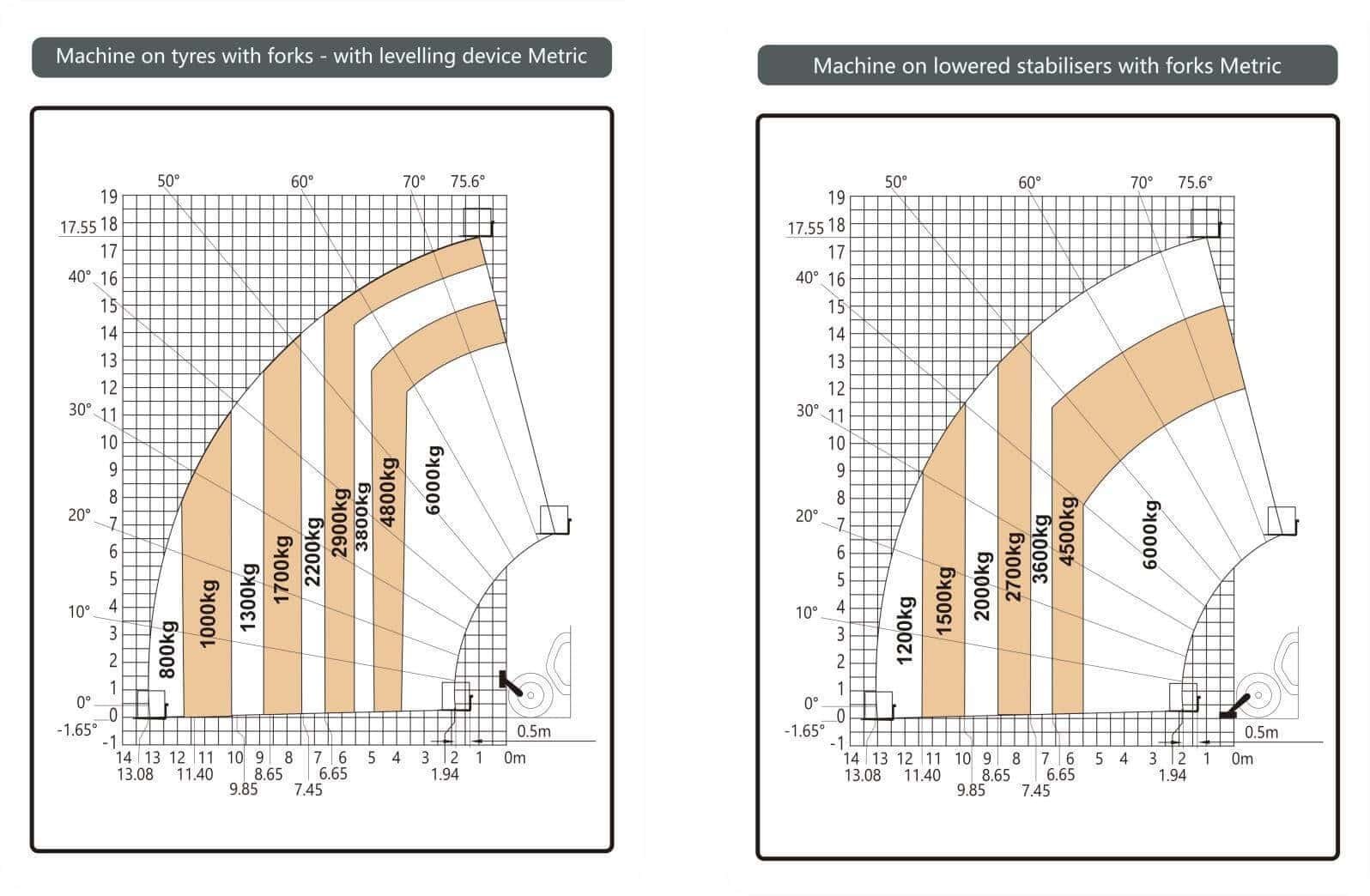
Lorsque vous regardez pour la première fois un tableau de charge, vous verrez un diagramme du chariot télescopique avec une grille superposée. Cette grille est le cœur du graphique. L'axe horizontal (en bas) représente le rayon de travail ou la portée, c'est-à-dire la distance entre la flèche et la machine. L'axe vertical (côté gauche) indique la hauteur de levage. Les chiffres dans la grille correspondent aux capacités de charge nominales pour ces combinaisons spécifiques de hauteur et de portée. Vous remarquerez également que le graphique est souvent divisé en zones étiquetées (comme A, B, C), ce qui facilite la recherche rapide de la bonne capacité pour une position de flèche donnée.
Comprendre les visuels
Le graphique utilise des symboles simples pour transmettre des informations. Les flèches droites indiquent la direction du mouvement de la flèche, comme l'extension ou le levage. Les flèches courbes indiquent la rotation autorisée de la machine. Parfois, vous verrez des zones ombrées. Ceux-ci marquent généralement différentes zones de fonctionnement ou font la distinction entre le travail avec des stabilisateurs vers le bas et vers le haut.
Terminologie clé
Pour utiliser correctement le graphique, vous devez connaître quelques termes clés. Nous construisons ces machines, alors laissez-moi vous expliquer ce qu'elles signifient de notre point de vue.
| Terme | Ce que cela signifie vraiment |
|---|---|
| Capacité de charge nominale | Il s’agit du poids maximum absolu que la machine est conçue pour soulever dans des conditions spécifiques et idéales. Ne le dépassez jamais. |
| Rayon de travail | Il s’agit de la distance horizontale entre le centre de rotation de la machine et le centre de la charge. C’est un facteur clé. |
| Angle de flèche | C'est l'angle de la flèche par rapport au sol. Un angle plus élevé permet généralement un levage plus lourd, mais avec une portée moindre. |
| Zones de chargement | Ce sont les sections (A, B, C) du graphique. Ils regroupent les capacités pour permettre de trouver plus rapidement la limite de sécurité de votre ascenseur. |
Chacun de ces éléments fonctionne ensemble. Ils définissent l’enveloppe de fonctionnement sécuritaire de la machine. Votre travail en tant qu'opérateur consiste à vous assurer que votre ascenseur reste toujours dans cette enveloppe.
Comment les facteurs externes affectent-ils la capacité de charge ?
Vous avez parfaitement lu le tableau, mais ce n’est que la moitié de l’histoire. Le tableau suppose des conditions idéales, que l’on ne retrouve presque jamais sur un chantier réel. Vous devez savoir à quel point la réalité change les chiffres.
Les accessoires, le centre de gravité de la charge et les conditions du sol réduisent tous la capacité de levage réelle du chariot télescopique. Vous devez toujours ajuster les valeurs du graphique en fonction de la pièce jointe spécifique que vous utilisez et de l'environnement dans lequel vous travaillez.
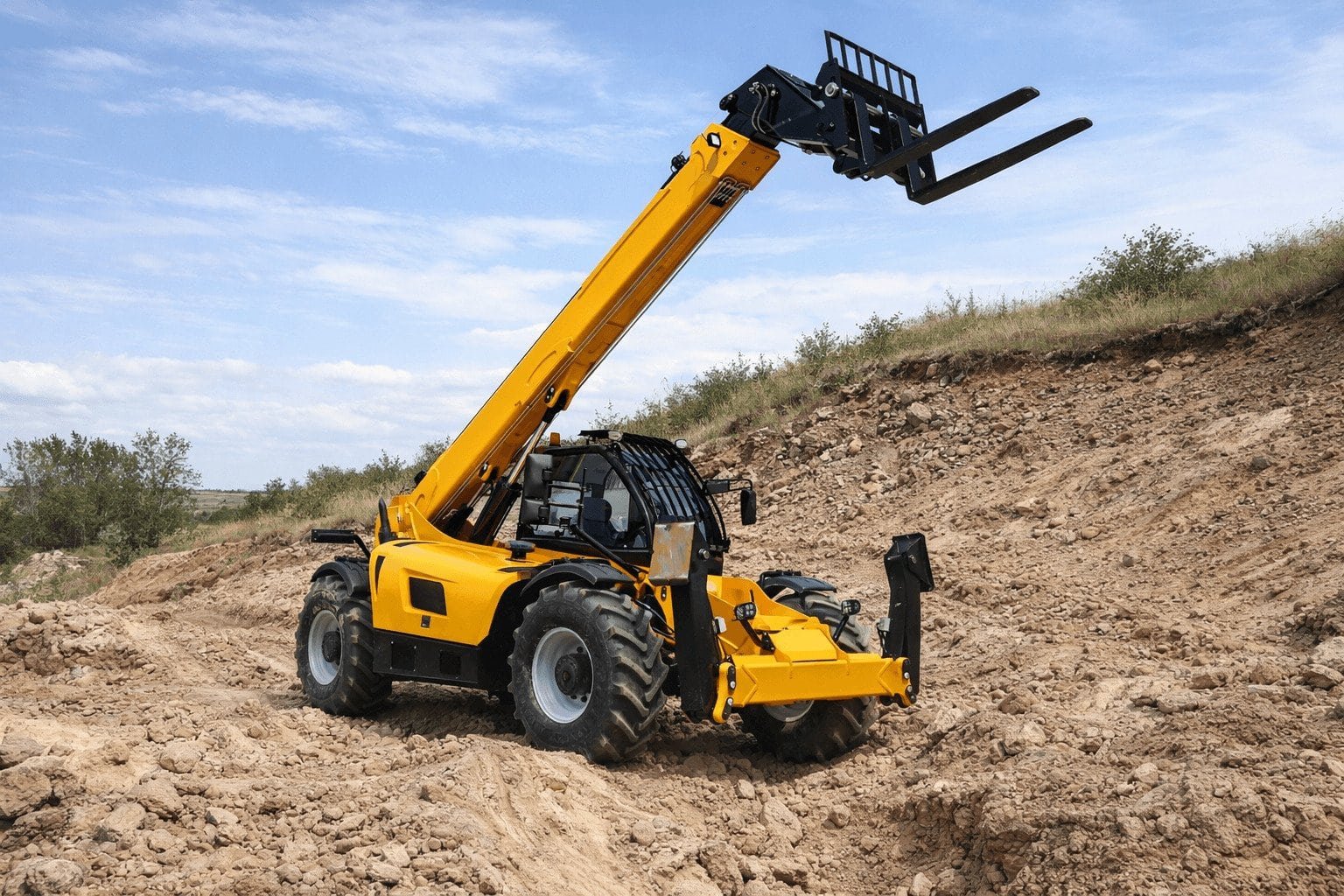
Les chiffres sur le tableau de charge sont calculés dans des conditions parfaites et contrôlées en usine. Cela signifie que la machine se trouve sur une surface plane, solide et sans vent. J'ai visité suffisamment de chantiers en Asie du Sud-Est et au Moyen-Orient pour savoir que c'est rarement le cas. Votre capacité réelle sera presque toujours inférieure à ce qu’indique le graphique. C'est vous, l'opérateur, qui devez prendre la décision finale. Chaque chantier est différent, vous devez donc adapter les limites de la machine à votre situation de travail réelle.
L'impact des pièces jointes
Le tableau de charge standard concerne généralement un chariot télescopique équipé de fourches standard. Dès que vous installez un accessoire différent, comme un godet, une flèche ou une plate-forme de travail, la donne change. Chaque accessoire a son propre poids, qui doit être soustrait de la capacité de la machine. Plus important encore, cela modifie le centre de charge, qui est le point d’équilibre du poids que vous soulevez. Un accessoire éloigne le centre de charge de la machine, ce qui réduit toujours la quantité que vous pouvez soulever en toute sécurité. Chez HIXEN, nous fournissons des tableaux de charge spécifiques pour différents accessoires car il s’agit d’un problème de sécurité critique.
Conditions du sol et environnement
Le sol sous votre chariot télescopique constitue sa fondation. S’il n’est pas parfaitement plat et ferme, la stabilité de la machine est compromise. Toute pente, même petite, déplace le centre de gravité de la machine et réduit considérablement sa capacité de levage en toute sécurité. Un sol mou ou des vides cachés peuvent rendre la machine instable et basculer, en particulier avec une flèche allongée. Les vents forts constituent un autre danger majeur. Le vent pousse contre la flèche et la charge, créant une charge latérale que la machine n'est pas conçue pour supporter. Je me souviens d'un projet où de fortes rafales ont failli provoquer un incident grave. L'opérateur a dû immédiatement baisser la charge et repositionner la machine. Réduisez toujours vos limites de travail dans ces conditions.
Pourquoi le tableau de charge de chaque chariot télescopique est-il unique ?
Vous pourriez penser que vous pouvez utiliser un tableau de charge d'un chariot télescopique provenant d'une machine similaire que vous avez utilisée hier. Cette petite erreur pourrait conduire à un accident majeur. Vous devez toujours utiliser le tableau spécifique à votre modèle exact.
Chaque modèle de chariot télescopique a une conception, un poids et une géométrie uniques. Pour cette raison, chaque tableau de charge est calculé et testé sur mesure pour cette machine spécifique. Ne remplacez jamais un graphique par un autre, même si les modèles semblent similaires.

En tant que fabricant produisant plus de 2 000 unités par an, je peux vous dire qu'il n'y a pas deux modèles de chariots télescopiques identiques. Une machine de 3,5 tonnes avec une flèche de 10 mètres a une physique complètement différente d'une machine de 5 tonnes avec une flèche de 14 mètres. Le contrepoids, la longueur du châssis, la construction de la flèche et la puissance hydraulique sont tous différents. Nous concevons et testons chaque modèle pour déterminer ses limites précises. Le tableau de charge est le résultat final de ce processus. Utiliser le mauvais tableau de charge du chariot télescopique, c'est comme utiliser la mauvaise carte : cela vous mènera à un endroit dangereux. Vérifiez toujours le numéro de série de la machine sur le tableau pour vous assurer qu'il correspond à la machine que vous utilisez.
Stabilisateurs et systèmes d'entraînement
De nombreux chariots télescopiques, dont nos modèles HIXEN, sont équipés de stabilisateurs (ou stabilisateurs). Ceux-ci s'étendent de la machine pour fournir une base plus large et plus stable. Le déploiement de stabilisateurs augmente considérablement la capacité de levage, en particulier sur les longues portées. Parce que la différence est si importante, vous trouverez presque toujours deux tableaux ou sections distincts sur le tableau : un pour les « stabilisateurs relevés » (sur les pneus) et un pour les « stabilisateurs abaissés ». Vous devez utiliser le bon. De même, bien que le système d'entraînement (2RM ou 4RM) ne modifie pas les chiffres du tableau, un système 4RM offre une meilleure traction et une meilleure stabilité sur terrain accidenté, ce qui peut influencer votre capacité à positionner la machine en toute sécurité pour un levage.
Le rôle de l’IMT
Les chariots télescopiques modernes sont équipés d'un système d'indicateur de moment de charge (LMI). Il s'agit d'un ordinateur qui fournit des données en temps réel sur votre ascenseur. Il surveille l'angle de la flèche, l'extension et le poids sur les fourches. Il compare ensuite ces informations aux données du tableau de charge de la machine. Si vous approchez d'une limite dangereuse, le LMI déclenchera une alarme et pourra même verrouiller les commandes pour éviter une surcharge. Bien qu’il s’agisse d’un élément de sécurité incroyable, cela ne remplace pas le fait de savoir comment lire le graphique vous-même. Le LMI est votre filet de sécurité, mais vous êtes le principal système de sécurité.
Conclusion
Reading a telehandler load chart correctly is not optional; it is essential for safe telehandler operation. It protects you, your coworkers, the machine, and the entire job site from preventable accidents.

