
Your farm faces constant pressure to be more efficient, but traditional loaders have their limits. This struggle to stack higher, reach further, and work faster costs you valuable time and money. It’s frustrating when you know there has to be a better way.
A telehandler revolutionizes farm work by using a single telescopic boom to lift materials higher and reach further than any tractor-loader combination. It combines the functions of a forklift, a wheel loader, and a crane into one machine, streamlining everything from material handling to building maintenance.
Let’s break down exactly how this engineering applies to the real world of your farm, moving beyond simple claims to focus on verifiable performance.
How Do Telehandlers Move Bulk Farm Materials Efficiently?
Moving tons of grain, fertilizer, or feed with a standard tractor loader is a slow, repetitive process. Every extra trip you take wastes fuel and, more importantly, precious time during your busiest seasons. You need to clear storage bays and load trucks faster.
Телескопические погрузчики move bulk materials using a combination of a high-capacity bucket and a long-reach telescopic boom. This allows you to reach over obstacles, clear the back of storage bays, and load high-sided trucks in far fewer cycles, all driven by powerful and precise hydraulics.
The efficiency gains come from specific engineering choices. Let’s consider loading a truck with grain. A typical agricultural telehandler can be fitted with a bucket of 2.5 to 3.0 cubic meters. The key here isn’t just the bucket size, but the machine’s “cycle time”—the time it takes to lift, extend, dump, and retract. This speed is a direct result of the hydraulic pump’s flow rate and the engine power supporting it. For example, a machine with a well-matched hydraulic system can complete a full loading cycle in under 30 seconds. When you combine this speed with a lift height of 7 meters or more, you can easily clear the sides of any grain truck. This eliminates the need for a second machine or manual labor to level the load. A tractor loader simply cannot match the height and forward reach, forcing you into inefficient, multi-step processes.
How Can a Telehandler Maximize Bale Stacking and Storage Space?
Barn and yard space is a finite resource on any farm. Stacking bales only two or three high with a tractor loader means you are wasting the most valuable storage dimension: vertical space. Unstable, low stacks are not just inefficient; they are a safety risk.
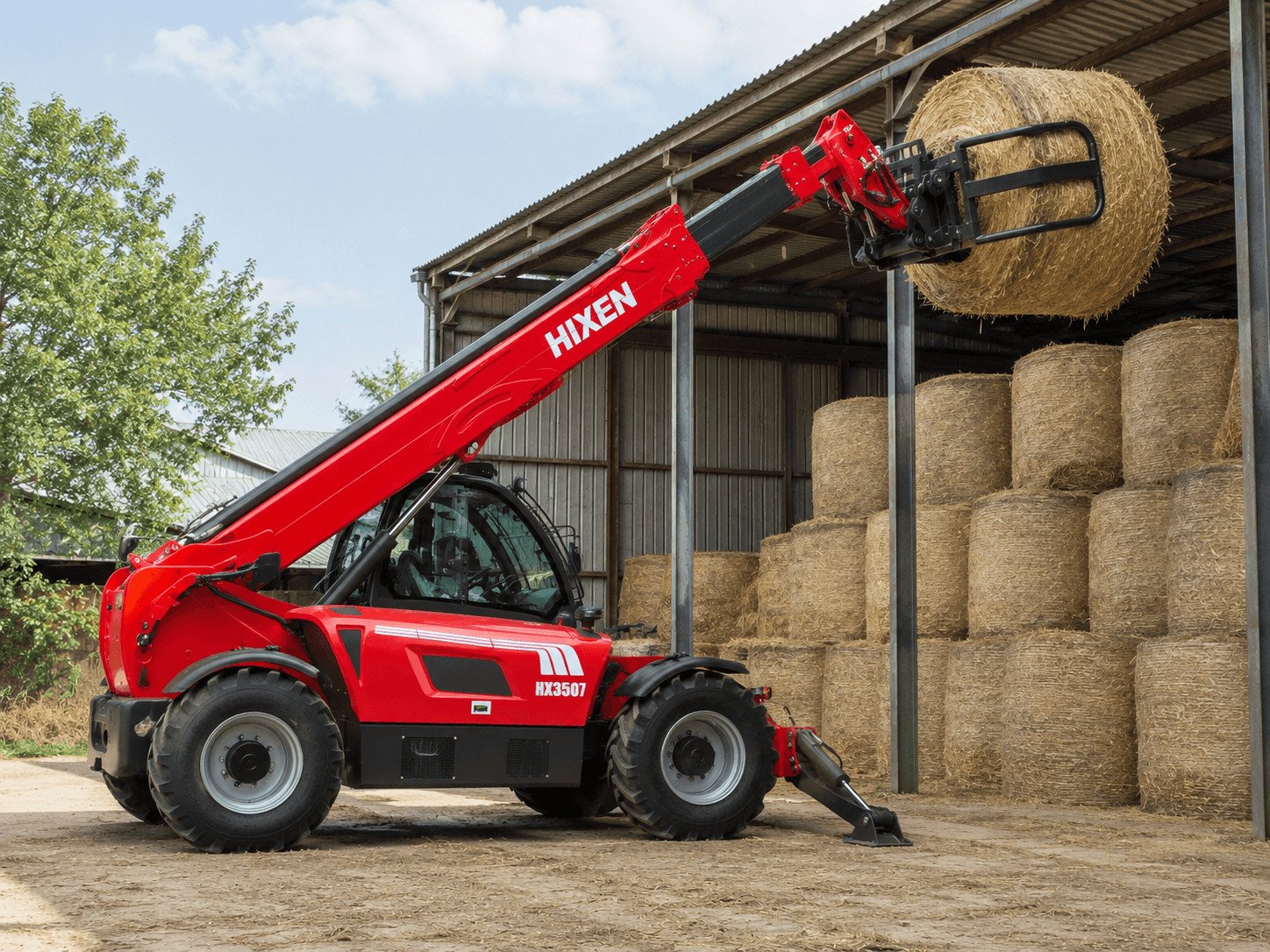
With lift heights ranging from 7 to 18 meters, telehandlers allow you to stack bales right up to the roofline of your barns. This vertical stacking can easily double or even triple your storage capacity within the same ground footprint, creating dense, stable stacks.
This capability is a direct function of boom geometry and machine stability. When we design a telehandler, we focus on providing maximum lift height while maintaining a stable base. This is achieved through a low center of gravity, a wide wheelbase, and a heavy counterweight at the rear. For example, our 14-meter model allows you to create stacks of large square bales more than 10 bales high. A tractor loader tops out at three or four. This lets you consolidate your storage, freeing up valuable space for other uses. The right attachment, like a hydraulic bale grab, is also critical. Unlike simple forks, a grab holds the bales securely from the sides, preventing damage to the wrapping on silage bales and ensuring a more stable, uniform stack. This is a simple mechanical solution that protects the quality of your feed and maximizes your storage density.
How Does a Telehandler Navigate Tight Livestock Barns?
Older livestock barns and poultry houses were not designed for large machinery. Their narrow aisles and tight corners often force you to rely on manual labor or small, inefficient skid steers for tasks like mucking out and distributing feed.
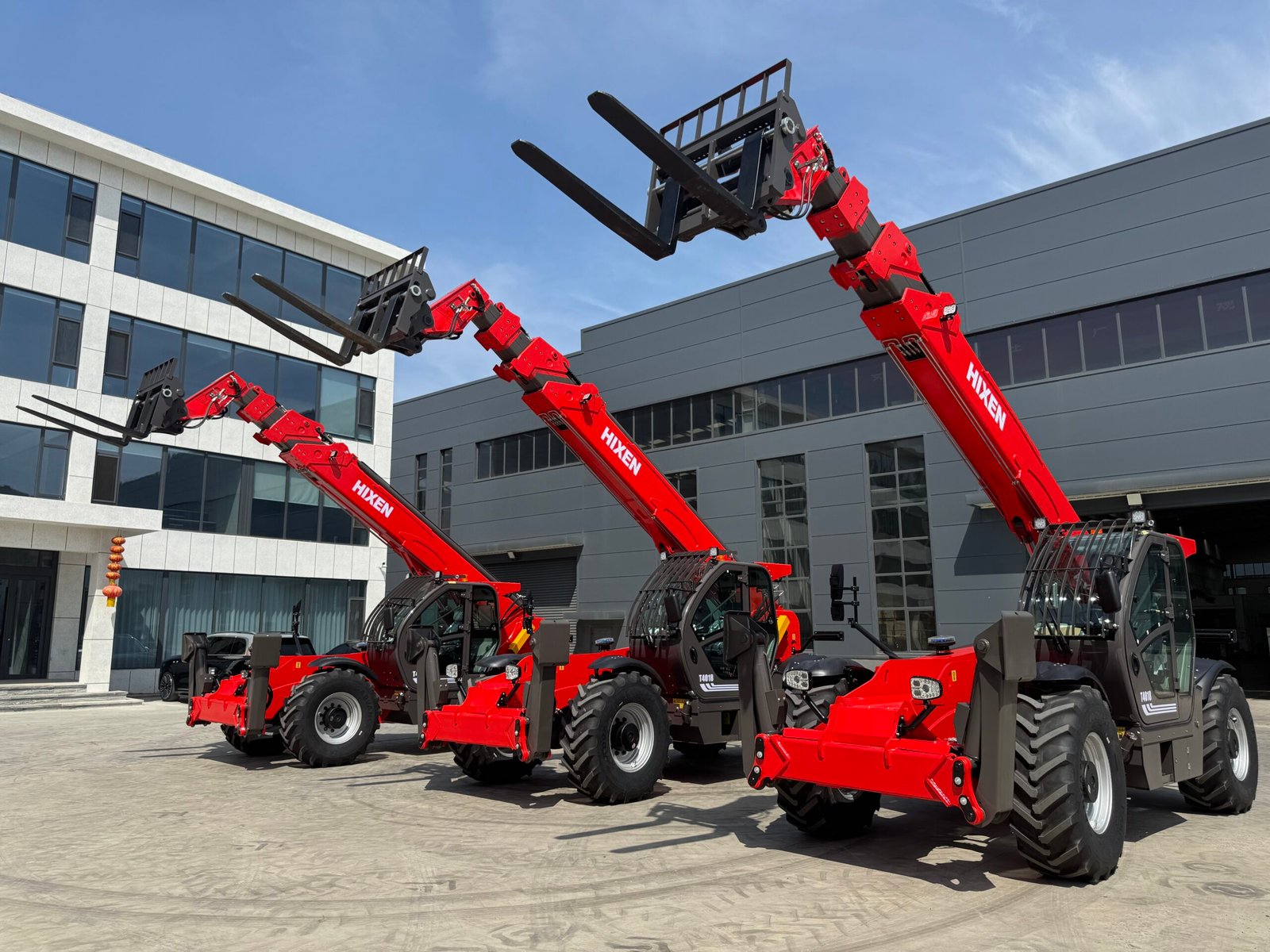
Compact telehandler models are specifically engineered for these confined spaces. They use a combination of a short wheelbase and advanced steering modes—especially four-wheel and crab steer—to achieve a turning radius that is often under 4 meters, allowing incredible maneuverability.
The secret is in the steering system. Unlike a rigid-frame tractor, a telehandler offers three distinct steering modes that the operator can select from the cab:
- Two-Wheel Steer: The front wheels steer, just like a car. This is ideal for traveling on the road.
- Four-Wheel Steer: The front and rear wheels turn in opposite directions. This drastically cuts the turning radius, allowing the machine to make sharp turns in tight spaces.
- Crab Steer: All four wheels turn in the same direction. This allows the machine to move sideways, perfect for getting close to a wall or navigating around obstacles without repositioning.
For a farm with narrow buildings, four-wheel steer is a game-changer. A machine with a tight turning circle can easily navigate aisles, clean out stalls, and place feed or bedding with precision, all without the endless three-point turns required by other loaders. This isn’t just a convenience; it’s an engineered feature designed to save hours of labor in daily livestock operations.
How Does a Telehandler Speed Up Harvest Logistics?
During harvest, time is your most critical asset. Delays in getting crops from the field into transport trucks can lead to spoilage and lost income. The bottleneck is often the process of loading, which can involve multiple machines and double handling of material.
A telehandler speeds up harvest by being the perfect link between the field and the road. Its superior reach and lift capacity allow it to load high-sided bulk trucks directly from a harvester or field-side pile, eliminating the need for intermediate steps and double handling.
Let’s look at the workflow. A common, inefficient process involves a combine or harvester unloading into a smaller trailer, which is then towed to a staging area, dumped into a pile, and then re-handled by a loader to finally get it into the transport truck. This is slow and labor-intensive. A telehandler streamlines this dramatically. Its forward reach allows it to sit in one position and load the entire length of a truck without constantly repositioning. The high lift capacity, often 4 tons or more, means it can move large volumes with each scoop. For example, loading a 25-ton truck with potatoes or sugar beets can take less than 15 minutes with an appropriately sized telehandler. That same job could take 30-40 minutes with a less capable machine, creating a costly bottleneck that backs up your entire harvest operation. The visibility from the high-seated cab also improves safety and precision during this fast-paced work.
Can a Telehandler Be Used for High-Access Farm Maintenance?
Your farm buildings, silos, and equipment all require regular maintenance at height. Using unsecured ladders or building complex scaffolding for every small repair on a roof or gutter is not only slow and inefficient but also extremely dangerous.
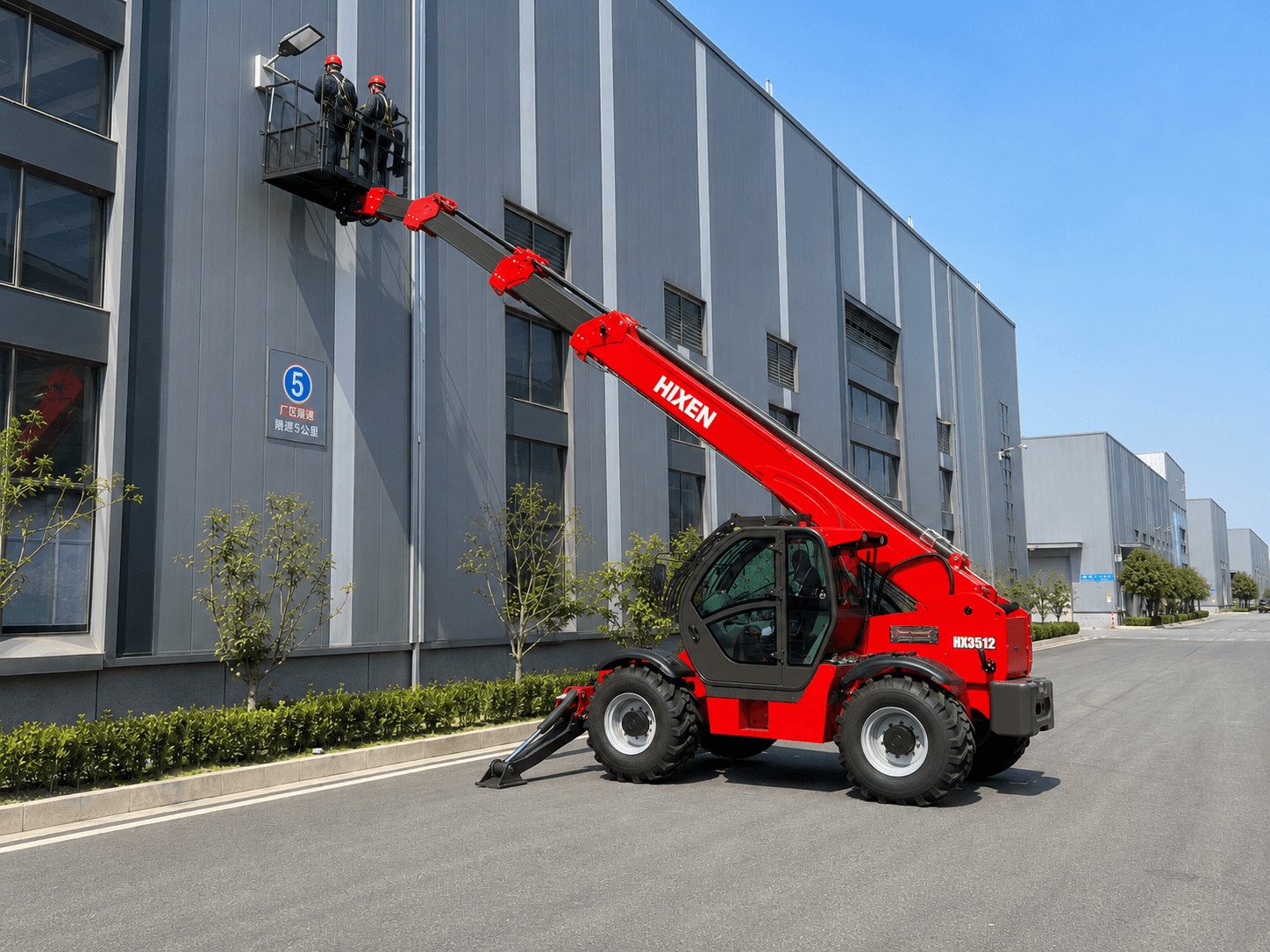
Yes, absolutely. By attaching a certified man basket or work platform to the boom, a telehandler transforms into a secure mobile elevating work platform (MEWP). It provides a stable base for workers to safely reach heights of up to 18 meters or more.
From an engineering standpoint, this is far more than just lifting a person in a bucket. A purpose-built work platform attachment includes critical safety features that we ensure are compatible with our machines’ hydraulic and electronic systems. These include a secure locking mechanism to attach it to the boom, hydraulic or gravity-based leveling to keep the platform floor flat regardless of the boom angle, and guard rails at the proper height. On many models, load sensors and boom extension limits are automatically engaged when the platform is attached, preventing unsafe operation. This turns a difficult, two-person job like repairing a grain auger, cleaning gutters on a tall barn, or inspecting a silo into a safe, quick task for one person. It removes the risk associated with ladders and saves countless hours compared to setting up scaffolding.
What Are the Must-Have Attachments for an Agricultural Telehandler?
A telehandler body is just a power unit; without the right tools at the end of the boom, its potential is wasted. Buying the wrong attachments, or attachments that are poorly made, means you can’t perform the tasks you bought the machine for in the first place.
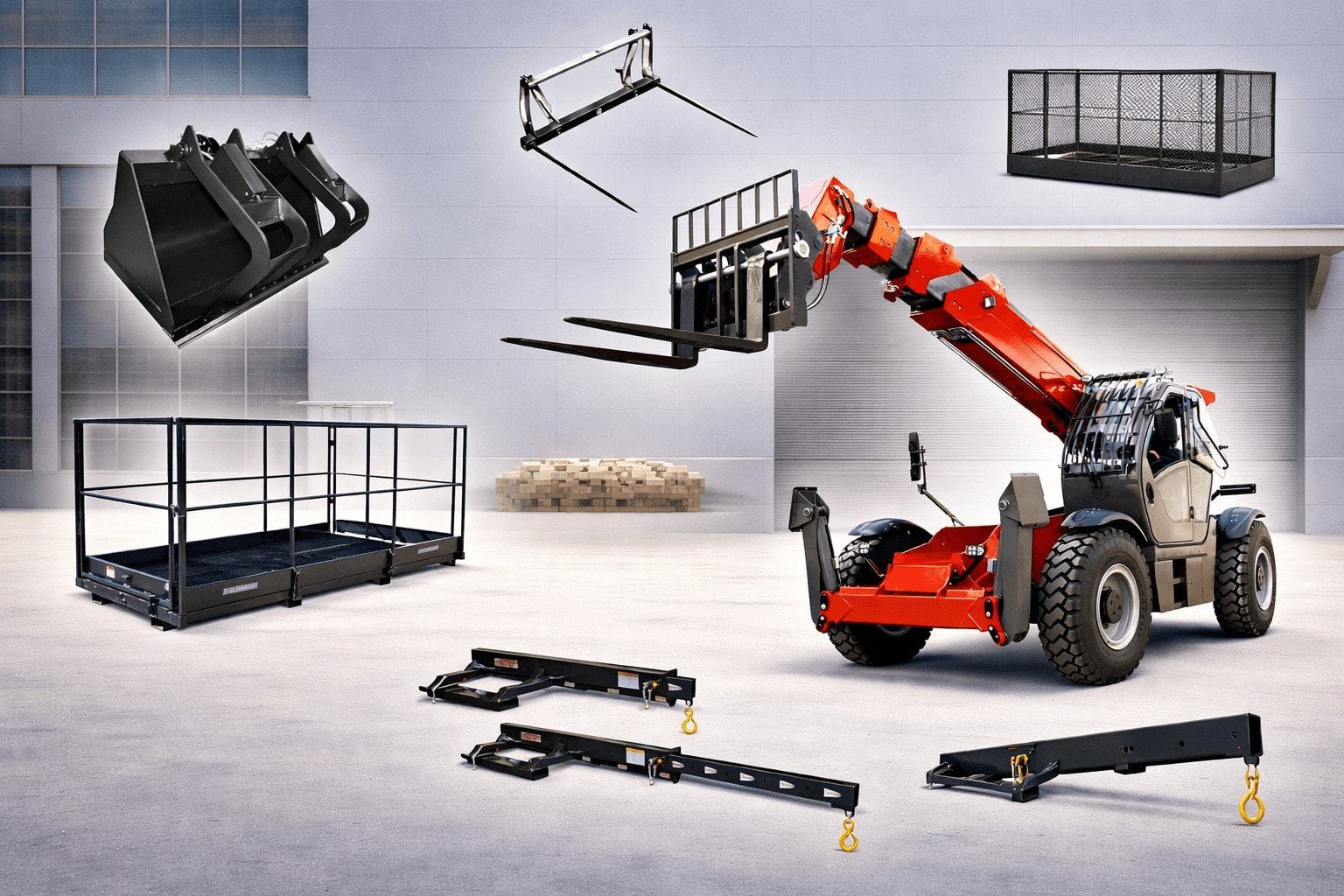
The most essential attachments for agriculture are pallet forks, a general-purpose bucket, a bale grab, and a man basket. These four attachments will cover over 80% of the typical jobs on a mixed farm, making your telehandler a true multi-tool.
Each attachment is designed for a specific job, and their effectiveness depends on their engineering.
- Pallet Forks: The workhorse for lifting anything on a pallet, from seed bags and fertilizer totes to equipment. The key is ensuring the fork strength and length match your machine’s capacity.
- General-Purpose Bucket: Essential for moving bulk materials like grain, feed, soil, or manure. The volume of the bucket should be matched to the telehandler’s lift capacity and the density of the material you handle most often.
- Bale Grab/Spike: For handling hay and silage. A grab is better for wrapped bales as it doesn’t pierce the plastic, while a spike is simple and effective for dry hay.
- Man Basket: As we discussed, this is a critical tool for safe maintenance at height.
Equally important is the quick-hitch system on the telehandler itself. We design our hydraulic quick-coupler systems to allow an operator to switch between these attachments in under a minute, without leaving the cab. This ensures that changing from loading grain to stacking bales is a seamless transition, not a time-consuming chore.
How Do I Match Telehandler Specs to My Farm’s Needs?
Telehandler specification sheets can be filled with confusing numbers. Choosing the wrong size is a costly mistake. If it’s too small, it won’t do the job safely. If it’s too big, you’ve overpaid for capacity you’ll never use.
Focus on four core specifications: lift capacity (tons), lift height (meters), forward reach (meters), and ground clearance (mm). Match these numbers to the primary tasks you need to accomplish on your farm. This practical approach ensures you get the right machine for the job.
Let’s break down how these specs relate to common agricultural tasks in a more structured way. Your choice should be based on your most demanding, frequent jobs. A machine that can handle your biggest challenge can easily handle all the smaller ones.
Here is a table to help you think through the requirements:
| Agricultural Task | Recommended Capacity (t) | Recommended Height (m) | Key Spec to Prioritize |
|---|---|---|---|
| Bale Stacking | 3.0 – 4.0 t | 9 – 14 m | Высота подъема |
| Grain/Bulk Loading | 3.5 – 5.0 t | 7 – 9 m | Lift Capacity & Reach |
| Barn/Stall Cleaning | 2.5 – 3.5 t | 6 – 7 m | Turning Radius |
| General Maintenance | 2.5 – 4.0 t | 10 – 18 m | Lift Height & Platform |
| Pallet & Tote Moving | 3.0 – 7.0 t | 7 – 10 m | Lift Capacity at Reach |
For example, if your main job is stacking bales in a high barn, prioritize lift height. But if you’re primarily loading trucks from a large pile, lift capacity and forward reach are more critical to minimize cycle times. For operations in muddy, uneven fields, high ground clearance is non-negotiable to prevent getting stuck. Analyzing your needs this way, based on the engineering data, leads to a much smarter investment.
What Should I Verify Before Buying a Telehandler Directly from a Manufacturer?
Buying heavy equipment directly from an overseas factory can feel like a big risk. You might worry about the quality of the machine, the availability of support and parts, and whether the equipment will truly meet the needs of your specific operation.
You must verify three key areas: international certifications (like CE), the details of the warranty and parts supply chain, and the manufacturer’s capability and willingness to customize the machine. A serious global manufacturer will provide clear, verifiable answers for all three.
As a manufacturer that builds over 1000 units a month and exports to more than 20 countries, these are the questions we expect and are prepared to answer.
- Certification: Don’t just ask if they have CE certification. Ask to see the certificate and verify its authenticity. For us, CE is not a sticker; it is a fundamental part of our design and production process, ensuring compliance with international safety and quality standards from the very beginning.
- Warranty and Parts: A warranty is only as good as the support behind it. Ask about the warranty period, what it covers, and, most importantly, their process for supplying spare parts. We maintain a dedicated international parts department to ensure we can ship any critical component anywhere in the world quickly, minimizing your downtime.
- Customization Capability: This is a major advantage of working directly with the factory. Your farm is unique. Ask if they can make modifications. For example, we frequently customize machines with specific tire types for muddy conditions, add extra hydraulic lines for special attachments, or install cold-weather packages for harsh climates. This level of partnership ensures the machine you receive is perfectly tailored to your work, not just a generic unit off the shelf.
.jpg)
Заключение
A telehandler is more than just a versatile machine; it’s a productivity engine for modern agriculture. Understanding its core engineering specifications is the key to choosing the right model for your farm’s success.
Choosing the right machine is a significant decision. If you have questions about how these specifications apply to your operation, our engineering team is here to help. Feel free to reach out to discuss your specific needs.

