
Elegir entre un new vs used telehandler can feel like a high-stakes decision for any operation. You’re weighing a significant capital outlay against potential long-term operational risks. Get it wrong, and the “cheaper” option could quickly become the most expensive machine in your fleet. The solution isn’t to look for a magic number on a price tag, but to reframe the choice as a strategic risk assessment tailored to your business.
The core difference in the new vs used telehandler debate comes down to certainty versus uncertainty. A new telehandler offers predictable Total Cost of Ownership (TCO), guaranteed performance, and risk transfer to the manufacturer via warranties and service agreements. A used telehandler provides a lower initial capital expense but introduces significant uncertainty regarding its maintenance history, component wear, and potential for costly downtime.
That simple distinction is the starting point, but the real decision lies in the details. The purchase price is just one variable in a much larger equation. To make the right investment, you need to look past the sticker price and analyze how each option aligns with your operational demands, financial model, and risk tolerance.
New vs Used Telehandler Comparison: It’s a Risk Decision, Not a Price Decision?
Are you paralyzed by the price difference between a new machine and a seemingly identical used one? Many buyers fixate on this initial cost, failing to see the bigger picture. The real comparison between a new vs used telehandler is about how your business chooses to manage risk.
A lower upfront price on a used unit is not a discount; it’s a trade. You are trading a known quantity (the manufacturer’s warranty and support) for an unknown one (the machine’s past life and future reliability). This is the central risk you must price into your decision.
The most sophisticated fleet managers I’ve worked with don’t talk about purchase price; they talk about cost-per-hour. This model provides a true measure of a machine’s financial impact over its service life in your operation. It forces you to account for all the hidden variables that the sticker price ignores.
Your cost-per-hour calculation should include:
- Capital Cost: (Purchase Price – Estimated Resale Value) / Total Expected Service Hours
- Maintenance & Repairs: Scheduled servicing, unexpected breakdowns, parts replacement. This is predictable for new machines under a service agreement but highly variable for used ones.
- Fuel Consumption: Modern engines in new telehandlers are significantly more fuel-efficient. Even a 10-15% improvement adds up to thousands of dollars over the machine’s life.
- Downtime Cost: This is the most underestimated expense. What is the cost to your business if a critical machine is down for a day? A week? Consider lost revenue, crew idle time, and project penalties.
- Financing & Insurance: Interest rates are often higher and terms shorter for used equipment. Insurance premiums can also vary.
Here is a simplified comparison of how these factors play out:
| Cost Factor | New Telehandler | Used Telehandler (5,000 hours) |
|---|---|---|
| Purchase Price | Alto | Low (e.g., 50-60% of new) |
| Warranty | Comprehensive (e.g., 2yr/2000hr) | None, or limited 30-day dealer warranty |
| Predictable Costs | Very High (fixed service plans) | Very Low (unknown history) |
| Risk of Major Failure | Bajo | Moderate to High |
| Cost of Downtime | Low (covered by warranty, loaner units) | High (fully on your books) |
| Resale Value | Predictable depreciation curve | Unpredictable, highly dependent on condition |
When you run the numbers, a used machine with a sudden major hydraulic or engine failure can see its cost-per-hour skyrocket past that of a new machine within the first year of ownership. The new vs used telehandler decision is ultimately a calculation of whether the initial savings justify accepting this level of financial and operational risk.
Used vs New Telescopic Handler Price Comparison: What the Purchase Price Doesn’t Tell You?
Staring at two quotes, one for a new telescopic handler and one for a five-year-old model, the price gap can be tempting. It’s easy to think about all the other things you could do with that saved capital. But that purchase price is just the tip of the iceberg.
The true cost is hiding below the surface. The price tag on a used machine doesn’t account for the accelerated wear, the less efficient engine, the potential for non-compliance with new safety standards, and the very real possibility of hunting for discontinued parts.
Let’s break down the costs that don’t appear on the invoice but will absolutely hit your balance sheet. In my experience providing equipment solutions, these are the factors that most often surprise first-time used equipment buyers.
The Depreciation Curve
A new machine experiences its steepest depreciation in the first 1-3 years. A used machine’s value depreciates much more slowly. This seems like a win for the used buyer. However, consider the flip side: you are buying the machine after its most trouble-free years. The slower depreciation is balanced by rapidly increasing maintenance costs as components reach the end of their designed life.
Financing Realities
Securing a loan for a new telescopic handler from a manufacturer or major dealer is straightforward, often with promotional rates. Financing a used machine, especially from a private seller or smaller auction, is a different story. Lenders view it as a riskier asset. You should expect:
- Higher interest rates: Reflecting the higher risk of default if the machine fails.
- Shorter loan terms: Lenders may be unwilling to finance a 10-year-old machine for another 5 years.
- Larger down payments: To reduce the lender’s exposure.
The Opportunity Cost of Downtime
This is the single biggest hidden cost. A new machine under warranty often comes with a service-level agreement (SLA) that guarantees a certain level of uptime, with penalties or loaner machines provided if those targets are missed. With a used machine, all downtime is your problem.
Imagine a construction project with a daily penalty of $5,000 for delays. If your used telehandler’s transmission fails and the part takes a week to arrive, you’ve just incurred a $35,000 loss. That single event could easily erase the entire initial savings over buying new. You aren’t just buying a machine; you are buying uptime.
Advantages and Disadvantages of Buying a Used Telehandler: The Risks Worth Pricing In?
Is buying a used telehandler ever a good idea? Of course, but it’s not for the faint of heart or for operations that can’t tolerate surprises. You’re taking on the role of risk manager, and you need to be compensated for it.
The primary advantage is obvious: a dramatically lower capital expenditure. This can free up cash for other investments or allow you to acquire a machine when a new one is out of budget. However, this comes with a list of disadvantages that must be carefully vetted and, if possible, quantified.
To make an informed decision, you need an honest accounting of both sides. I always advise clients to treat a used machine not as a “bargain” but as a machine with a history that needs to be discovered.
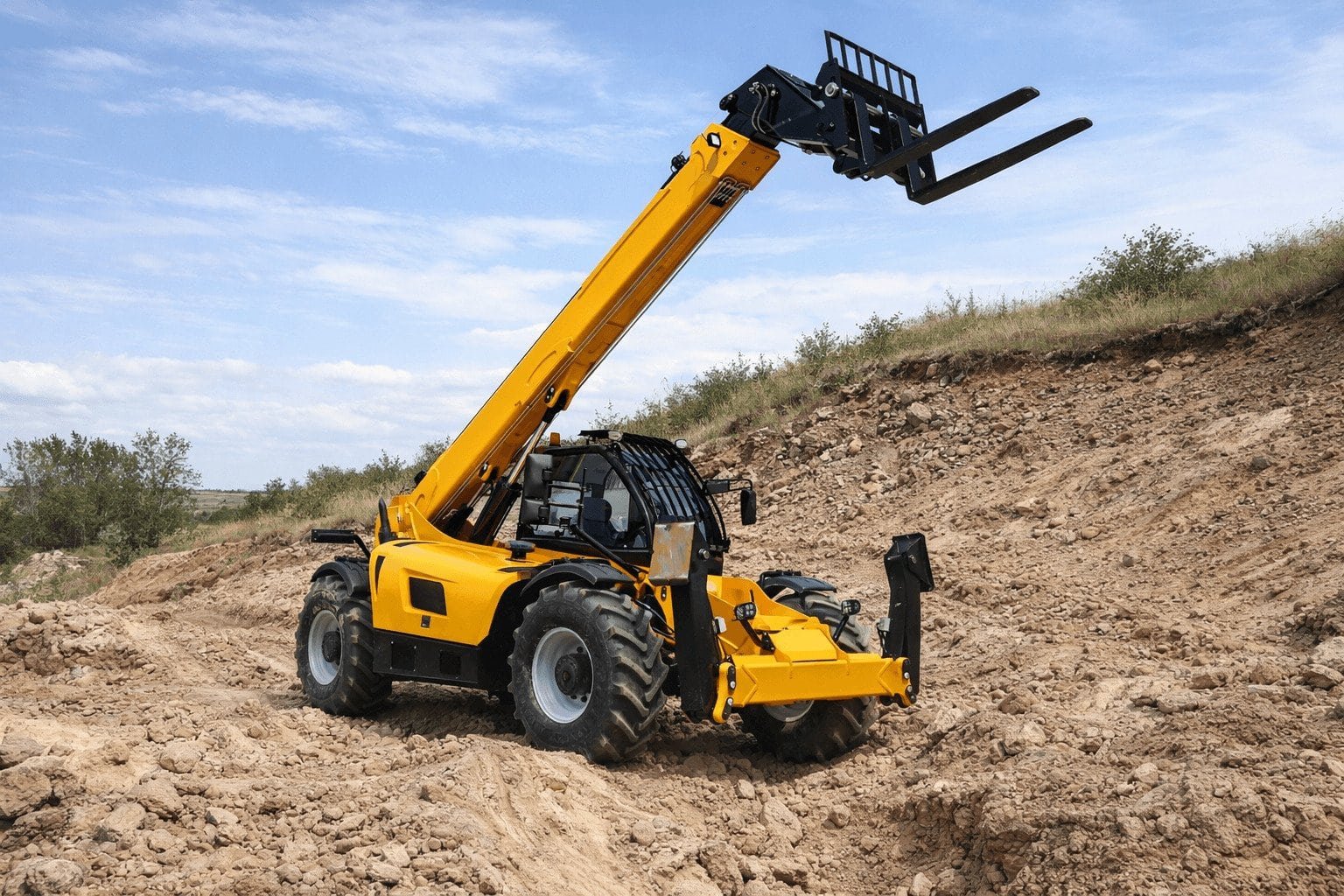
Advantages of a Used Telehandler:
- Lower Initial Cost: This is the main driver. You can often acquire a machine for 40-60% of the cost of a new one, which can be critical for new businesses or those with tight capital budgets.
- Slower Depreciation: You avoid the steepest part of the depreciation curve, meaning the machine’s value will decrease more slowly from the moment you buy it.
- Proven Technology: You are buying a model that has been in the field for years. Any major design flaws or recalls are likely well-known and documented.
- Availability: In times of supply chain disruption, the used market may be the only way to get a machine quickly.
Disadvantages and Risks of a Used Telehandler:
- Unknown History: This is the biggest risk. Was it meticulously maintained by an owner-operator or abused in a rental fleet? Service records can be forged or incomplete. A pre-purchase inspection by a qualified, independent mechanic is non-negotiable.
- No Warranty: Once the deal is done, every single repair is on you. A single major failure in the engine, transmission, or hydraulic system can cost tens of thousands of dollars.
- Parts Availability: For older models (10+ years), critical components may be discontinued. You could find yourself searching for used parts, which carries its own risks, or facing a machine that is effectively scrap because one part is unavailable.
- Safety & Compliance: Safety standards evolve. An older machine may lack modern features like improved operator visibility, advanced load management systems, or newer emission controls, potentially putting you at odds with job site or regional regulations.
- Lower Efficiency: Older engines and hydraulic systems are simply less efficient. You will pay more in fuel every single hour you run the machine.
- Operator Comfort and Productivity: Newer cabs are quieter, more ergonomic, and have better climate control. A comfortable operator is a more productive and safer operator.
Advantages and Disadvantages of Buying a New Telehandler: What You Pay For Beyond the Machine?
When you sign the papers for a nuevo manipulador telescópico, the machine itself is only part of what you’re buying. You’re paying a premium for certainty, support, and technology. This side of the new vs used telehandler debate is about de-risking your operation.
For many businesses, particularly those with tight schedules and high utilization rates, the higher initial cost is a worthwhile insurance policy against the unpredictable nature of used equipment. It’s an investment in operational continuity.
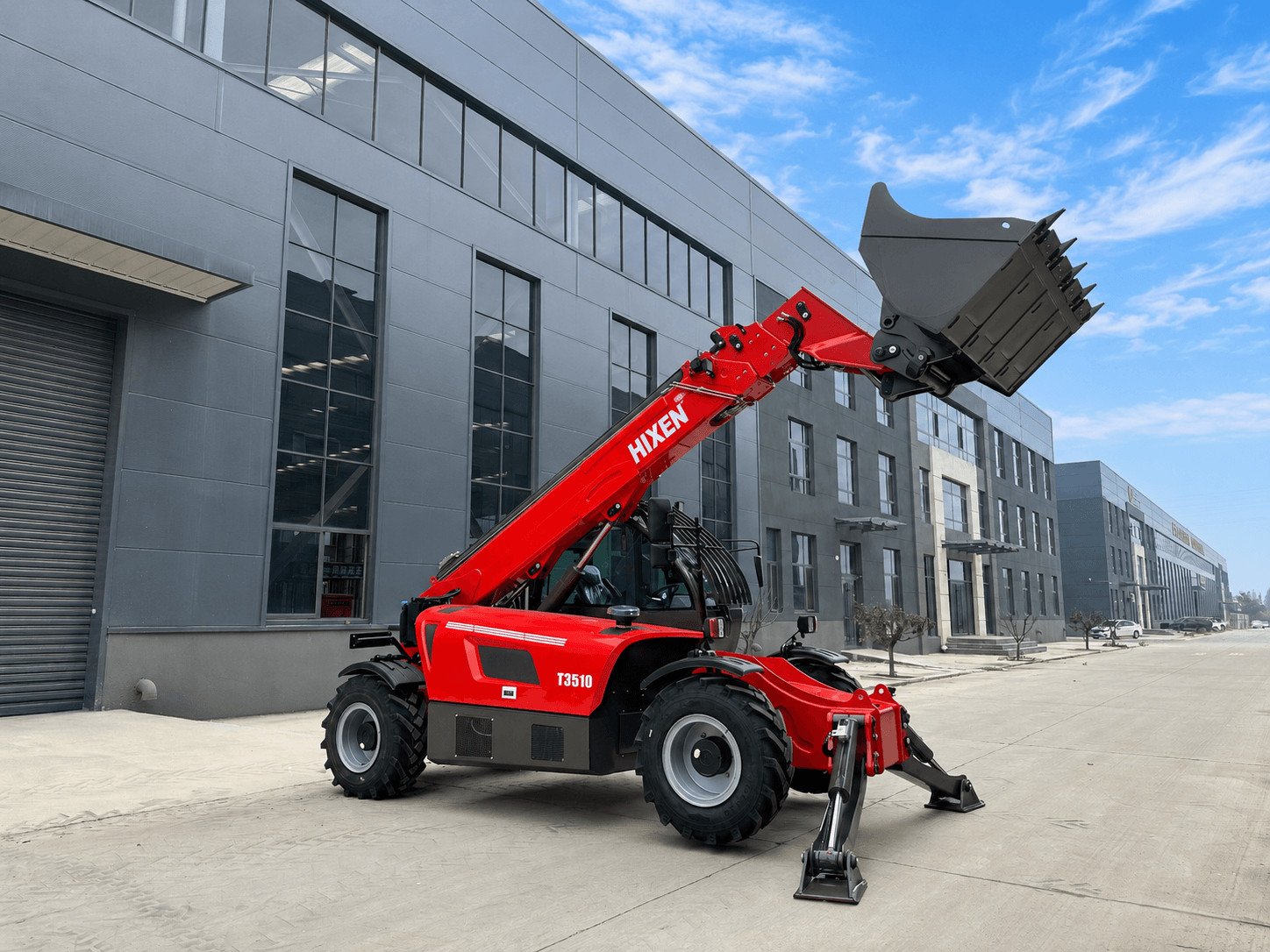
Let’s break down exactly what that price premium gets you. From my perspective as a manufacturer, we aren’t just selling steel; we’re selling a comprehensive performance package.
Advantages of a New Telehandler:
- Comprehensive Warranty: This is the most significant advantage. For a specified period (e.g., 2 years or 2,000 hours), the manufacturer bears the financial risk of component failure. This makes your maintenance costs highly predictable.
- Peak Performance & Efficiency: The machine operates exactly as designed. Hydraulic cycle times are fast, the engine delivers optimal power and fuel economy, and all systems are calibrated for maximum productivity from day one.
- Latest Technology: New machines come with a suite of modern features:
- Telemática: Track location, hours, fuel use, and fault codes remotely. This is invaluable for fleet management, maintenance scheduling, and security.
- Advanced Safety: Modern load management systems, better visibility, and enhanced operator protection are standard.
- Eficiencia de combustible: Tier 4 Final / Stage V engines are cleaner and can be significantly more fuel-efficient than their predecessors.
- Full Compliance: A new machine is guaranteed to meet all current safety, emissions, and operational regulations in your region.
- Operator Morale and Comfort: A new, clean, comfortable cab with modern controls can boost operator morale, reduce fatigue, and improve productivity. It can also be a key factor in attracting and retaining skilled operators.
- Favorable Financing: Manufacturers often offer attractive financing options with low interest rates and flexible terms to incentivize new equipment sales.
Disadvantages of a New Telehandler:
- Higher Capital Expenditure: The initial purchase price is the most significant barrier. It ties up more capital and requires a larger financial commitment.
- Steep Initial Depreciation: The machine will lose a significant portion of its value in the first few years. If you plan to sell the machine within 1-2 years, this will be a substantial cost.
- Lead Times: Depending on market demand and supply chain conditions, there may be a waiting period of several weeks or months for a specific configuration.
Beyond the Spec Sheet: How Wear Changes Precision, Speed and Fuel Consumption?
A common mistake is comparing the spec sheet of a 5,000-hour used machine to a brand-new one. They might both list a 10,000 lb lift capacity and a 42-foot reach. But do they perform the same? Absolutely not.
Wear and tear is a silent performance killer. It doesn’t happen overnight, but thousands of hours of vibration, heat cycles, and load stress take their toll on every component. This degradation directly impacts your cycle times, fuel budget, and the precision of the work.
Let’s move beyond abstract concepts and look at how wear manifests in the real world. These are the performance gaps I’ve seen develop time and again between new equipment and its well-used counterparts.
Hydraulic System Degradation
The hydraulic system is the heart of a telehandler. Internal wear in the pumps, valves, and cylinders creates tiny internal leaks.
- Result 1: Slower Cycle Times. The system has to work harder and longer to build the required pressure. A boom lift/extend cycle that takes 15 seconds on a new machine might take 18-20 seconds on a used one. Over an 8-hour shift with hundreds of cycles, that lost time adds up to significant lost productivity.
- Result 2: Reduced Precision. Worn seals and linkages in the boom and carriage lead to “slop.” The operator has to constantly make micro-adjustments to land a load precisely. This slows down work and increases the risk of damaging materials.
Engine and Drivetrain Efficiency Loss
An engine with 5,000+ hours will have experienced wear on its rings, injectors, and turbo.
- Result 1: Higher Fuel Consumption. The engine doesn’t burn fuel as cleanly or efficiently as it once did. I’ve seen data showing that a well-used machine can consume 15-25% more fuel per hour than its brand-new equivalent to do the same work.
- Result 2: Less Power. The engine may struggle more under heavy load, further slowing down operations, especially when climbing grades or operating in rough terrain.
Chassis and Boom Fatigue
The steel structure of the boom and chassis flexes slightly with every lift. Over thousands of cycles, this can lead to microscopic cracks or a loss of rigidity.
- Result: Increased Bounce and Sway. When extending the boom with a heavy load, an older machine will exhibit more bounce and sway. This forces the operator to move more slowly and carefully, eroding confidence and speed. On one job site, I watched an operator of an older telehandler have to wait 5-10 seconds for the boom to settle at full extension before he could place his load, a delay that simply didn’t exist for the crew with the new machine.
Which One Fits Your Job? A Decision Framework by Application and Utilization
So, after all this, how do you choose? The final decision in the new vs used telehandler debate isn’t about which is universally “better.” It’s about which is optimal for your specific job.
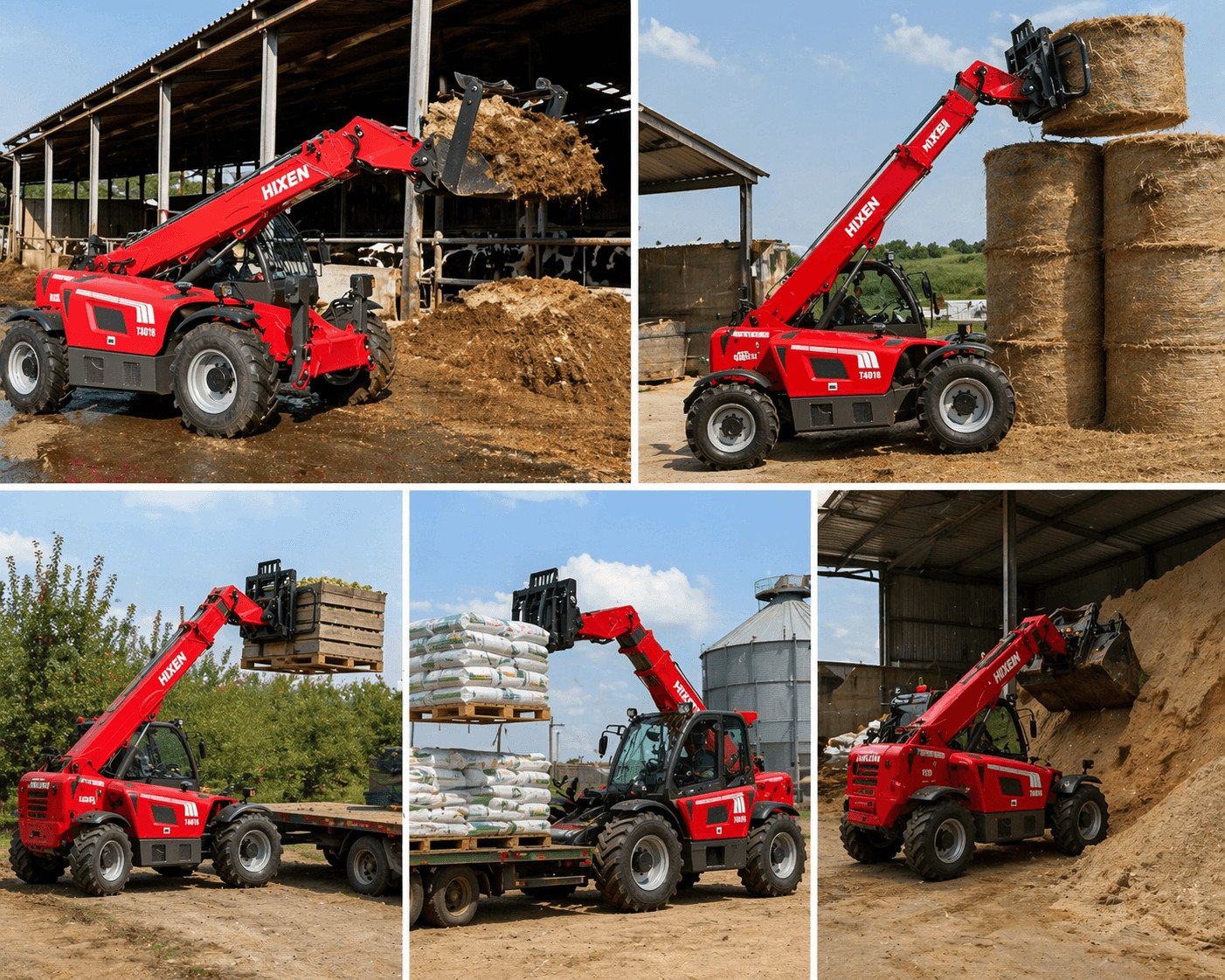
Are you running a machine 8 hours a day on a critical path of a major project, or 8 hours a week for miscellaneous tasks on a farm? The answer to that question will guide you to the right choice. Don’t buy a machine; buy a solution for the task at hand.
Matching the Machine to the Mission
Let’s outline a few common scenarios. See where your business fits. This framework should help clarify whether the certainty of “new” or the low entry cost of “used” is the right strategic fit for you.
| Application / Business Type | Key Priorities | Recommended Choice | Rationale |
|---|---|---|---|
| Large Construction Contractor | Uptime, project deadlines, safety compliance, operator productivity | Nuevo | The cost of downtime is immense. Project penalties and idle crews make the reliability and warranty of a new machine a non-negotiable insurance policy. Telematics for fleet management is also a huge plus. |
| Rental Fleet Operator | TCO, customer satisfaction, fleet utilization, resale value | A Mix (Leaning New) | Leading rental companies rotate their fleets, offering newer machines for premium clients and cycling older, well-maintained units to less demanding jobs. New machines ensure happy customers and predictable maintenance under warranty. |
| Small Family Farm / Agriculture | Low initial cost, versatility, low annual hours | Well-Maintained Used | A telehandler may only be used 200-400 hours per year for non-critical tasks like moving hay bales or feed. In this case, the high cost of a new machine is hard to justify. The key is to buy a thoroughly inspected, well-maintained unit. |
| Landscaping / Municipal Services | Budget constraints, moderate use, reliability | Lean Towards New or Late-Model Used | Reliability is important, but budgets are often tight. A new machine is ideal, but a low-hour (under 2,000 hrs), late-model used telehandler from a reputable dealer can be a smart compromise, offering some modern features without the full price tag. |
| Mining / Quarry Operations | Extreme duty cycles, reliability, safety | Nuevo | The harsh environment and high utilization demand the most robust and reliable equipment possible. The risks of failure in a mining environment are too high to gamble on a machine with an unknown history. |
Ultimately, perform an honest assessment of your utilization rate and the true cost of downtime in your operation. That calculation will almost always point you to the right answer.
Conclusión
The debate over a new vs used telehandler is not about finding the cheapest price, but about making the smartest long-term investment for your business. The decision hinges on a clear-eyed assessment of risk, a comprehensive understanding of Total Cost of Ownership, and the specific demands of your application. A new machine offers predictable costs, the latest technology, and the peace of mind of a full warranty—transferring operational risk to the manufacturer. A used machine offers a lower entry cost but requires you to accept the financial and operational risks of an unknown history. By building a cost-per-hour model and matching the machine’s profile to your job’s requirements, you can move beyond the misleading sticker price and choose the telehandler that truly delivers the best value for your operation.
If you’re evaluating your options and need a transparent partner to discuss the TCO of a new machine, contact our team. We provide clear data and tailored solutions to help you make the right long-term investment.

