
You search “rough terrain forklifts” and get two completely different machines in the results. One has a vertical mast and pneumatic tires. The other has a telescoping boom that reaches forward like a crane. Both handle pallets on uneven ground — but choosing the wrong one costs you productivity, money, and time on site.
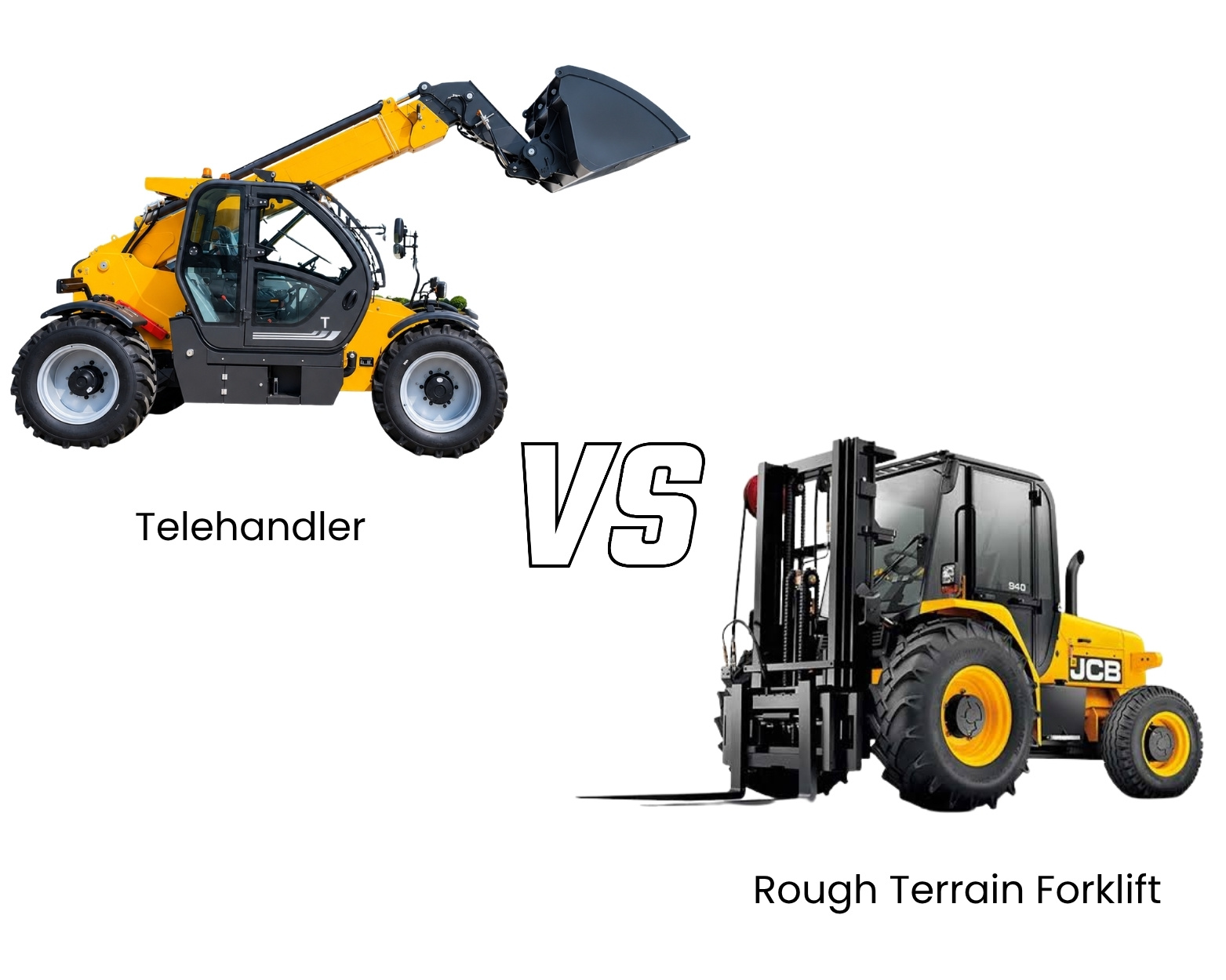
The term “rough terrain forklift” describes two distinct machine types: a mast-type forklift with 4WD pneumatic tires, and a telehandler (also called a telescopic handler), which is technically a variable-reach rough terrain truck. The key difference is lift geometry. A mast forklift lifts straight up. A telehandler’s boom reaches forward, upward, and over obstacles. For repetitive pallet handling on uneven ground, the mast type wins on simplicity and cost. For construction sites that need reach, height, and multi-function capability, the telehandler is the correct tool.
The right choice depends on your specific job conditions, required lift height, whether you need to place loads over obstacles, and your total ownership cost horizon. The sections below break down both machines clearly so you can evaluate them the way a procurement team should.
What Is a Rough Terrain Forklift?
Most buyers already know the standard warehouse counterbalance forklift. A rough terrain forklift applies the same mast-and-forks concept to outdoor and off-road conditions. The question is: where does it work well, and where does it fall short?
A rough terrain forklift is a mast-type lift truck fitted with large pneumatic tires, a rigid or articulated frame, and 4WD drive. It lifts loads vertically on twin forks mounted to a mast. Lift heights typically range from 4 to 7 meters. It is designed for outdoor use on gravel, mud, sand, and uneven terrain — common in lumber yards, brick plants, construction material storage, and agricultural warehouses.

Understanding this machine’s geometry is essential before you compare it to a telehandler. The mast moves vertically. The machine must position itself directly in front of the load to pick it up. That simplicity is both its greatest strength and its primary limitation.
How the Mast System Works
The forks extend forward from the mast carriage. When the machine tilts the mast forward, the forks lower. When it tilts backward, the forks raise and the load stabilizes against the backrest. To place a load, the operator must drive close enough for the forks to enter the pallet — which means the machine needs clear, direct access to every load position.
Key structural features of a rough terrain forklift:
- Large pneumatic tires (often 12–16 inch wide section tires) for ground flotation and traction
- 4WD with limited-slip or locking differentials for loose or wet ground
- Counterweight at the rear to offset the load at the forks
- Mast tilt cylinder for forward reach and load stabilization
- Side shift attachment (optional) for minor lateral load adjustment without repositioning the machine
Where Rough Terrain Forklifts Excel
- High-cycle pallet handling in material storage yards
- Repetitive loading and unloading of flatbed trucks on uneven ground
- Brick, block, tile, and lumber handling where loads are uniform and access is consistent
- Operations where operators are trained to standard forklift procedure
- Sites where budget and simplicity are primary procurement criteria
Capacity and Cost Behavior
Capacity ratings on mast-type rough terrain forklifts are relatively stable across the lift height range, because the load stays centered on the forks close to the mast. This is a meaningful procurement advantage: the rated capacity at low lift and the rated capacity near maximum lift are close to each other. Price points are generally lower than equivalent-capacity telehandlers, and service requirements follow standard forklift maintenance protocols widely understood by technicians globally.
What Is a Telehandler?
Verreikers cause more buyer confusion than almost any other machine category. They look like construction equipment. They handle pallets like a forklift. They reach like a crane. Buyers often underestimate how differently they behave from a mast-type machine.
A telehandler (telescopic handler) is a rough terrain lift truck with a single telescoping boom that extends forward and upward from a pivot point near the cab. It accepts interchangeable attachments — pallet forks, buckets, jibs, winches, and man baskets — at the boom head. Lift heights range from 6 to 18+ meters depending on the model, with forward reach extending well beyond the machine’s footprint.
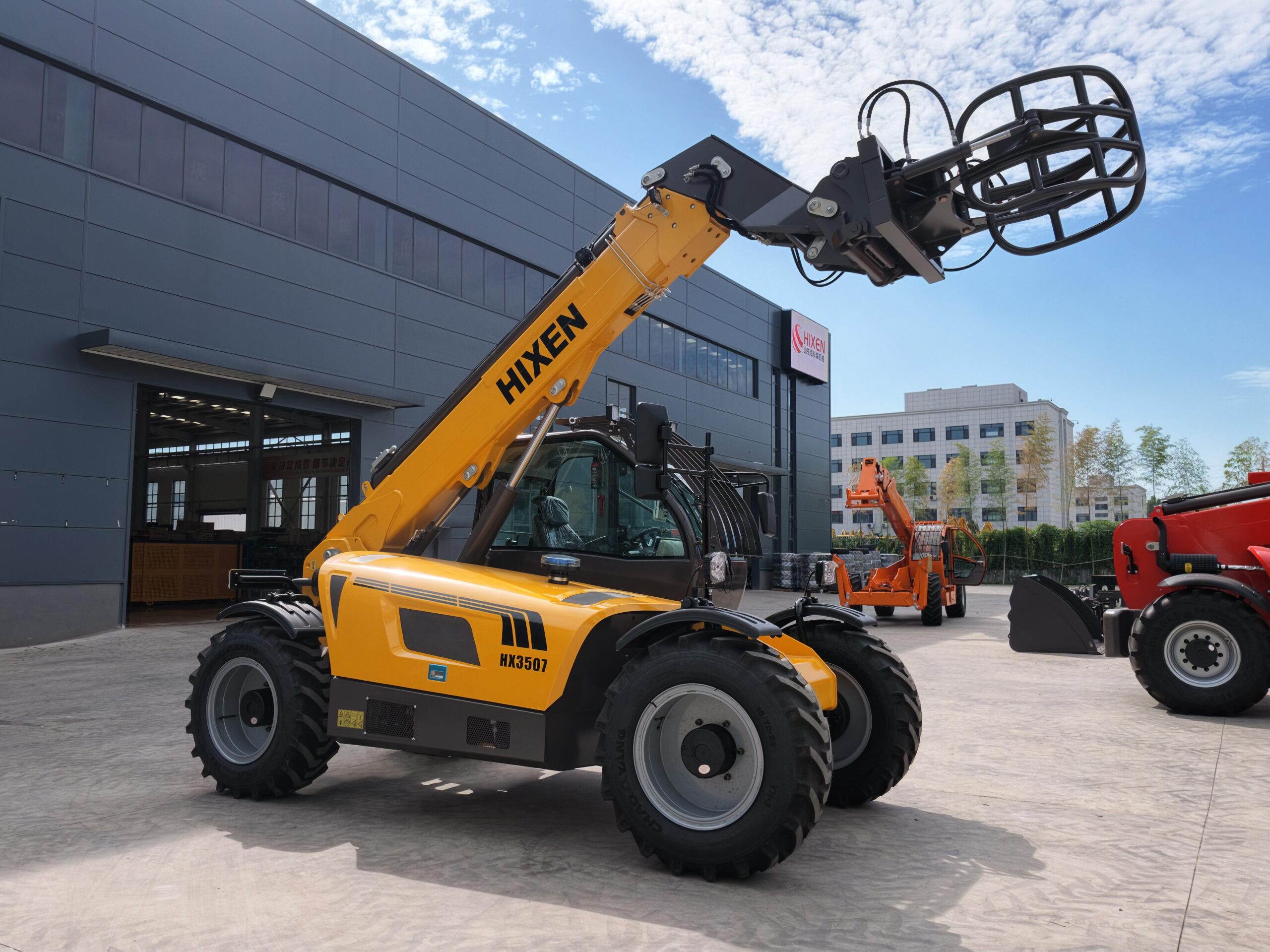
The telescoping boom is what separates this machine from everything else. It allows an operator to place a load on a second-floor deck, over a trench, or onto scaffolding — positions that a mast forklift cannot reach from any position.
Boom Geometry and the Load Chart
This is the most important technical concept for any buyer evaluating telehandlers: capacity drops as the boom extends.
A telehandler rated at 3,500 kg at zero extension may carry only 1,200 kg at full forward reach. This is not a defect — it is the physics of a cantilevered boom. Every telehandler ships with a lastdiagram that maps rated capacity against boom angle and extension length. Buying or renting a telehandler without understanding the load chart is one of the most common and costly procurement errors in the category.
| Boom Position | Typical Capacity (3.5T model example) |
|---|---|
| Fully retracted, low angle | 3,500 kg |
| Mid extension, 45° | 2,100 kg |
| Full extension, high angle | 1,000–1,400 kg |
| Full extension, horizontal | 700–900 kg |
Always request the full load chart from the manufacturer or dealer. Do not rely on nominal capacity alone.
Attachments That Expand Telehandler Utility
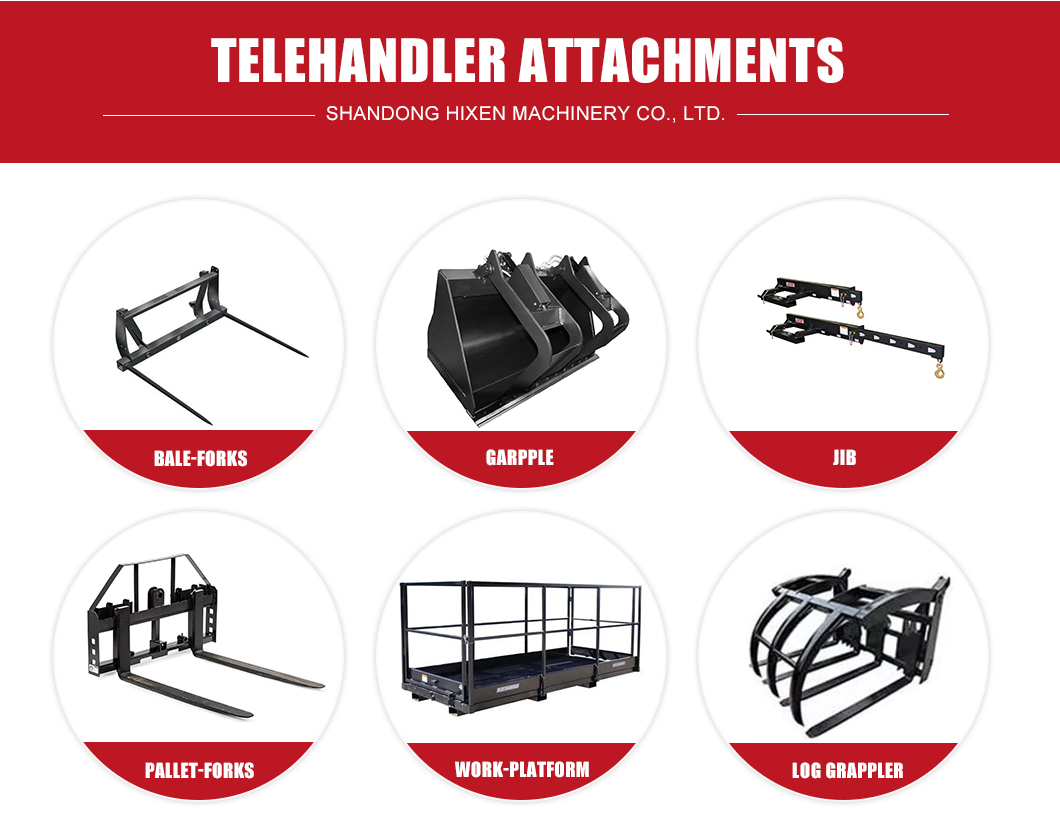
One telehandler can replace several machines on a construction site or farm when equipped with the right attachments:
- Pallet forks — standard material handling
- Bucket — bulk material loading (grain, soil, gravel)
- Jib/fly boom — crane-like lifts for long or awkward loads
- Man basket — personnel lift for maintenance and installation tasks
- Bale clamp / bale spike — agricultural handling
- Auger drive — post-hole drilling
This attachment versatility is a primary reason telehandlers dominate rental fleets and construction sites. A single machine generates revenue or value across multiple job functions.
Drive and Steering Systems
Most telehandlers offer three steering modes:
- Front-wheel steer — road travel and high-speed movement
- 4-wheel steer — tight maneuvering on congested sites
- Crab steer — moving laterally while maintaining forward orientation
4WD with high ground clearance handles the same terrain as a rough terrain forklift, often with a higher chassis clearance due to the larger frame and wheel size.
Rough Terrain Forklifts vs Telehandlers: Key Differences at a Glance
Here is a structured comparison for procurement evaluation.
| Functie | Rough Terrain Forklift | Verreiker |
|---|---|---|
| Lift mechanism | Vertical mast | Telescoping boom |
| Forward reach | None (must drive to load) | Significant — 2 to 7+ meters |
| Max lift height (typical) | 4–7 m | 6–18+ m |
| Capacity behavior | Stable across lift height | Drops sharply with extension |
| Attachments | Limited (side shift, fork positioner) | Wide range (forks, bucket, jib, basket) |
| Typical job sites | Lumber yards, brick plants, storage areas | Construction sites, farms, rental fleets |
| Operator skill required | Standard forklift certification | Telehandler-specific training |
| Purchase cost | Lower | Higher |
| Maintenance complexity | Lower — simpler hydraulic system | Higher — boom, slew, hydraulic circuits |
| Spare parts availability | Widely available | Varies by brand/market |
| Terrain capability | Very good | Very good |
Which Machine Fits Which Job Site?
The machine type should follow the job requirement — not the other way around. Many procurement errors occur when buyers apply a familiar machine to a job it was not designed for.
Choose a rough terrain forklift when your primary task is high-cycle pallet handling in a material storage yard, on flat or gently rolling ground, with consistent load positions. Choose a telehandler when your job site requires placing loads at height, over obstacles, or in positions that a vertical mast cannot reach from ground level.
Job Site Matching Guide
Rough Terrain Forklift — Best Fit:
- Concrete block and brick manufacturing yards
- Lumber and timber storage and distribution
- Pipe yards and steel stock storage
- Agricultural warehouses with wide aisles and flat storage pads
- Quarry finished-product stockpiles
Telehandler — Best Fit:
- Multi-story building construction (material placement on upper floors)
- Renovation and infrastructure projects with limited access
- General agricultural operations (feeding, bale handling, grain loading)
- Rental fleets requiring single-machine versatility
- Ports and logistics yards with stacked or elevated load positions
Consider Both When:
Some large sites run both machine types simultaneously — a rough terrain forklift handles repetitive ground-level pallet cycling while a telehandler services elevated placements. In that scenario, the question shifts from “which one” to “how many of each.”
How to Choose the Right One?
The procurement decision involves more than machine specs. Buyers who evaluate only nominal capacity or published lift height frequently make the wrong selection.
To choose between a rough terrain forklift and a telehandler, define your maximum required lift height, your forward reach requirement, your load weight at that reach and height, your attachment needs, your operator training capacity, and your total ownership cost over the expected service period. Then match those requirements to verified manufacturer specifications — not marketing summaries.

A Practical Evaluation Checklist
Use this checklist when issuing an RFQ or comparing supplier proposals:
- Define the critical lift task — what is the heaviest load, at what height, at what forward reach?
- Request the full load chart, not just the nominal capacity figure
- Confirm tire specification for your ground conditions (foam-filled, pneumatic, solid)
- Verify 4WD and steering mode options for your terrain
- List required attachments and confirm compatibility with the boom head coupler
- Assess service infrastructure — local dealer, parts availability, technician training
- Check certifications relevant to your target market (CE for Europe, ANSI/ASME B56.6 for North America)
- Calculate total cost of ownership — purchase price, maintenance intervals, consumables, downtime risk
A Note on Certifications
Certifications such as CE marking, EPA engine compliance, and ANSI/ASME standards are documents buyers should independently verify with the issuing body or through a qualified third-party inspection. A supplier’s claim of certification is the starting point for verification, not the endpoint.
Veelgestelde vragen
What is the main difference between a rough terrain forklift and a telehandler?
A rough terrain forklift lifts vertically using a mast and must drive close to the load. A telehandler uses a telescoping boom to reach forward and upward, allowing it to place loads at height or over obstacles without repositioning. The telehandler also accepts a wider range of attachments.
Why does a telehandler’s capacity change with boom extension?
A telehandler’s boom is a cantilever. As it extends forward, the load moves further from the machine’s center of gravity, increasing the tipping moment. Capacity ratings decrease at greater extension and lower boom angles. Always consult the manufacturer’s load chart for the specific capacity at your required reach and height.
Can a telehandler replace a rough terrain forklift entirely?
For high-cycle repetitive pallet handling in a material storage yard, a rough terrain forklift is usually more efficient and lower in cost. A telehandler can perform the same task but at a higher acquisition cost and with greater maintenance complexity. On mixed-task construction sites, a telehandler often replaces multiple machines simultaneously, making it the more cost-effective single investment.
What certifications should I check when importing a rough terrain forklift or telehandler?
For European markets, confirm CE marking and compliance with Machinery Directive 2006/42/EC. For North American markets, check ANSI/ASME B56.6 and EPA Tier 4 engine compliance. For other markets, consult local import regulations. Always request original certification documents and verify them with the issuing authority.
What lift heights are available for telehandlers?
Telehandler lift heights range from approximately 6 meters in compact models to 18 meters or more in high-reach models. Some specialized construction telehandlers exceed 20 meters. Our current range covers 7, 10, 14, and 18-meter lift height configurations, with capacity from 2.5 to 7 tonnes. Custom configurations are available on request.
Conclusie
Rough terrain forklifts and telehandlers both solve the same surface-level problem — moving heavy loads on uneven ground — but they solve it with fundamentally different geometry, capability, and cost profiles. A mast-type rough terrain forklift delivers reliability, simplicity, and efficiency for repetitive pallet handling in yards and storage facilities. A telehandler delivers reach, height, and attachment versatility for construction, agriculture, and rental applications where one machine must do many jobs.
The number that matters most in any telehandler evaluation is not the headline capacity — it is the rated capacity at your actual required reach and height. Get the load chart. Verify certifications. Assess parts and service availability for your market.
If you are evaluating rough terrain forklifts or telehandlers for import, distribution, or fleet procurement, I am glad to share detailed specifications, load charts, and production capacity information. Contact our team to request a formal product datasheet or to discuss your application requirements directly.

