
Choosing the right construction equipment can make or break a project’s timeline and budget. With dozens of machine types on the market — from mini excavators to crane trucks — it’s easy to over-invest in equipment you don’t need, or worse, show up on site without the right machine for the job.
The best way to understand types of construction equipment is by its job function: digging, lifting, or moving material. For 80% of small-to-mid-sized projects, you only need a core trio: an excavator for digging, a versatile handler like a telehandler or skid steer, and a compactor.
This guide breaks down the most common types of construction equipment by function, explains what each machine does best, and shows you how to build a lean, efficient equipment lineup instead of chasing every machine on a manufacturer’s catalog.
What Is Construction Equipment and How Is It Classified?
The world of heavy machinery seems complex with all its different names and models. This complexity can make you feel unsure about where to even start. Let’s clear up the confusion with a simple classification.
Construction equipment refers to heavy-duty vehicles designed for construction tasks. The easiest way to classify them is by their primary function: 1. Earthmoving (digging, grading), 2. Material Handling (lifting, loading), and 3. Compaction (flattening surfaces). Most machines fit into one of these groups.
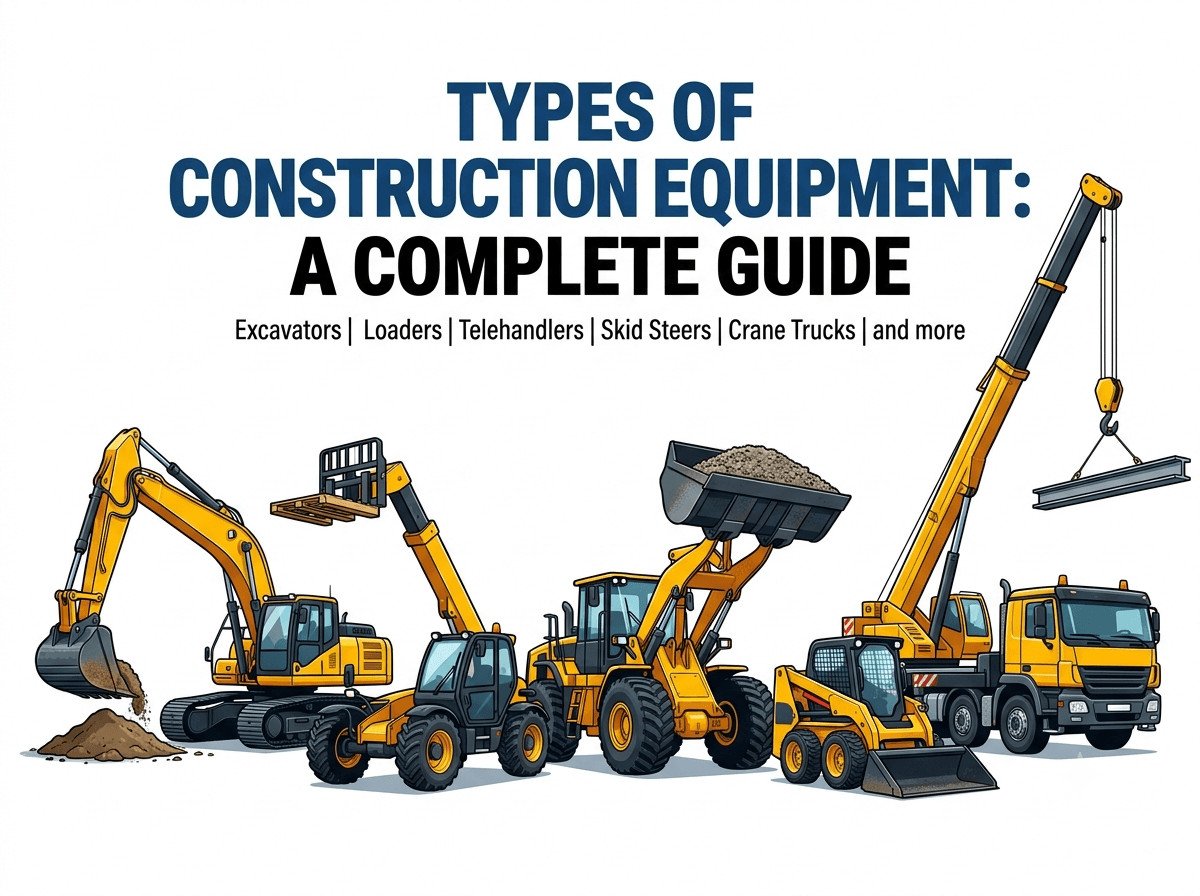
When you are buying equipment, thinking in terms of function is much more helpful than just memorizing names. Instead of asking “Do I need a backhoe or an excavator?”, ask “What is my main job? Is it digging a deep trench or is it loading dirt onto a truck?” This simple shift in thinking makes decisions much easier. At HIXEN, we always start our conversations with customers this way. We want to understand the job first, then match the machine. Below is a simple table to help you start thinking this way. It connects the machine type to its main job and where you’ll most likely use it.
| Виды строительной техники | Основное использование | Typical Site | Key Consideration |
|---|---|---|---|
| Экскаватор | Digging, demolition, trenching | General construction, landscaping | Size (mini vs. large) determines dig depth and access. |
| Телескопический погрузчик | Lifting, moving materials at height | Building sites, farms, warehouses | Versatility; can replace a forklift, crane, and loader. |
| Мини-погрузчик с бортовым поворотом | Loading, grading in tight spaces | Residential, indoor, landscaping | Compact size and agility are its main strengths. |
| Бульдозер | Pushing large amounts of soil | Large-scale land clearing, road building | Powerful but less precise than a grader. |
| Устройство | Compacting soil, asphalt, gravel | Roadwork, foundations, paving | Essential for creating a stable base. |
Excavators: Mini vs. Large Excavators and Their Uses?
Choosing the wrong size excavator is a common and costly mistake. A machine that’s too small will struggle and take forever, while one that’s too big wastes fuel and can’t fit in tight spots. This choice can make or break your project’s timeline and budget.
А mini excavator is perfect for tight spaces, landscaping, and trenches up to 4-5 meters deep. A large excavator is for bulk earthmoving, deep foundations, and projects where power and reach are more important than fitting into a small area.
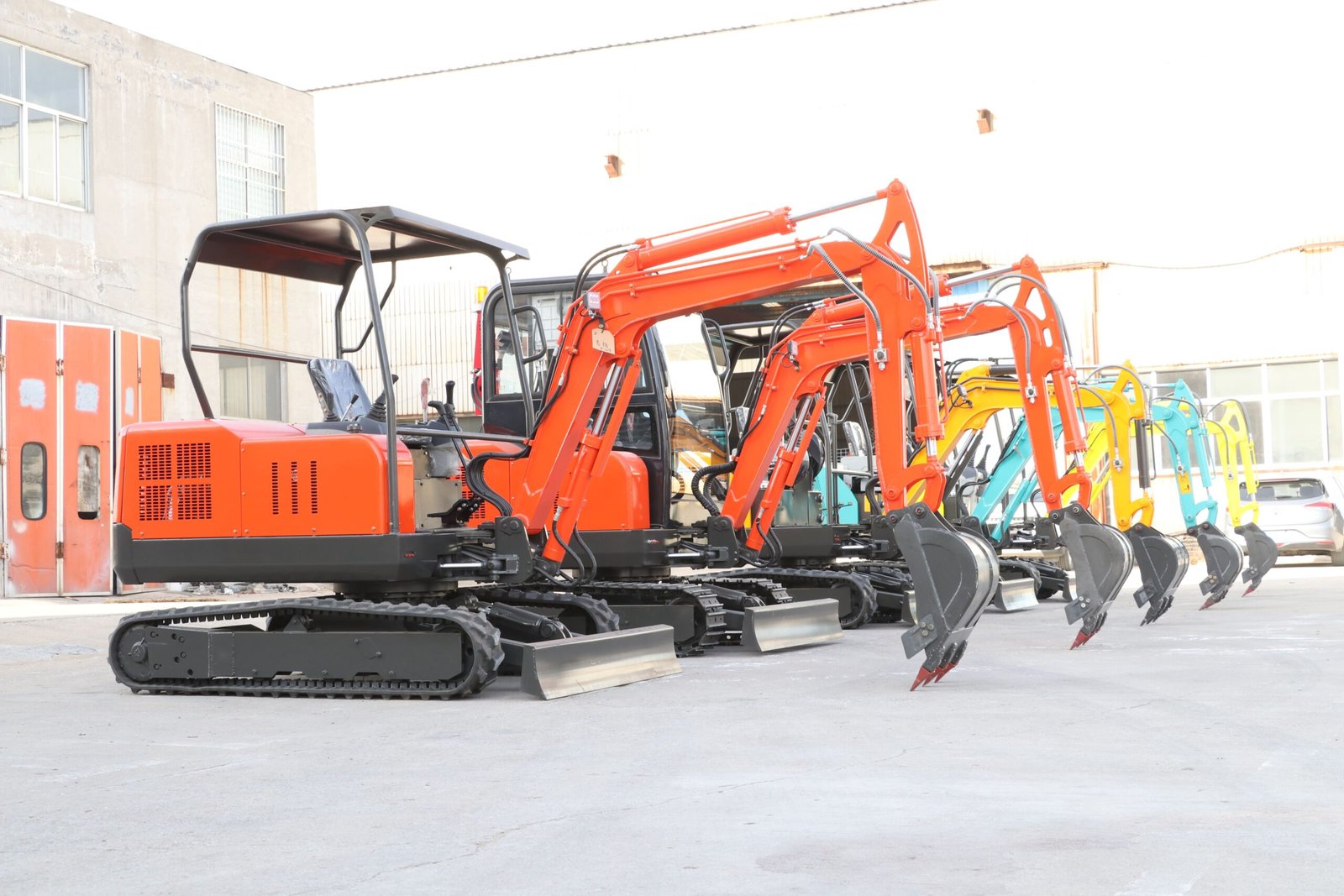
The decision between a mini and a large excavator shouldn’t be based on just “small job” vs. “big job.” You need to look at specific numbers. I always advise our customers to consider two key metrics:
1. Digging Depth and Radius
A mini excavator, like our popular 1-ton to 6-ton models, is ideal for utility trenches, small foundations, and backyard projects. They can typically dig several meters deep and have a compact swing radius, meaning they can work right next to a wall. A large excavator (20 tons and up) is needed when you have to dig foundations for a commercial building or move massive amounts of dirt quickly. Their reach can be more than double that of a mini excavator.
2. Site Access and Ground Pressure
Can the machine even get to the work area? A mini excavator can often pass through a garden gate. A large excavator needs wide access roads. Also, think about the ground. Mini excavators have lower ground pressure, so they cause less damage to finished surfaces like lawns or pavement.
Telehandlers (Telescopic Handlers): The 3-in-1 Machine?
Your job site needs a forklift for pallets, a small crane for lifting trusses, and a loader for moving dirt. That means three machines, three operators, and three times the maintenance headache. This inefficiency eats into your profits and complicates logistics.
А Talehandler is a highly versatile machine that acts like a Swiss Army knife for your job site. By simply changing the attachment, it can function as a rough-terrain forklift, a compact crane, and a wheel loader, saving you significant money and space.
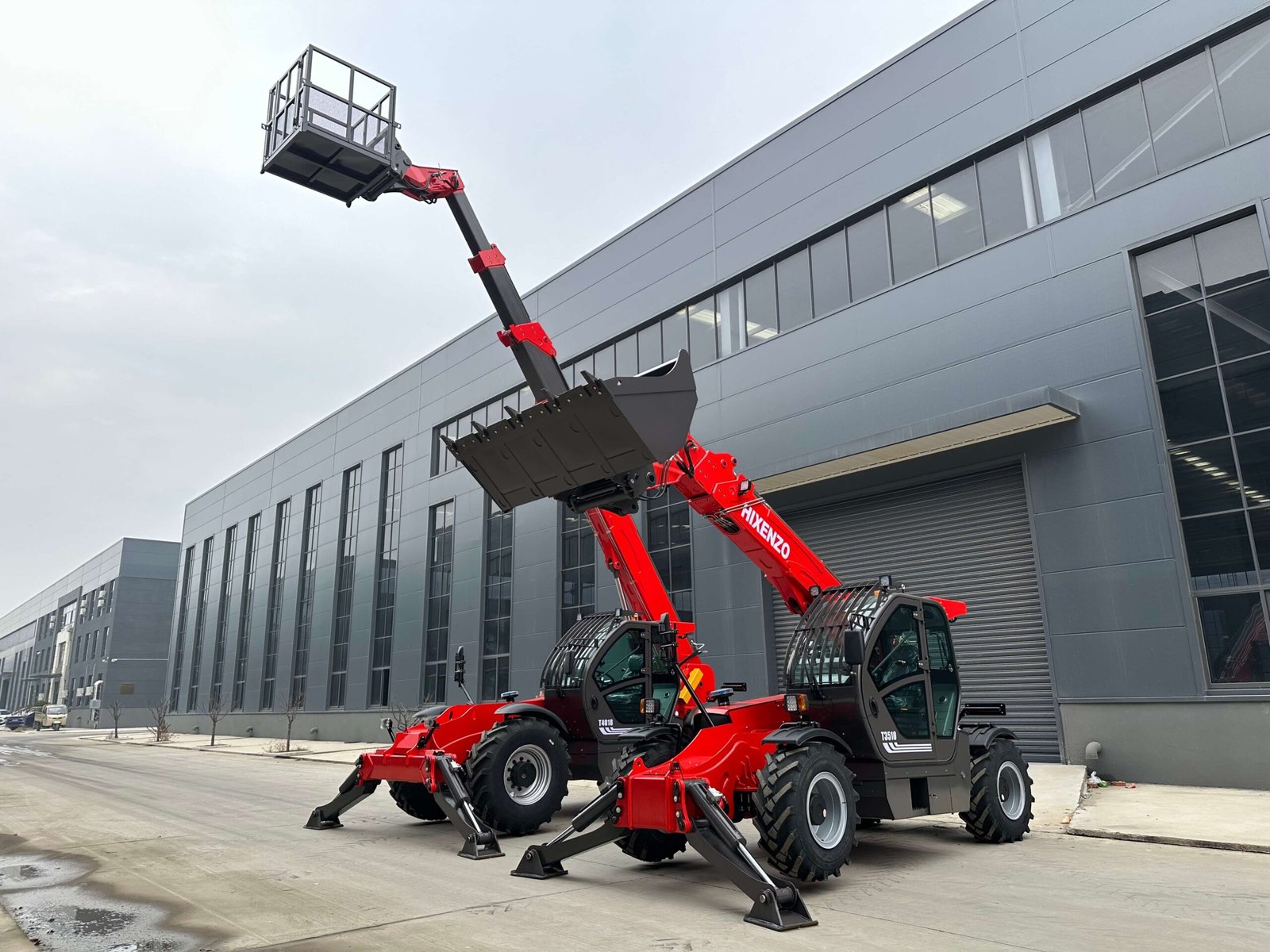
I believe the telehandler is one of the most underrated machines in construction, especially for small to medium-sized contractors. Many people see it as just a big forklift, but it’s so much more. Its real power comes from its telescopic boom and the ability to switch attachments.
Here’s how it replaces three machines:
- As a Forklift: With forks attached, it can lift pallets of materials much higher and farther than a standard forklift. It’s perfect for placing materials on the second or third story of a building.
- As a Crane: Switch to a jib attachment, and you have a mobile crane capable of lifting several tons. I’ve seen customers use our telehandlers to place roof trusses, steel beams, and large pipes, saving them the high cost of renting a dedicated crane.
- As a Loader: Attach a bucket, and it can scoop and move bulk materials like sand, gravel, or dirt, just like a wheel loader.
One of our clients, a home builder in Europe, used to have a forklift, rented a crane weekly, and owned an old loader. He replaced all three with one of our 17-meter telehandlers. His efficiency went up, and his operational costs went way down. That’s the power of versatility.
Skid Steer Loaders: Compact Power for Tight Job Sites?
You need to move materials on a crowded residential site or inside a warehouse. A larger loader is too big to maneuver, and doing the work by hand is too slow and labor-intensive. You’re stuck between a rock and a hard place.
А погрузчик с бортовым поворотом is the solution for jobs in confined spaces. Its ability to turn within its own footprint (“zero-turn”) and its compact size allow it to work efficiently where other machines can’t, from backyards to building interiors.
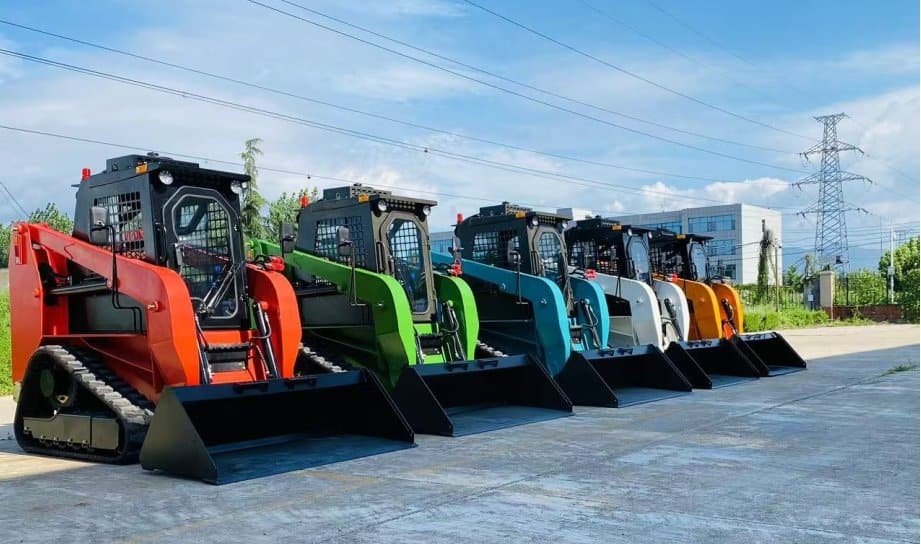
The name “skid steer” comes from how it turns. The wheels on each side are locked in synchronization, and you turn by “skidding” the machine, allowing for incredible agility. This makes it a favorite for landscaping, demolition, and agricultural work. But its small size doesn’t mean it’s weak. Like a telehandler, a skid steer’s true value is unlocked with attachments. With a bucket, it’s a loader. With pallet forks, it’s a forklift. With an auger, it drills holes. With a breaker, it demolishes concrete. It’s a compact utility player that can handle dozens of different tasks. For any contractor working in developed areas or on smaller projects, a skid steer is often one of the first and best investments they can make.
Wheel Loaders vs. Skid Steer Loaders: What’s the Difference?
Both machines have a bucket on the front and are used for loading material. It can be confusing to know which one is right for your operation. Choosing the wrong one leads to either a machine that’s too clumsy for the site or too small for the workload.
The key difference is in size, steering, and application. A skid steer is small, agile, and turns by skidding, making it ideal for tight spaces. A wheel loader is larger, steers by articulating (bending) in the middle, and is built for moving large volumes of material in open areas.
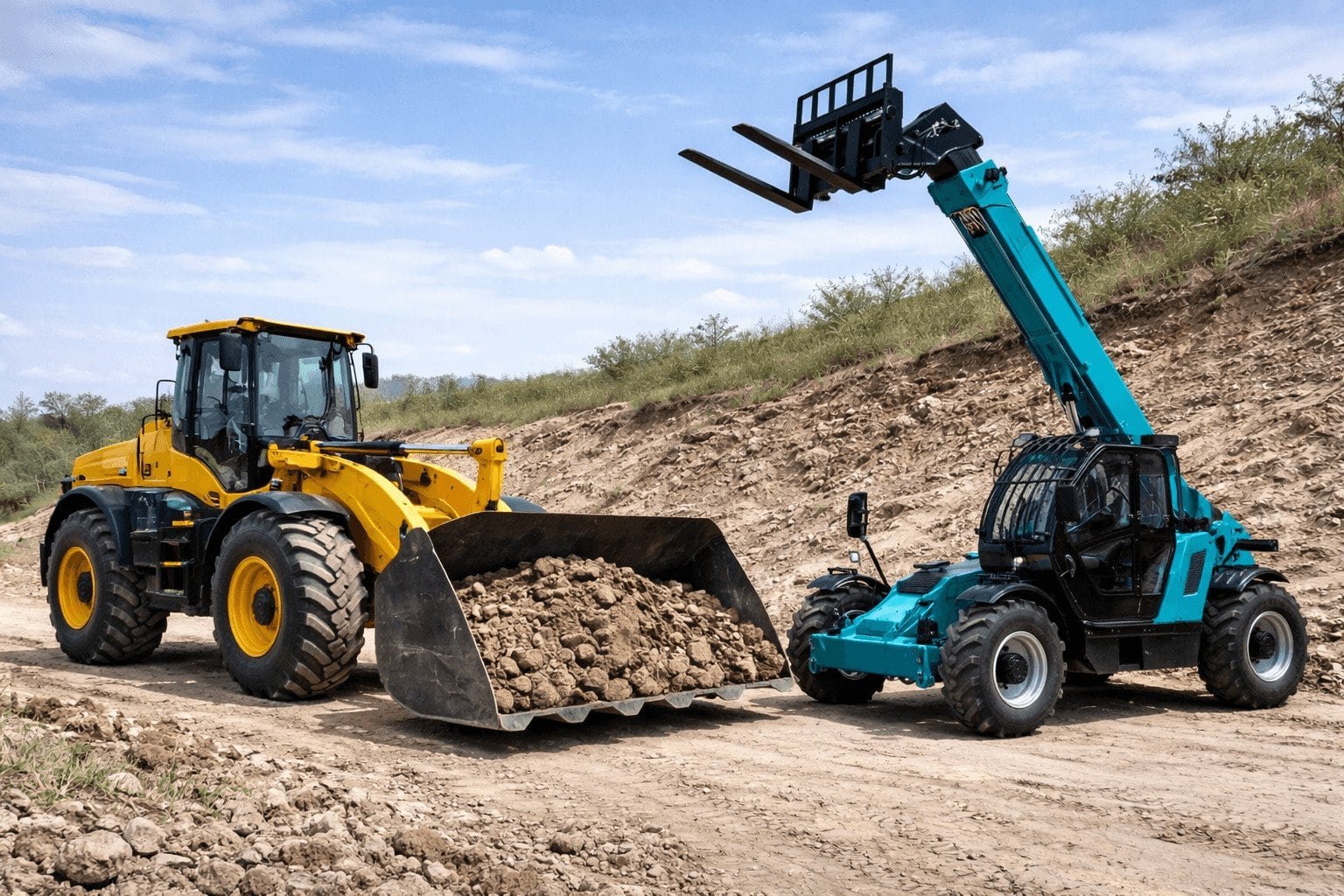
Let’s break it down with a direct comparison to make the choice clearer. I often walk customers through this exact thought process.
| Особенность | Мини-погрузчик с бортовым поворотом | Колесный погрузчик |
|---|---|---|
| Рулевое управление | Skids to turn (zero-turn) | Articulated (bends in the middle) |
| Ideal Site | Tight, confined spaces (indoors, backyards) | Open spaces (quarries, large construction sites) |
| Подъемная способность | Lower | Higher |
| Скорость | Slower | Faster over long distances |
| Surface Impact | Can scuff surfaces due to skidding | Gentler on surfaces |
| Primary Job | Versatile utility work with attachments | Bulk material loading and transport |
Think of it this way: a skid steer is like a powerful, agile running back who can navigate a crowded field. A wheel loader is like a strong lineman, built for pure power and moving big obstacles in a straight line. You wouldn’t use one for the other’s job.
Crane Trucks and Mobile Cranes for Lifting Operations?
Your project requires lifting heavy materials like steel beams, HVAC units, or precast concrete panels. Trying to do this without the right equipment is not just impossible, it’s incredibly dangerous. You absolutely need a specialized lifting solution.
Crane trucks and mobile cranes are designed for one primary purpose: lifting and placing heavy loads with precision. Crane trucks offer mobility for jobs across different sites, while larger mobile cranes provide immense lifting capacity for major construction projects.
While a telehandler with a jib is great for moderate lifts, dedicated cranes are necessary when you get into serious weight and height. A crane truck, which is a crane mounted on a truck chassis, is perfect for jobs like setting trusses or lifting equipment onto rooftops. Its advantage is that you can drive it on the highway from job to job. Larger mobile cranes are what you see dominating the skyline on skyscraper projects. They require specialized transport and setup but can lift hundreds of tons. For most general contractors, renting a crane and a certified operator for specific heavy lifts is more cost-effective than owning one.
Bulldozers and Motor Graders for Earthmoving?
You need to clear a large plot of land or build a road with a precise slope. An excavator can dig, and a loader can move piles, but neither can efficiently level large areas of ground. Using the wrong tool for this job results in a wavy, uneven surface.
Bulldozers are for raw power, used to push massive quantities of soil, sand, and debris for land clearing. Motor graders are for finesse, used to create a flat or precisely sloped surface, making them essential for road building and site finishing.
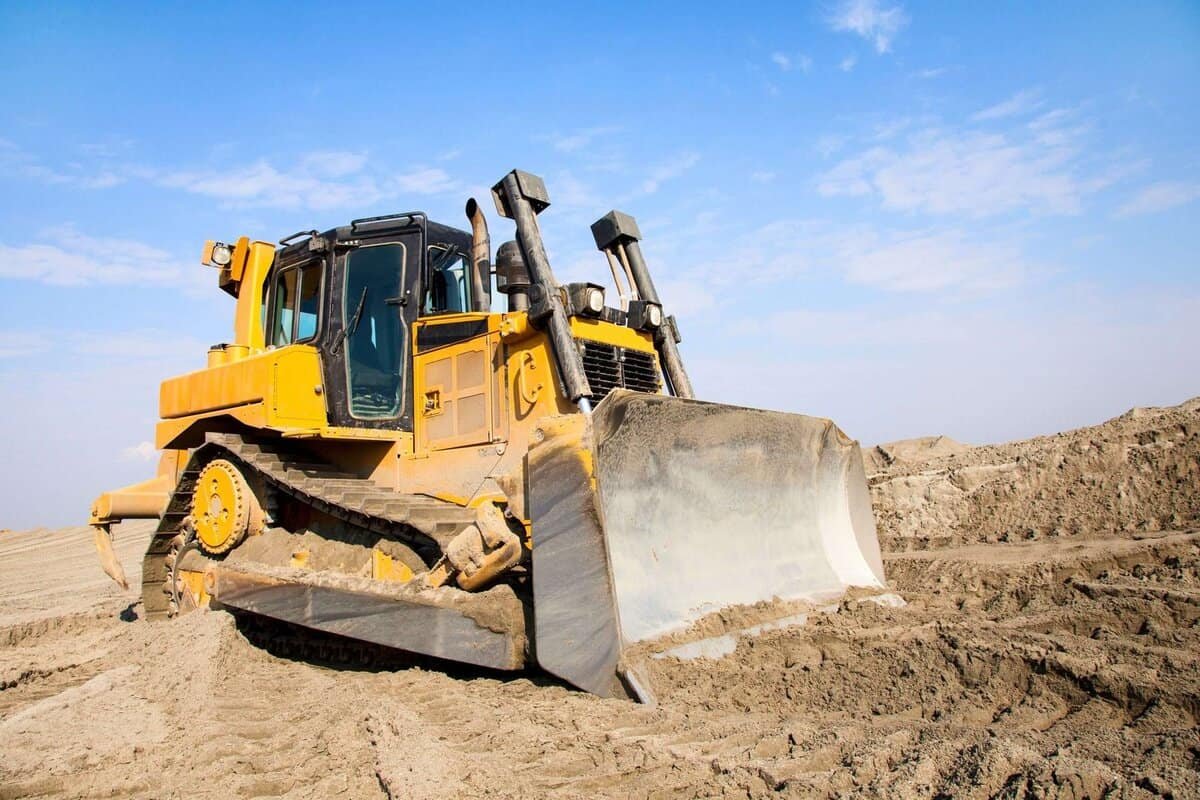
I tell people to think of them as a team. The bulldozer is the brute force. It goes in first, equipped with a large metal plate (the blade), and shoves everything out of the way. It’s the king of bulk earthmoving. Once the bulldozer has done the heavy lifting, the motor grader comes in. With its long blade positioned between the front and rear axles, it can be adjusted to minute angles to create a perfectly smooth and graded finish. You can’t build a good road or foundation without both power and precision, and these two machines provide exactly that.
Dump Trucks and Hauling Equipment?
You’ve excavated thousands of cubic meters of dirt, but now it’s just sitting in a giant pile. Or, you need to bring tons of gravel to the job site. Without an efficient way to transport these materials, your entire project grinds to a halt.
Dump trucks and other hauling equipment are the lifeblood of a construction site, responsible for moving bulk materials to, from, and around the project area. Their capacity and off-road capability are critical for keeping the workflow moving smoothly and on schedule.
Hauling equipment ranges from standard on-road dump trucks, which are great for bringing materials from a quarry, to massive articulated dump trucks (ADTs) designed for rough, muddy, off-road conditions on large sites. The choice depends on the volume of material, the distance it needs to travel, and the terrain. A project’s efficiency is often directly tied to its hauling strategy. If excavators are sitting idle waiting for trucks, you’re losing money. A well-managed fleet ensures that material is constantly flowing, a key part of successful project management.
Compaction Equipment: Rollers and Plate Compactors?
You’ve laid down the soil for a foundation or the gravel for a new road, but it’s loose and unstable. Building on this weak base will lead to cracks, settling, and catastrophic failure down the line. You need to create a solid, dense surface.
Compaction equipment, such as rollers and plate compactors, uses weight, vibration, or impact to increase the density of soil or asphalt. This process removes air pockets and creates a stable, load-bearing foundation, which is a non-negotiable step in quality construction.
This is the third piece of our “core 3” for many jobs. You dig with the excavator, you move material with the loader, and you compact with a compactor. Compaction equipment comes in many sizes. For large areas like roads and parking lots, you’ll use large, ride-on smooth drum or padfoot rollers. For smaller areas, like trenches or sidewalk prep, a walk-behind plate compactor or a “jumping jack” rammer is perfect. No matter the scale, skipping or rushing the compaction step is one of the worst mistakes you can make. A solid base is the foundation for everything that comes after it.
How to Choose the Right Construction Equipment for Your Project?
You’ve seen all the options, but now you’re facing “analysis paralysis.” With so much money on the line, the fear of making the wrong choice can be immobilizing. How do you confidently select the right machine?
To choose the right equipment, follow a simple 4-step process: 1. Analyze the job’s primary function (dig, lift, move). 2. Evaluate site conditions (space, terrain). 3. Consider your budget (rent vs. buy). 4. Prioritize versatility to maximize your investment.
Over the years, I’ve helped hundreds of customers make this decision. We’ve refined it into a simple checklist that cuts through the noise.
1. Analyze the Job Type
What is the main task you need to accomplish 80% of the time? Is it digging trenches? Then you need an excavator. Is it lifting materials to the second floor? A telehandler is your best bet. Be honest about your core business. Don’t buy a massive bulldozer if you primarily do residential landscaping.
2. Evaluate the Site Conditions
Where will you be working? In wide-open fields or tight urban environments? On soft mud or hard pavement? The answers will immediately rule out certain machines. A skid steer thrives in tight spots, while a large wheel loader needs room to maneuver.
3. Consider Your Budget (Rent vs. Buy)
Do you need this machine every day or just for one specific project? If you need it daily, buying makes sense. As a manufacturer, we see the long-term value customers get from owning our reliable machines. If you only need a machine for a week, renting is smarter. Factor in the total cost of ownership: purchase price, fuel, maintenance, and operator costs.
4. Think About Versatility
Always ask: can one machine do the job of two or three? This is where machines like our telehandlers and skid steer loaders truly shine. Buying one machine with multiple attachments is often a much wiser investment than buying two or three specialized machines.
Заключение
Choosing the right equipment isn’t about having the most machines; it’s about having the right ones for your work. By focusing on your core tasks, you can build a capable fleet.

