
Choosing the right equipment for your fleet or project is a high-stakes decision. In the debate of rotating vs fixed telehandlers, making the wrong choice can lead to project delays, operational inefficiencies, and a lower return on investment. You see both models on the market, but their distinct benefits and costs can be unclear, turning procurement into a gamble. This guide will clarify the key differences, helping you make a confident, informed purchasing decision based on application, cost, and performance.
A fixed telehandler has a stationary cab and chassis, lifting loads primarily in a straight line forward, making it a cost-effective and reliable choice for straightforward material handling. In contrast, a rotating telehandler features a turret that spins 360 degrees on the chassis, allowing it to place loads anywhere in a wide radius without repositioning the machine, which is ideal for congested sites but comes at a higher cost and complexity.
Now that we have the core distinction, let’s explore what makes each machine unique. Understanding their specific designs, capabilities, and ideal use cases is the first step to mastering your equipment selection process and building a more profitable and efficient fleet.
What Is a Fixed Telehandler?
Do you need a reliable, rugged workhorse for your primary material handling tasks? The complexity of some modern equipment can seem like overkill, adding unnecessary maintenance and acquisition costs to your operation. A fixed telehandler offers a powerful, straightforward solution that gets the job done efficiently.
A fixed telehandler, also known as a rigid-frame or standard telehandler, is a material handling machine where the cab and chassis form a single, non-rotating unit. The telescopic boom extends forward and upward from the rear of the machine to lift and place loads, operating much like a forklift but with far greater reach and rough-terrain capability.
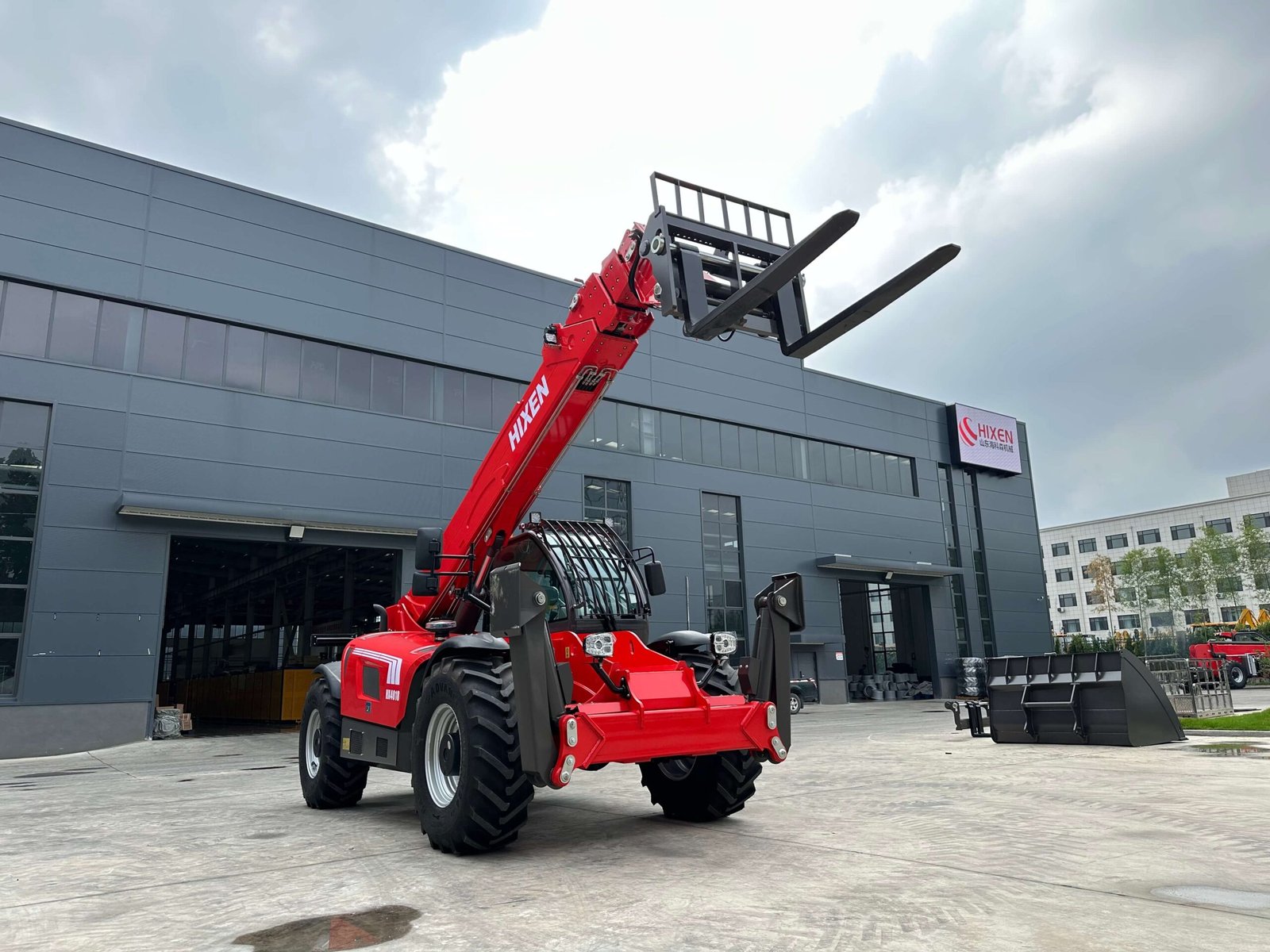
The fixed telehandler is the most common type of telehandler globally, and for good reason. Its design philosophy prioritizes strength, reliability, and cost-effectiveness. As manufacturers, we see this model as the core of most international fleets we supply.
Core Design and Operation
The machine’s strength lies in its simplicity. The chassis is a robust, rigid frame that supports the engine, drivetrain, and operator’s cab. The boom is mounted directly to this chassis. To move a load laterally, the operator must drive and reposition the entire machine. While this sounds less advanced, it’s a proven, durable design that has been refined over decades. Operation is intuitive for anyone familiar with heavy equipment, reducing the learning curve for new operators.
Key Strengths of a Fixed Telehandler
For B2B buyers like dealers and large contractors, the business case for the fixed telehandler is compelling.
- Simplicity and Reliability: Fewer complex moving parts means fewer potential points of failure. There is no slewing ring, hydraulic swivel, or complex rotation sensor system to maintain. This is a critical advantage for our dealer partners operating in regions where specialized technical support may be limited. Higher uptime is a direct result of this simpler design.
- Lower Acquisition Cost: The straightforward engineering and manufacturing process results in a significantly lower purchase price compared to a rotating model of similar lift capacity. This allows fleet owners to acquire more units for the same capital investment.
- Favorable Total Cost of Ownership (TCO): Beyond the initial price, the reduced maintenance needs—no expensive slewing ring bearings or hydraulic swivels to service—lead to lower long-term operational costs.
- Ease of Maintenance: Routine service is simpler and can be performed by general heavy equipment mechanics, ensuring machines stay productive without needing highly specialized technicians.
Because of these powerful advantages, the fixed telehandler is the dominant machine in agriculture, general construction, masonry, and logistics. It is the workhorse of the industry and, for most of our distributors, the safest and most profitable core product in their equipment portfolio.
What Is a Rotating Telehandler?
Are you constantly repositioning your machine on a cramped urban job site? Moving a large piece of equipment just a few feet to pick and place materials wastes valuable time, fuel, and labor. A rotating telehandler offers a game-changing solution, transforming how work gets done in confined spaces.
A rotating telehandler, often called a roto-telehandler or slewing telehandler, features an upper structure—the cab and boom—that can rotate a full 360 degrees on its chassis. This unique capability allows it to function like a mobile crane, placing materials in a wide radius from a single, static position.
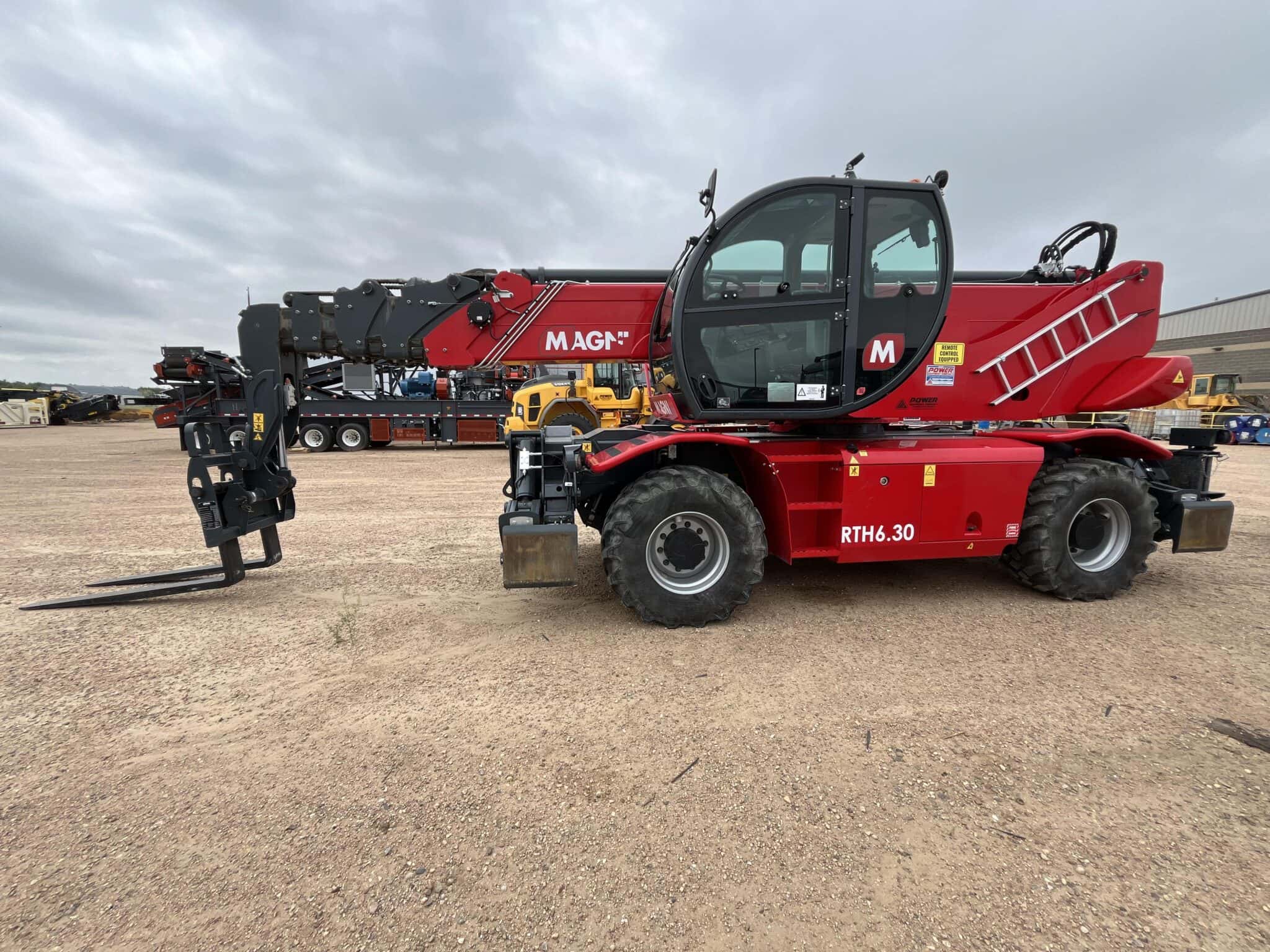
The rotating telehandler is a masterpiece of engineering, designed to solve complex logistical challenges on modern job sites. It effectively combines the functions of a telehandler, a rough-terrain crane, and an aerial work platform into one highly versatile machine.
Advanced Design and Functionality
The magic of the rotating telehandler lies in its turntable design. The upper structure, or turret, rests on a large, robust slewing ring mounted to the chassis. A hydraulic swivel allows for the continuous flow of hydraulic fluid to the boom and cab controls while the turret rotates. To ensure stability during these complex movements, rotating telehandlers are almost always equipped with robust, independently controlled outriggers. These stabilizers are essential for achieving the machine’s full lift capacity, especially when lifting at a distance from the chassis.
Unique Advantages of a Rotating Telehandler
The higher investment in a rotating telehandler is justified by its immense on-site benefits.
- Unmatched Efficiency in Confined Spaces: This is the rotating telehandler’s signature strength. Park the machine once and deliver materials to the front, sides, and even rear of the chassis. This is invaluable on tight urban construction sites, within industrial plants, or on projects where repositioning is impossible.
- Enhanced Safety: By minimizing the need to travel with a raised load—a leading cause of job site accidents—rotating telehandlers create a safer working environment. Operators can lift the load, rotate it into position, and place it without driving the machine.
- Crane-Like Capabilities: With a winch attachment, a rotating telehandler can compete directly with smaller mobile cranes for tasks like lifting steel beams, placing trusses, or handling building materials over obstacles. This versatility can eliminate the need to rent an additional crane, saving significant costs.
From our perspective as a manufacturer, the rotating telehandler is a specialized, high-value addition to a fleet. For our partners who supply equipment to high-rise contractors, industrial maintenance firms, and specialized installers, this machine is a powerful problem-solver that commands premium rental rates.
Rotating vs Fixed Telehandlers: Key Differences?
When you compare two telehandler spec sheets, the lift height and capacity numbers can look similar, yet the prices are worlds apart. It’s frustrating to try and justify the cost difference without a clear breakdown. Let’s compare the critical differences between rotating vs fixed telehandlers head-to-head.
The fundamental difference lies in mobility versus versatility. A fixed telehandler must reposition its entire body to move a load laterally, making it a master of linear, A-to-B tasks. A rotating telehandler, however, can place loads in a 360-degree radius from one spot, excelling in complex, multi-directional work. This difference cascades into cost, complexity, and ideal use cases.
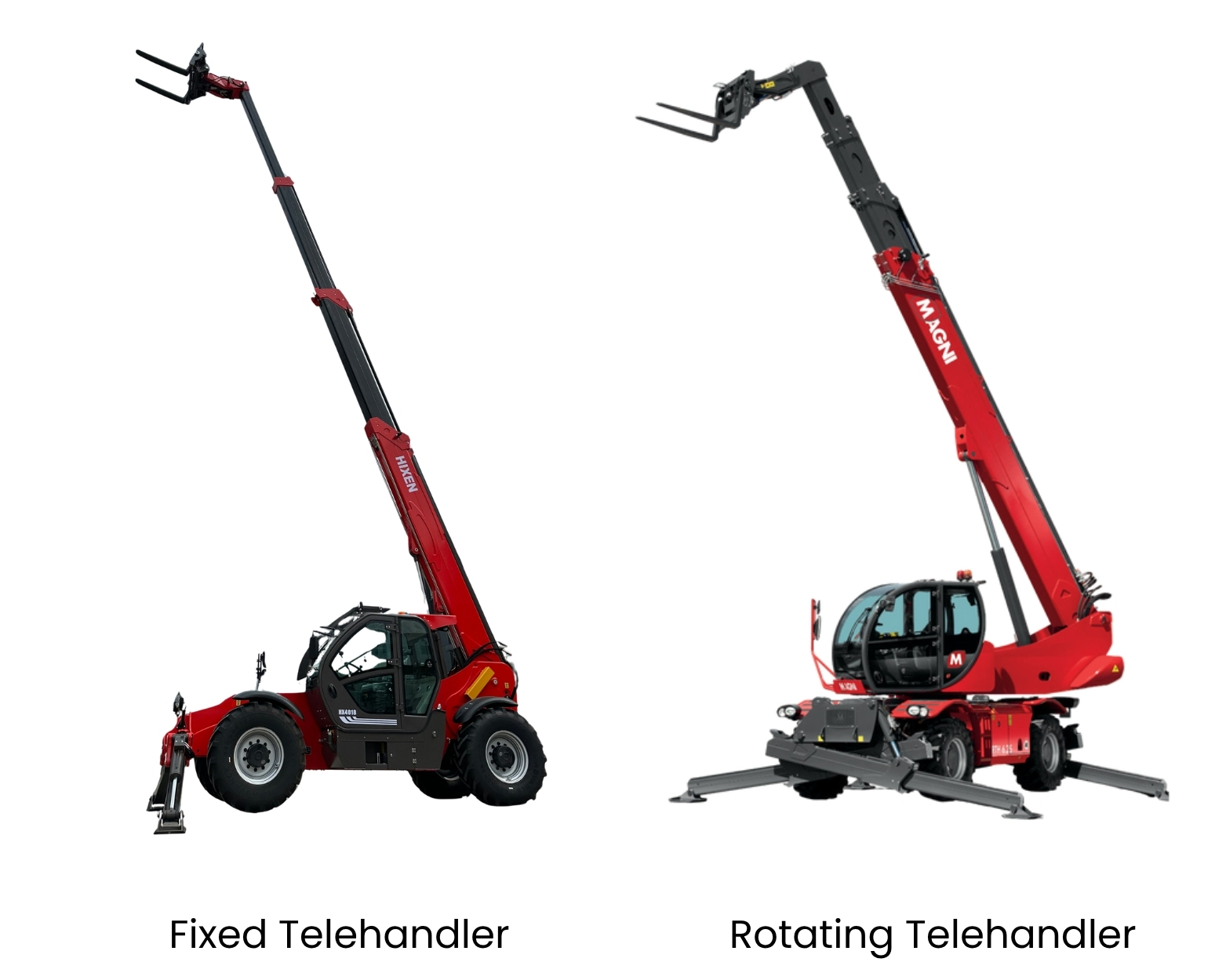
To help procurement managers and dealers make a strategic choice, we’ve broken down the core differences in a simple table. This comparison is essential for understanding the Total Cost of Ownership (TCO) and ROI for each machine type.
| Feature | Fixed Telehandler | Rotating Telehandler |
|---|---|---|
| Core Function | Lift and carry in a forward direction. | Lift and place in a 360° radius. |
| Positioning | Operator must drive the machine to reposition. | Operator parks once and rotates the boom. |
| Acquisition Cost | Lower | Significantly Higher |
| Maintenance | Simpler; fewer specialized components. | More complex; requires service for slewing ring, hydraulic swivel, and advanced sensors. |
| Operational Complexity | Lower; intuitive for forklift/loader operators. | Higher; requires specific training for safe rotation and outrigger setup. |
| Stability System | Primarily relies on its wide stance and tires. | Heavily dependent on outriggers for full capacity and safe rotation. |
| Job Site Footprint | Requires a larger area to maneuver and turn. | Requires a smaller operational footprint once stabilized, but needs space for outriggers. |
| Load Chart | Simpler; based on boom extension and angle. | More complex; factors in rotation angle, boom extension, and outrigger configuration. |
As a manufacturer, we advise our partners to look beyond the initial price tag. The decision between rotating vs fixed telehandlers is a strategic one. For a rental fleet serving a broad market like agriculture or suburban construction, the lower purchase price, higher reliability, and simpler maintenance of a fixed telehandler fleet provide a robust and profitable business model. Conversely, for a specialized rental company in a major metropolitan area, the premium rental rates and unique capabilities of a rotating telehandler can deliver a much higher ROI on specific projects, despite the larger initial investment.
What Are the Ideal Applications for Rotating vs Fixed Telehandlers?
Mis-matching a machine to the job site is a recipe for inefficiency. Using a fixed model on a congested site causes constant delays, while using a sophisticated rotating model for simple yard work is a waste of capital. How do you ensure you’re specifying the right tool for the job?
The answer is simple: fixed telehandlers are the masters of open-space, high-volume tasks like those found in agriculture, landscaping, and general construction material distribution. Rotating telehandlers are the indispensable specialists for congested urban job sites, high-rise building projects, industrial maintenance, and any job requiring crane-like precision over and around obstacles.
To maximize profitability and efficiency, it’s crucial to deploy the right asset. Here is a breakdown of the prime environments for each machine.
Prime Use Cases for Fixed Telehandlers
The fixed telehandler is the undisputed champion of tasks that require power, durability, and straightforward movement.
- Agriculture: Moving hay bales, loading grain, cleaning barns, and stacking pallets of feed or fertilizer.
- General Construction: Distributing pallets of bricks, lumber, and other materials across a relatively open site from the delivery zone to the work area.
- Landscaping: Moving bulk materials like soil and mulch, placing large stones or trees, and site cleanup.
- Warehousing & Logistics: Serving as a powerful outdoor forklift for yards, handling oversized materials that a standard forklift cannot.
- Masonry: Lifting cubes of block and mortar tubs to the first and second stories of buildings.
Prime Use Cases for Rotating Telehandlers
The rotating telehandler shines where space is limited and precision is paramount.
- Urban Construction: Working between existing buildings, lifting materials from a single lane of a closed street onto multiple floors of a new building.
- Roofing & Façade Work: Precisely placing roofing materials, glass panels, or cladding without needing to set up extensive scaffolding or a large crane.
- Bridge & Infrastructure: Reaching over barriers to perform work on bridge decks or in tunnels from a secure position on the road.
- Industrial Maintenance: Reaching over fixed machinery and pipe racks inside a plant to replace components or perform repairs.
- Event Setup: Quickly erecting stages, lighting trusses, and large structures from a central location.
Our engineering and production capabilities are aligned with these diverse needs. Our robust fixed telehandlers, with capacities from 2.5 to 7 tons, form the backbone of many of our global partners’ fleets. Our advanced rotating models are the specialized instruments they deploy for their most challenging and lucrative projects.
Rotating vs Fixed Telehandlers: Which One Is Right for Your Project?
You’ve seen the designs, applications, and key differences, but now the final procurement decision looms. How do you translate this knowledge into a confident choice, whether you’re a dealer building your rental inventory or a contractor purchasing for a specific project?
The right choice between rotating vs fixed telehandlers hinges on a balanced assessment of your job site conditions, project budget, and required operational versatility. For open sites with linear tasks, a fixed telehandler offers unbeatable value. For complex, confined sites that demand multi-directional placement, a rotating telehandler is the superior investment, quickly paying for itself in saved time and labor.
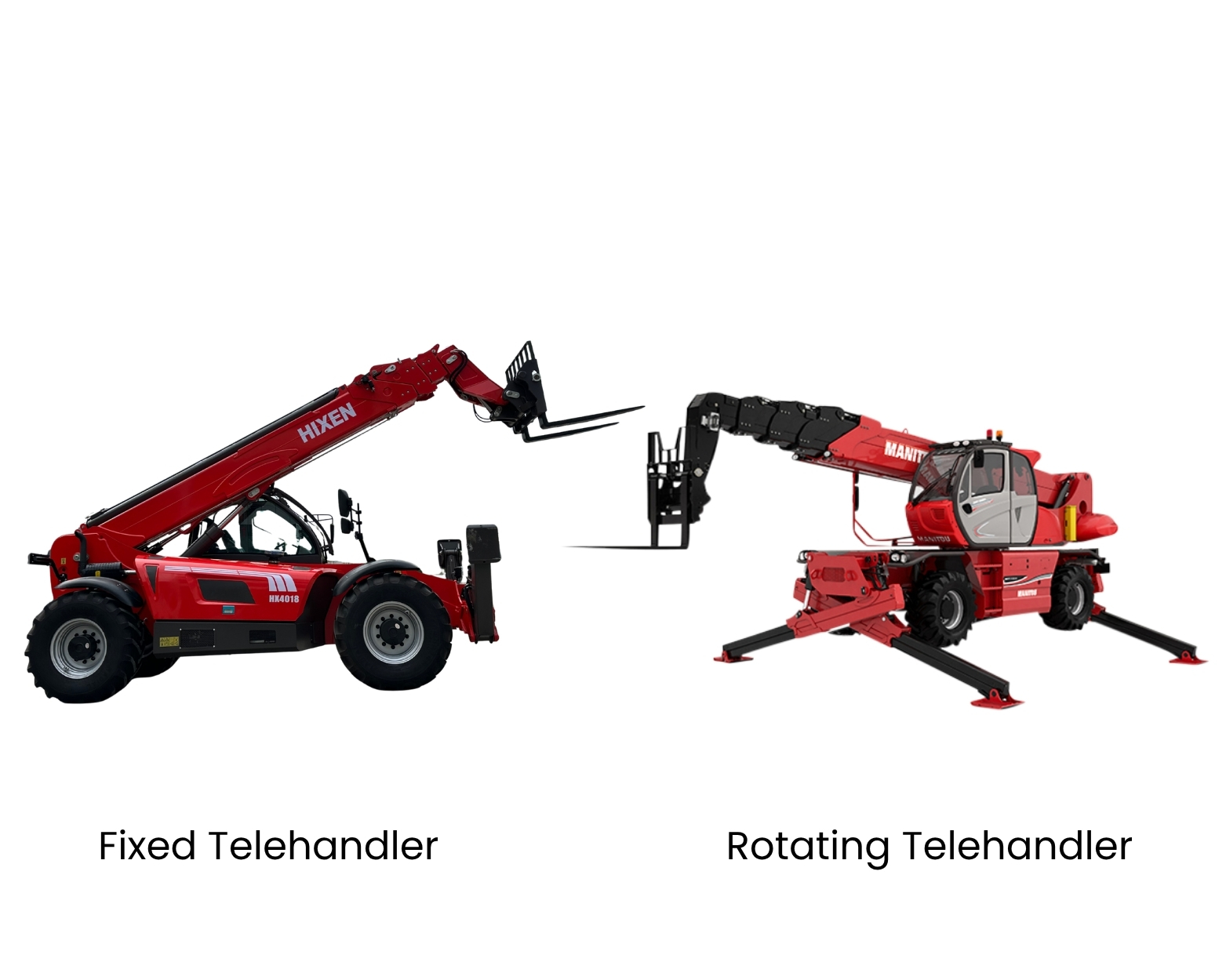
To make the best strategic decision, ask your team the following questions. The answers will point you clearly toward the right machine.
Key Evaluation Questions
- Analyze Your Typical Job Site: Are your projects located in open fields and spacious suburban lots, or in dense city centers and crowded industrial plants? The level of congestion is the number one factor.
- Evaluate Your Core Tasks: Is your primary need moving pallets from Point A to Point B? Or do your projects involve lifting materials over fences, across trenches, or onto multiple points of a tall structure from a single setup position?
- Calculate Your Budget and Projected ROI: What is your capital budget for acquisition? More importantly, how will the machine’s efficiency impact your bottom line? A rotating telehandler might cost 50-100% more upfront, but if it saves hundreds of labor hours and eliminates the need for a separate crane rental, its ROI can be exceptionally high.
- Assess Your Support Capabilities: Do you have operators with the training to manage a complex load chart and safely operate a rotating machine? Does your service department have the expertise to maintain advanced hydraulic and electronic systems? For our distributors in emerging markets, we often recommend building a strong foundation with a fleet of fixed telehandlers. Their simplicity ensures high uptime and customer satisfaction, establishing a strong market presence before introducing more specialized equipment.
Ultimately, the choice between rotating vs fixed telehandlers is a business strategy decision. The right answer depends not just on the machine’s specs, but on your market, your customers’ needs, and your operational model.
Frequently Asked Questions
Are rotating telehandlers less stable?
No, when used correctly with their outriggers fully deployed, rotating telehandlers are engineered to be perfectly stable throughout their 360-degree operational range. However, their stability is entirely dependent on this proper setup. A fixed telehandler is inherently stable on its wheels for most tasks within its load chart without requiring outriggers.
Can a fixed telehandler use the same attachments as a rotating one?
For the most part, yes. Common attachments like forks, buckets, and truss jibs are often designed to be compatible with both types of machines, provided the coupling system is the same. However, specialized attachments like personnel baskets or hydraulic winches often require the advanced controls and certifications more commonly found on rotating models. Buyers must always verify attachment compatibility with the specific machine.
What is the main reason for the price difference between rotating and fixed telehandlers?
The significant price difference is driven by the complex engineering and high-value components in a rotating telehandler. This includes the large-diameter slewing ring, the precision-machined hydraulic swivel, the advanced stability control system with multiple sensors, and the standard inclusion of four powerful, independent outriggers.
Do I always need to use outriggers on a rotating telehandler?
For achieving the machine’s full rated lift capacity, especially at height or reach, the use of outriggers is almost always mandatory. The manufacturer’s load chart will clearly specify when outriggers are required. While some limited, low-capacity “pick and carry” functions may be possible on tires, this is not the machine’s intended primary function and severely restricts its capabilities.
Conclusion
In the crucial comparison of rotating vs fixed telehandlers, the decision boils down to a strategic trade-off between targeted versatility and overall cost-effectiveness. Fixed telehandlers stand as the reliable, economical backbone for the vast majority of material handling tasks in agriculture, logistics, and general construction. Their simple design, lower purchase price, and reduced Total Cost of Ownership make them a sound and profitable investment. Conversely, rotating telehandlers are specialized, multi-functional machines that act as a force multiplier on congested and complex job sites, justifying their higher investment through immense gains in efficiency and safety.
Understanding this fundamental distinction is key to building a powerful and profitable fleet. If you are evaluating telehandlers for your import or distribution business, we invite you to contact our engineering team. We can provide detailed specifications, load charts, and expert guidance to help you configure the perfect fixed or rotating telehandler solution to meet your market’s unique demands.

