
Struggling to lift awkward loads over obstacles on your job site? Renting a separate crane is expensive and slow. A telehandler jib boom can easily turn your machine into a versatile crane.
A telehandler jib boom is a specialized attachment that connects to the end of the telehandler’s boom. It works like a crane’s jib, extending your machine’s reach. This lets you lift and place suspended loads accurately over obstacles, significantly boosting your machine’s versatility.
This simple attachment can completely transform your operations, but understanding how it works is the key to using it safely and effectively. In my 15+ years in this industry, I’ve seen how the right attachment can make or break a project’s timeline and budget. Let’s explore what makes the jib boom such a powerful tool and how you can make the most of it.
What Is a Telehandler Jib Boom?
Your telehandler is great with forks, but what about suspended loads? Lifting items without a proper attachment is unsafe. A jib boom attachment provides a certified lifting point for these tasks.
A telehandler jib boom is a truss or beam structure that attaches to the quick-attach carriage on your telehandler’s boom. It provides a hook point, effectively converting your telehandler into a small mobile crane for lifting and suspending materials where forks can’t go.

Think of it as a simple upgrade that unlocks a new primary function for your machine. Instead of just lifting pallets from the ground up, you can now handle suspended loads. I remember a project where a client needed to place heavy HVAC units onto a second-story roof. Their initial plan was to rent a mobile crane, which would have cost them thousands and added a full day for setup and takedown. Instead, we equipped their HIXEN telehandler with a jib boom. They finished the job in just a few hours with a machine they already had on-site. The jib isn’t just a piece of steel; it’s a problem-solver that adds incredible value by turning your telehandler from a material mover into a precision lifting tool.
How Does the Key Structure of a Jib Boom Attachment Work?
You see a jib boom, and it looks simple. But its design is crucial for safety and performance. Understanding its parts helps you operate it correctly and avoid dangerous mistakes on site.
A jib boom consists of a main beam, a mounting plate that connects to the telehandler, and a certified lifting hook. It works by extending the boom’s reach and changing the lifting point, allowing for crane-like vertical and horizontal placement of suspended loads.
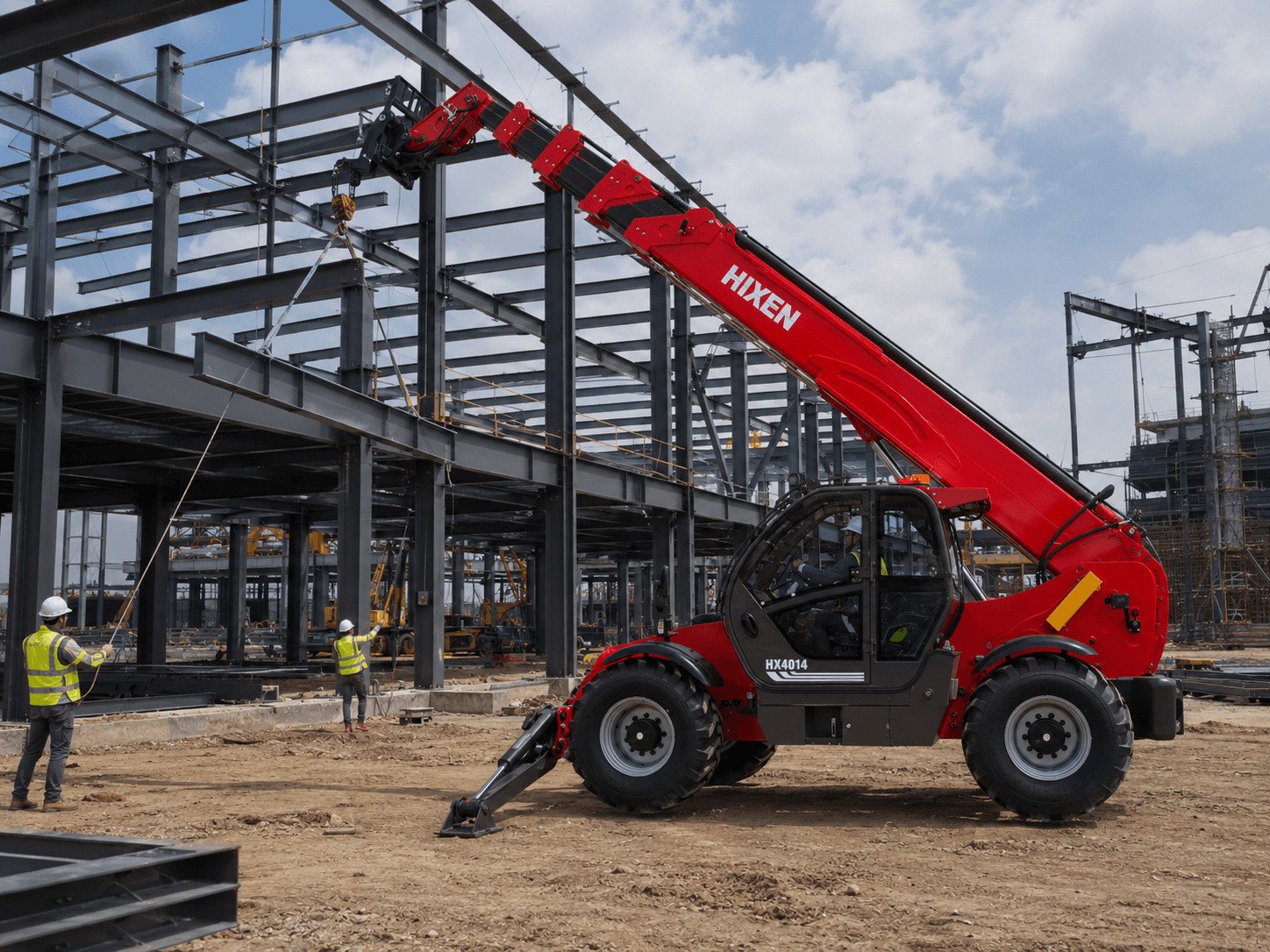
The genius of the jib boom lies in its engineered simplicity. Let’s break down how these components work together to provide safe lifting capabilities.
Key Structural Components
The main structure, whether it’s a solid beam or a lighter truss design, is made from high-strength steel. At HIXEN, we use a truss structure for many of our jibs because it provides an excellent strength-to-weight ratio, which maximizes the telehandler’s remaining lift capacity. This frame is connected to a heavy-duty mounting plate designed to lock securely into your telehandler’s quick-attach system. Finally, at the end of the jib, you have the most critical part: the certified lifting hook with a safety latch. This is the only point from which you should ever suspend a load.
Fixed vs. Telescoping Jibs
Jibs come in two main types, and choosing the right one depends on your needs.
| Feature | Fixed Jib | Telescoping Jib |
|---|---|---|
| Structure | Single-piece, fixed length | Multiple sections, adjustable length |
| Versatility | Good for repetitive tasks at a known distance | Excellent for varied tasks with changing reach |
| Cost | More affordable | More expensive |
| Best For | Truss installation, predictable lifts | Complex job sites, placing loads over obstacles |
The working principle is all about leverage. By extending the load further away from the machine, the jib increases the tipping force. This is why understanding the load chart, which we’ll discuss later, is not just important—it’s essential for safe operation.
Where Are Jib Booms Mainly Used in Construction and Material Handling?
Need to lift materials in tricky spots? Some jobs seem impossible for a standard telehandler with forks. A jib boom unlocks new applications, making your machine more valuable on any site.
Jib booms are widely used in construction for lifting steel beams, roof trusses, and precast panels. They are also used in industrial maintenance for positioning equipment and in agriculture for handling large bags, especially for tasks requiring “up-and-over” lifting capability.
The versatility of the jib boom means we see our customers using them in a huge range of industries. Its ability to precisely place a suspended load makes it indispensable in modern work environments.
Construction Sites
This is the most common application I see. On a residential building site, operators use jibs to lift and place roof trusses or prefabricated wall sections directly into position. For larger commercial projects, they are perfect for positioning steel beams or lifting packs of materials onto scaffolding. The “up-and-over” capability is the real star here. You can easily lift a load over a newly built wall or other obstruction that would completely block a forklift.
Industrial and Plant Maintenance
In factories or processing plants, maintenance teams use jib booms to remove and install heavy motors, pumps, or large sections of pipe. These areas are often cramped, with limited overhead space, making a traditional crane impractical. A telehandler with a jib can navigate these tight spaces and provide the necessary lifting power and precision.
Logistics and Agriculture
In a yard or port, a jib can be used to load or unload irregularly shaped equipment from a flatbed truck. In agriculture, I’ve seen farmers use them to lift and place large fertilizer bags or move heavy irrigation equipment. It’s a much safer and more efficient method than trying to drag or push these items with forks.
What Are the Advantages of Using a Telehandler Jib Boom?
Is renting a separate crane eating into your profits? Job site logistics can be a nightmare. A telehandler jib boom attachment adds massive versatility and can save you a lot of money.
The main advantages are increased reach and “up-and-over” lifting capability. It improves site efficiency, reduces the need for expensive crane rentals, and allows for precise placement of suspended loads in tight or obstructed areas, boosting your telehandler’s utility.
From my experience working with hundreds of contractors, the decision to invest in a jib boom attachment almost always pays for itself very quickly. The benefits go far beyond just lifting.
Enhanced Versatility and Cost Savings
The most obvious advantage is turning one machine into two. Your telehandler, which you already have on-site for material handling, now functions as a light-duty mobile crane. This is a huge cost saver. I ran the numbers for a client once:
| Task: Lift 10 HVAC units to a roof (2-day job) | Using Separate Crane | Using Telehandler with Jib |
|---|---|---|
| Equipment Cost | Crane Rental: $2,000 | Jib Attachment Purchase: $3,500 (one-time) |
| Labor | Crane Operator + Rigger: $1,600 | Telehandler Operator (existing): $0 extra |
| Transport/Setup | $800 | $0 |
| Total Cost for Job | $4,400 | $0 (after initial purchase) |
The jib paid for itself on the very first job. After that, it was pure profit and efficiency savings on every subsequent project.
Improved Access and Efficiency
The “up-and-over” reach is a true game-changer. Without it, operators have to find a long, clear path to place materials. With a jib, they can lift directly over walls, scaffolding, trenches, and other common job-site obstacles. This dramatically speeds up the workflow. Instead of spending 30 minutes navigating around a building, an operator can lift a load into place in just five. This time savings adds up quickly, allowing crews to complete projects faster.
What Load Capacity and Safety Rules Must You Follow?
Using a jib boom seems easy, but it changes everything about your telehandler’s balance. Ignoring the new limits is a recipe for disaster. From our factory floor to your job site, safety must always come first.
You must strictly follow the updated telehandler load chart provided with the jib boom attachment. The telehandler’s capacity is significantly reduced, or “derated,” because the attachment shifts the load center forward. Always inspect the attachment and never exceed the specified weight limits.
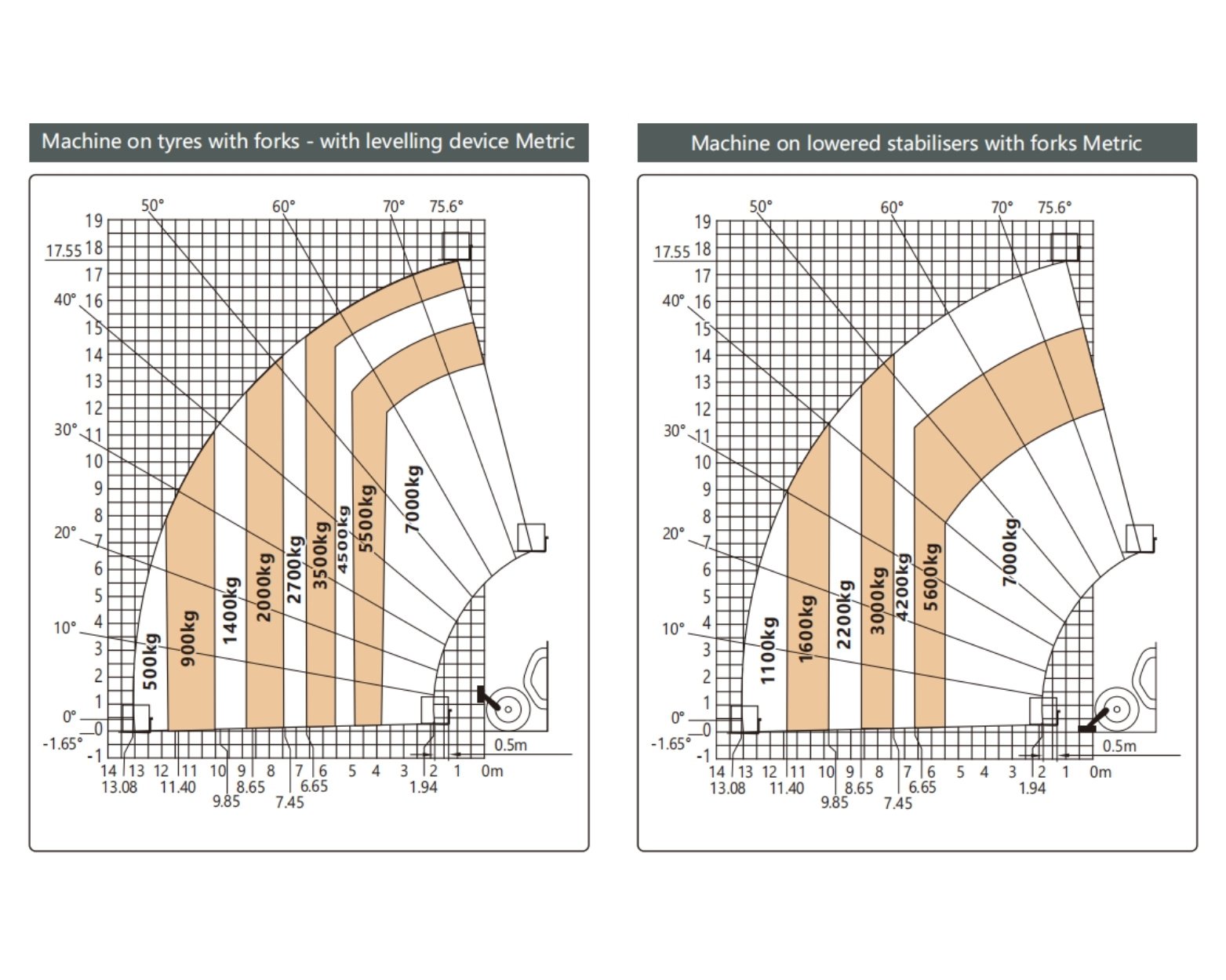
I cannot stress this enough: using a jib boom fundamentally changes your machine’s physics. Every single operator must understand this before they turn the key.
Understanding Load Derating
When you attach a jib, you are extending the lifting point further out from the front axle of the telehandler. This acts like a longer lever, meaning even a small weight at the end of the jib puts a much larger tipping force on the machine. This is called “derating.” For example, a telehandler that can lift 4 tons with forks might only be able to lift 1 ton with a jib extended. This is not a defect; it is a principle of physics. Ignoring it is the single most common cause of accidents with these attachments.
The Load Chart is Law
Every jib boom we ship from HIXEN comes with a specific load chart. This chart is not for the telehandler alone; it is for the specific combination of that telehandler model and that jib attachment. The chart tells you the maximum weight you can lift at different boom angles and extensions. I always tell our customers: the load chart is not a suggestion; it is the law on your job site. It must be in the cab and the operator must know how to read it.
Pre-Operation Safety Checks
Before every shift, the operator must:
- Inspect the Jib: Check for cracks in the welds, bending in the frame, or any signs of damage.
- Check the Mounting: Ensure the jib is securely locked into the telehandler’s quick-attach system.
- Inspect the Hook: Make sure the hook and safety latch are in good condition and function correctly.
A five-minute check can prevent a catastrophic failure.
How Do You Choose the Right Jib Boom for Your Telehandler?
Not all jib booms are the same. Buying the wrong one can be a costly mistake or even a safety hazard. You need to match the attachment to your machine and the jobs you plan to do.
Choose a jib boom that is specifically rated and approved for your telehandler model. Consider the maximum weight you need to lift and the reach required. Decide between a fixed or telescoping jib based on your typical tasks, and ensure it comes with a certified load chart.
As a manufacturer, we design our attachments to work perfectly with our machines. Mismatched equipment is a huge risk. Here is the process I walk my customers through when they’re selecting a jib.
1. Confirm Compatibility
First and foremost, the jib must be approved by the telehandler manufacturer. Never use a third-party jib that isn’t explicitly certified for your machine’s make and model. The manufacturer has done the engineering calculations and stability tests to ensure the combination is safe. Using an unapproved attachment voids your warranty and, more importantly, puts your entire operation at risk.
2. Analyze Your Lifting Needs
Think about your most common lifting tasks.
- What is the maximum weight you’ll need to lift? Look at your heaviest materials, like steel beams or concrete panels.
- What is the maximum height and reach you need? Consider the height of your buildings and how far you need to reach over obstacles.
This analysis will help you determine the required capacity and length of the jib.
3. Select the Right Type: Fixed vs. Telescoping
Your lifting needs will guide this choice. A fixed jib is simpler, more durable, and more affordable. It’s perfect if you’re doing repetitive tasks, like lifting trusses to the same height all day. A telescoping jib offers much more flexibility. It allows you to adjust the reach on the fly, making it ideal for complex sites with varied lifting requirements. It costs more, but the added versatility can be invaluable.
Why Does a High-Quality Jib Boom Matter for Long-Term Operation?
A cheap jib boom might save you some money today. But a failure on site could cost you everything. From my perspective as a manufacturer, investing in quality is investing in safety and reliability.
A high-quality jib boom ensures operational safety and longevity. It is made from superior materials with certified welds, preventing structural failure. This protects your machine, your operator, and your investment by minimizing downtime and maximizing long-term profitability.
We’ve been exporting telehandlers and telehandler attachments for over 15 years, and we’ve learned that shortcuts in manufacturing always lead to problems down the road. For an attachment that carries thousands of pounds suspended over people and property, quality is not negotiable.
The Role of Materials and Welding
The difference between a quality jib and a cheap one starts with the steel. We use high-tensile steel that can withstand the immense stress of lifting. But the material is only as good as the welds holding it together. Every welder in our 10,000-square-meter factory is certified, and our welds are inspected to ensure they are free of defects. A poor weld can create a weak point that fails catastrophically under load.
The Importance of Certification and Engineering
When you buy a jib from a reputable manufacturer like HIXEN, you’re not just buying steel. You’re buying the engineering and testing that went into its design. Our jibs are designed to integrate perfectly with our telehandlers’ hydraulic and stability systems. They come with CE, SGS, and ISO certifications, which means they have been independently tested to meet strict international safety and quality standards. This documentation is crucial for job site compliance and your own peace of mind.
For us, building a high-quality jib isn’t just about good business; it’s our responsibility. A durable, properly engineered attachment ensures your operations run safely and efficiently for years, delivering a much higher return on your investment than any cheap alternative could.
Conclusion
A telehandler jib boom is a powerful attachment that turns your machine into a versatile crane. Choosing a quality, certified jib and always following the correct load chart and safety rules will ensure efficiency, safety, and profitability for years to come.

